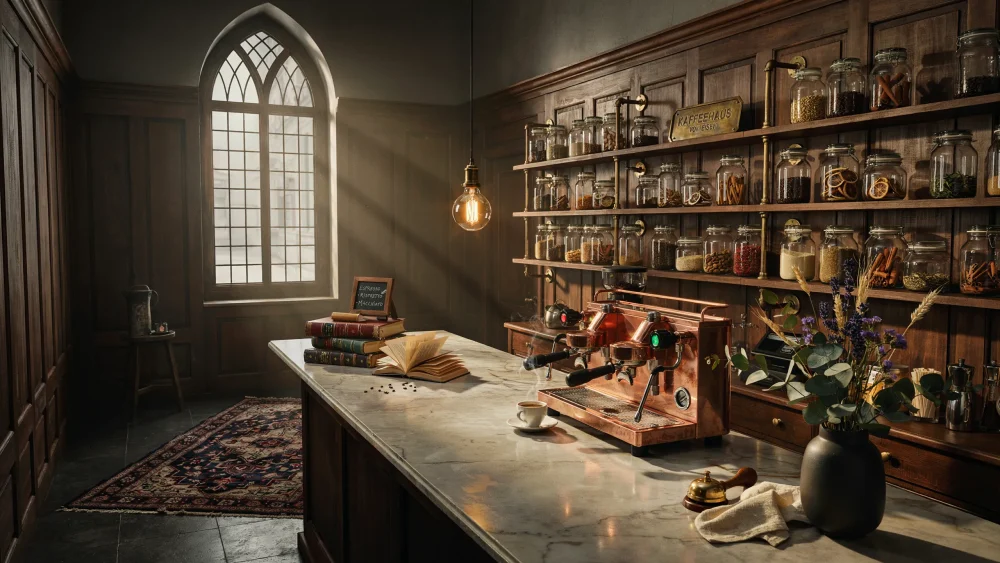
30 Gothic and Vintage Espresso Bars That Feel Like an Old-World European Cafe
You know that feeling when you walk into a dimly lit Viennese cafe, the smell of espresso hanging in the air, old books stacked on every surface, and everything just feels like it was designed for someone who takes their mornings seriously? I spent years chasing that feeling inside my own home — and failing, mostly because I kept adding the wrong things. A dark academia coffee station is not just a color palette or a style label. It is a full sensory experience built from layered textures, warm low light, and objects that look like they have a history. If you have ever wanted your morning coffee ritual to feel genuinely atmospheric rather than just aesthetically pinned, you are in exactly the right place.
The Mistake I Made Before I Got This Right
My first attempt at a moody coffee corner looked less like a Parisian cafe and more like I had spray-painted a regular kitchen shelf black. I bought matte black everything — containers, trays, a kettle — and lined them up in a row under a bright white LED strip light. The result was flat, cold, and honestly a little depressing. I thought dark meant just removing color, and I was completely wrong about that.
The real shift came when I stopped shopping for a look and started thinking about warmth and depth. Dark academia is built on contrast — deep tones against warm amber light, rough textures beside polished brass, old objects beside functional modern ones. The moment I swapped that LED strip for a single Edison bulb sconce and added a small stack of leather-bound books beside my espresso machine, the whole corner finally exhaled. That one lesson saved every setup I have done since.
Moody Foundation Setups That Set the Whole Tone
These are the structural choices — the ones that determine whether everything else you layer on top actually lands.
1. The Ink-Black Alcove with Warm Brass Hardware
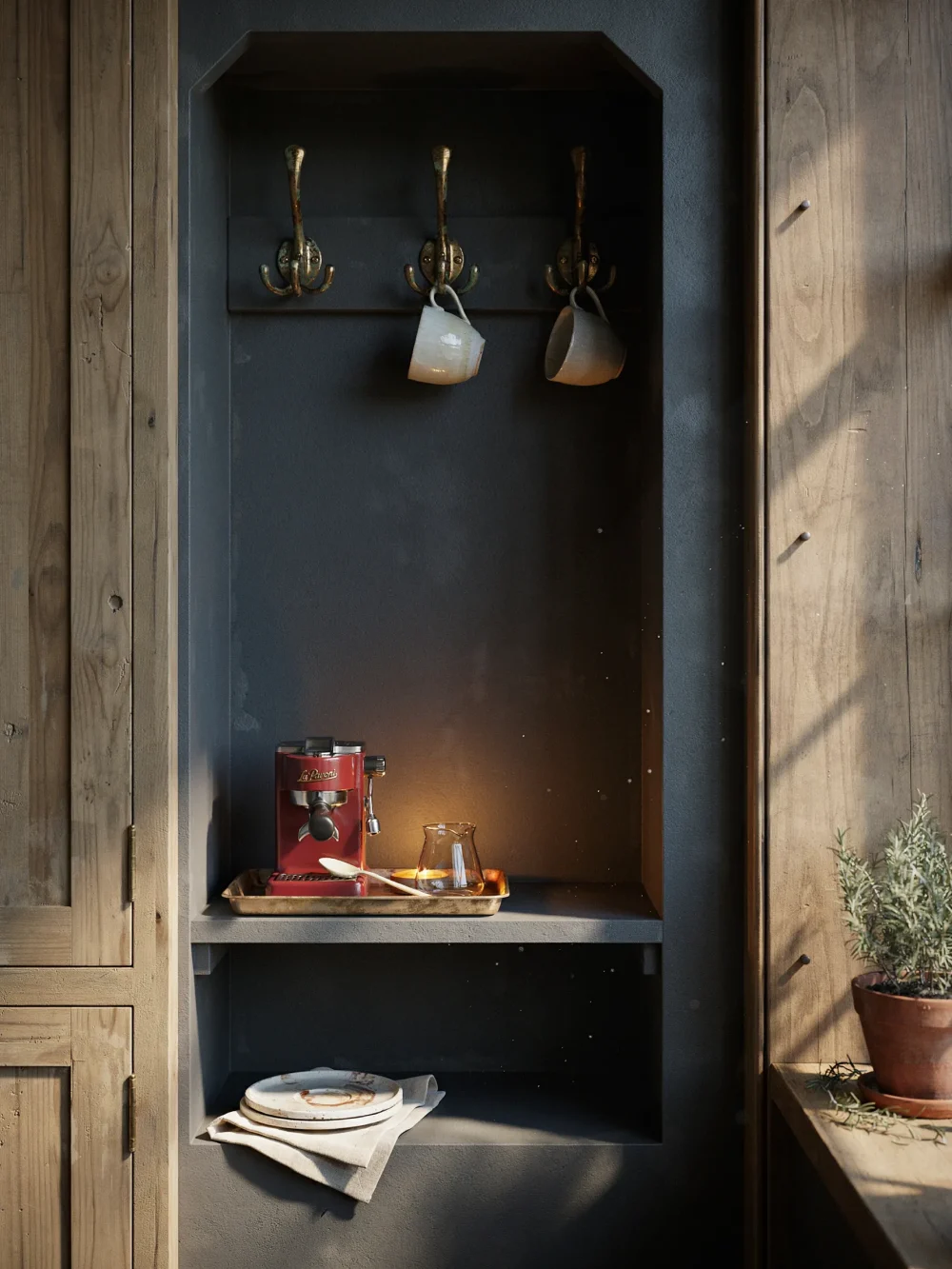
Painting the interior of a recessed nook in a near-black shade like Farrow and Ball’s Railings creates an instant shadow-box effect that makes everything inside it look intentional. Pair it with unlacquered antique brass trays and cup hooks for a finish that oxidizes beautifully over time. The alcove shape does half the atmospheric work for you — you just have to fill it thoughtfully.
2. Rich Walnut Stained Open Shelving
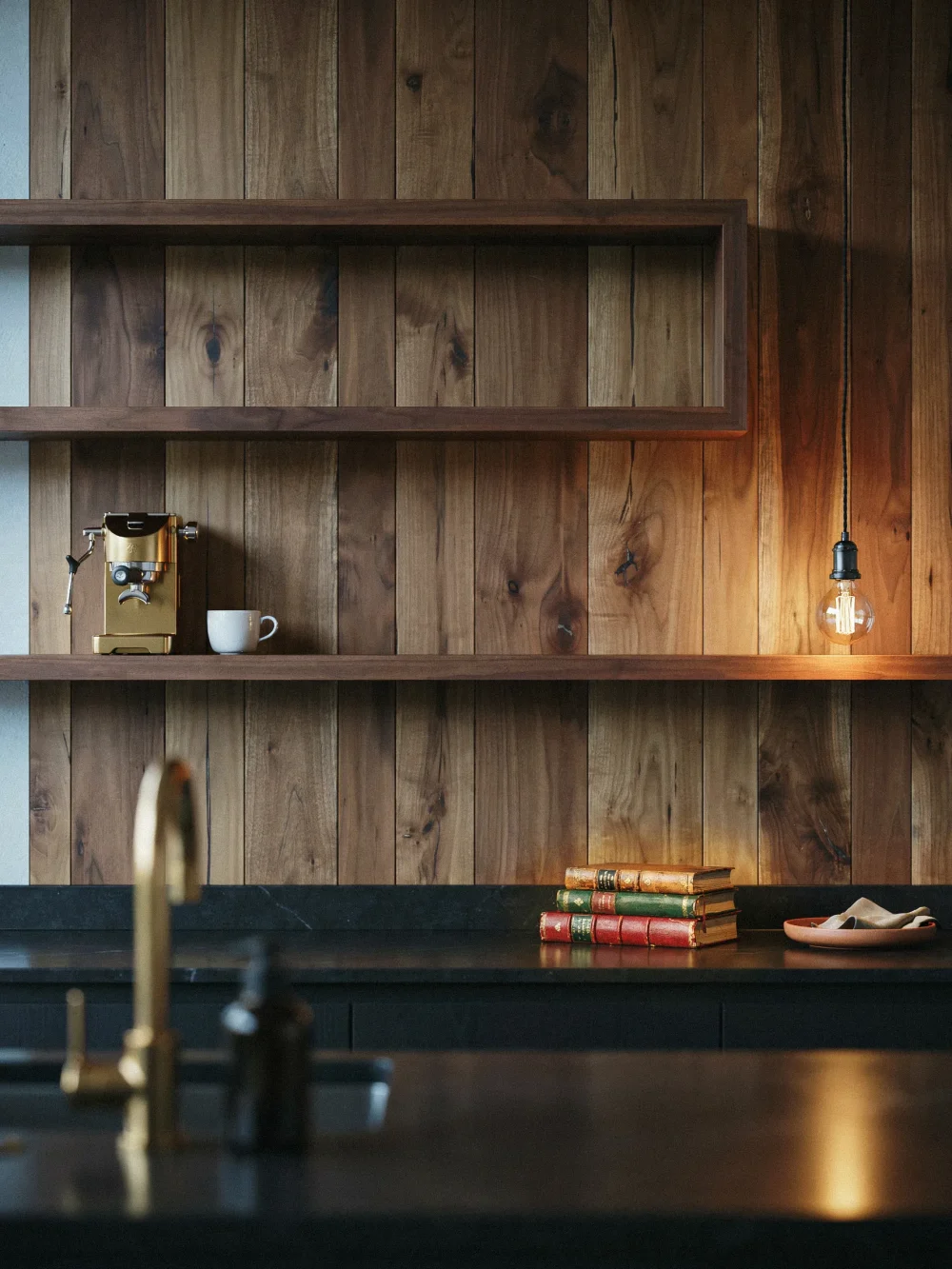
Deep walnut stained wood shelves carry a natural warmth that painted surfaces simply cannot replicate, especially under amber lighting. Float two shelves at different heights and leave deliberate negative space between objects rather than filling every inch. Overcrowding is the fastest way to make this look like clutter instead of a curated collection.
3. Matte Black Vintage Cabinetry with Glass Fronts
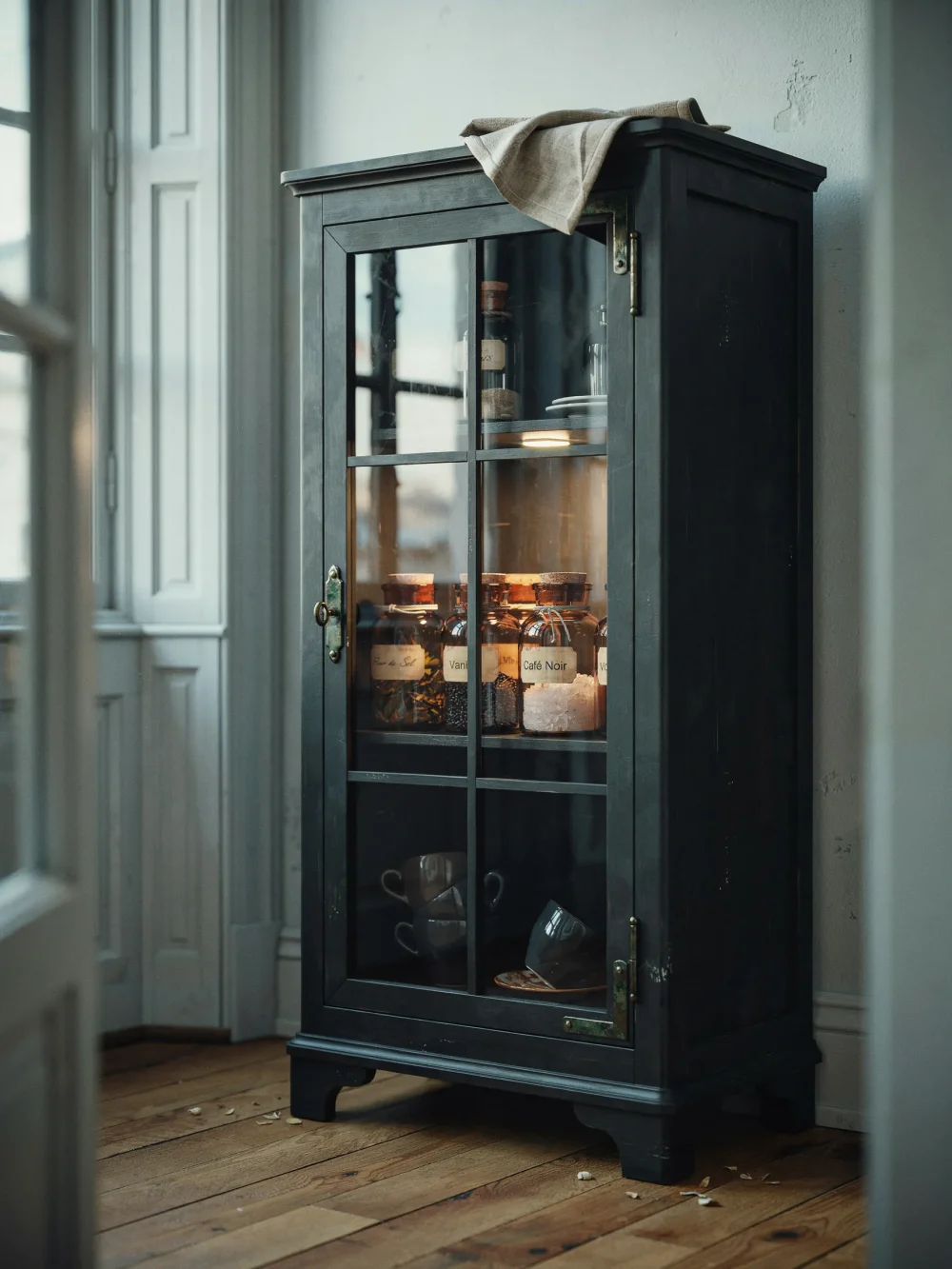
Matte black vintage cabinetry with small-pane glass doors lets you display amber glass apothecary jars and vintage cups without the visual chaos of fully open shelving. The glass diffuses the interior slightly, especially if you tuck a small warm-toned LED puck light inside. Choose cabinets with ornate hardware — plain bar pulls will flatten the whole gothic effect.
4. Deep Forest Green Wall as a Backdrop
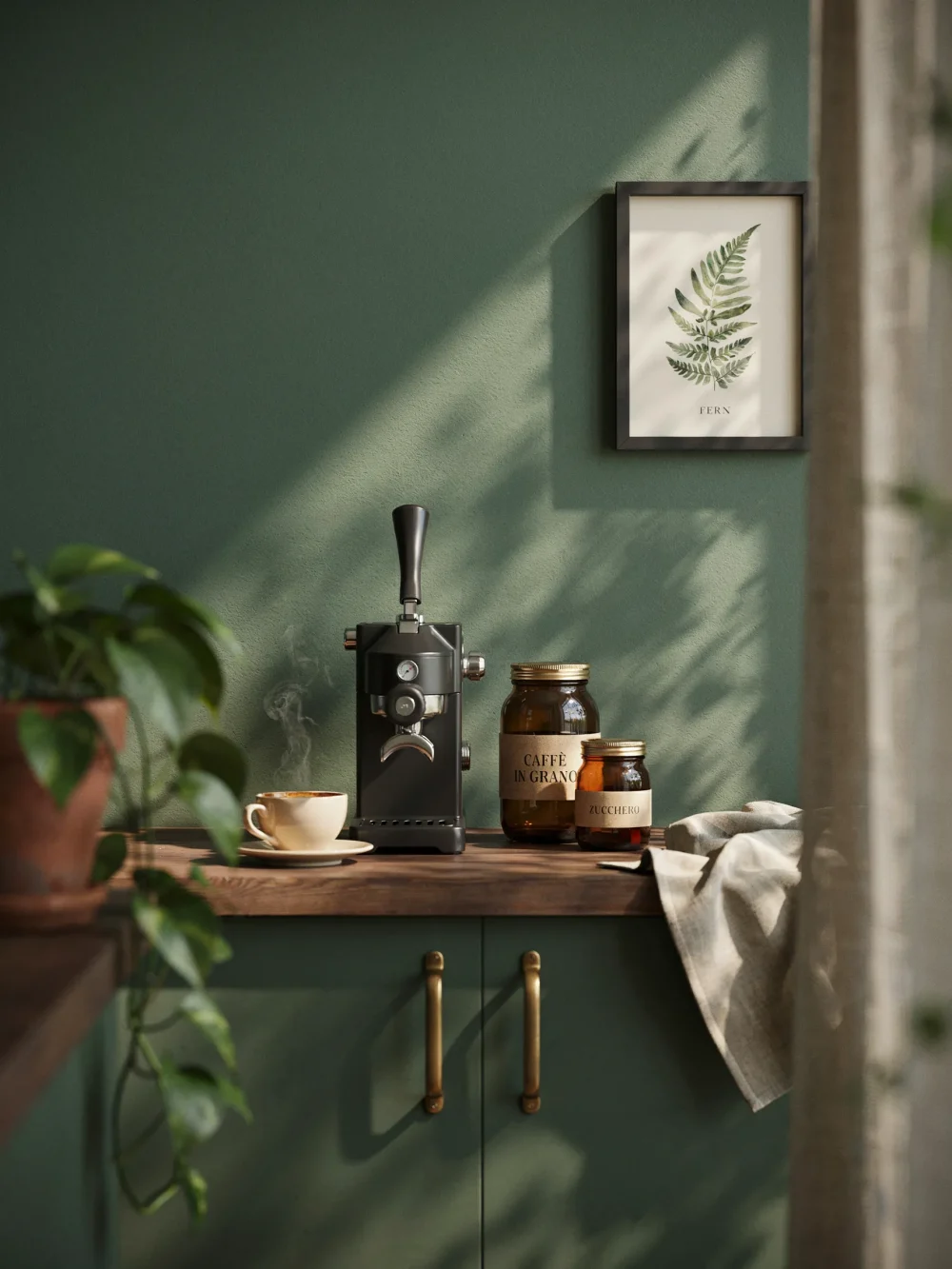
Forest green in a deep, muted tone — think Valspar’s Aged Olive or Benjamin Moore’s Backwoods — creates a moody European cafe backdrop without the starkness of black. It reads as rich and botanical, which pairs beautifully with dark wood and brass. This color actually photographs better than black in most home lighting conditions, which is a practical bonus.
5. Exposed Brick Wall Espresso Corner
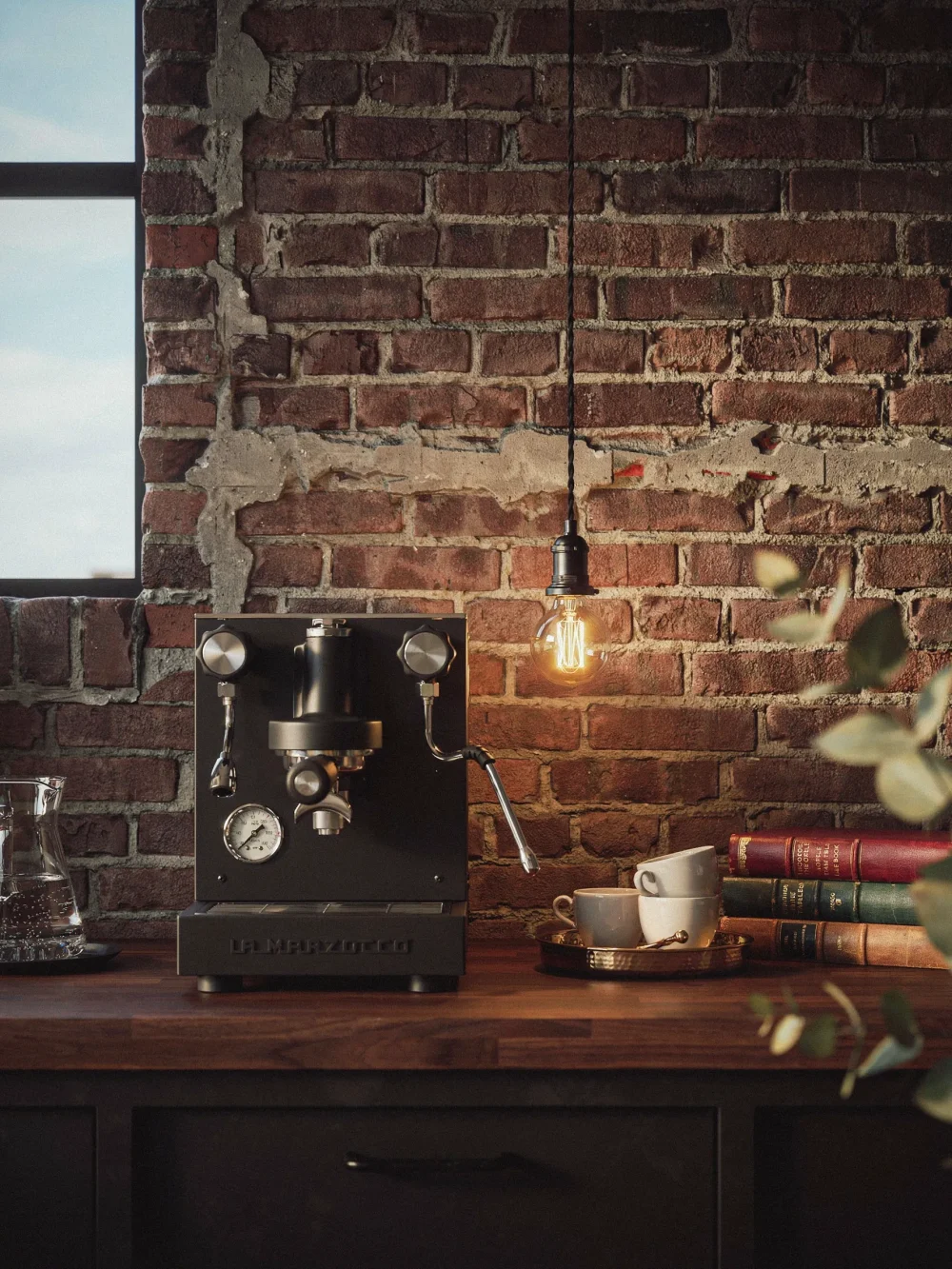
A raw or painted-dark exposed brick wall behind your espresso machine adds instant architectural age that no wallpaper convincingly fakes. If you have actual brick, leave it alone — maybe seal it so it does not dust, but do not paint it white. Dark brick plus warm Edison light is genuinely one of the easiest paths to a historic European home cafe look.
Vintage and Antique Object Styling
Objects with history are what separate a dark aesthetic from a dark academia aesthetic — the difference is soul.
6. Leather-Bound Recipe Books as Display Objects
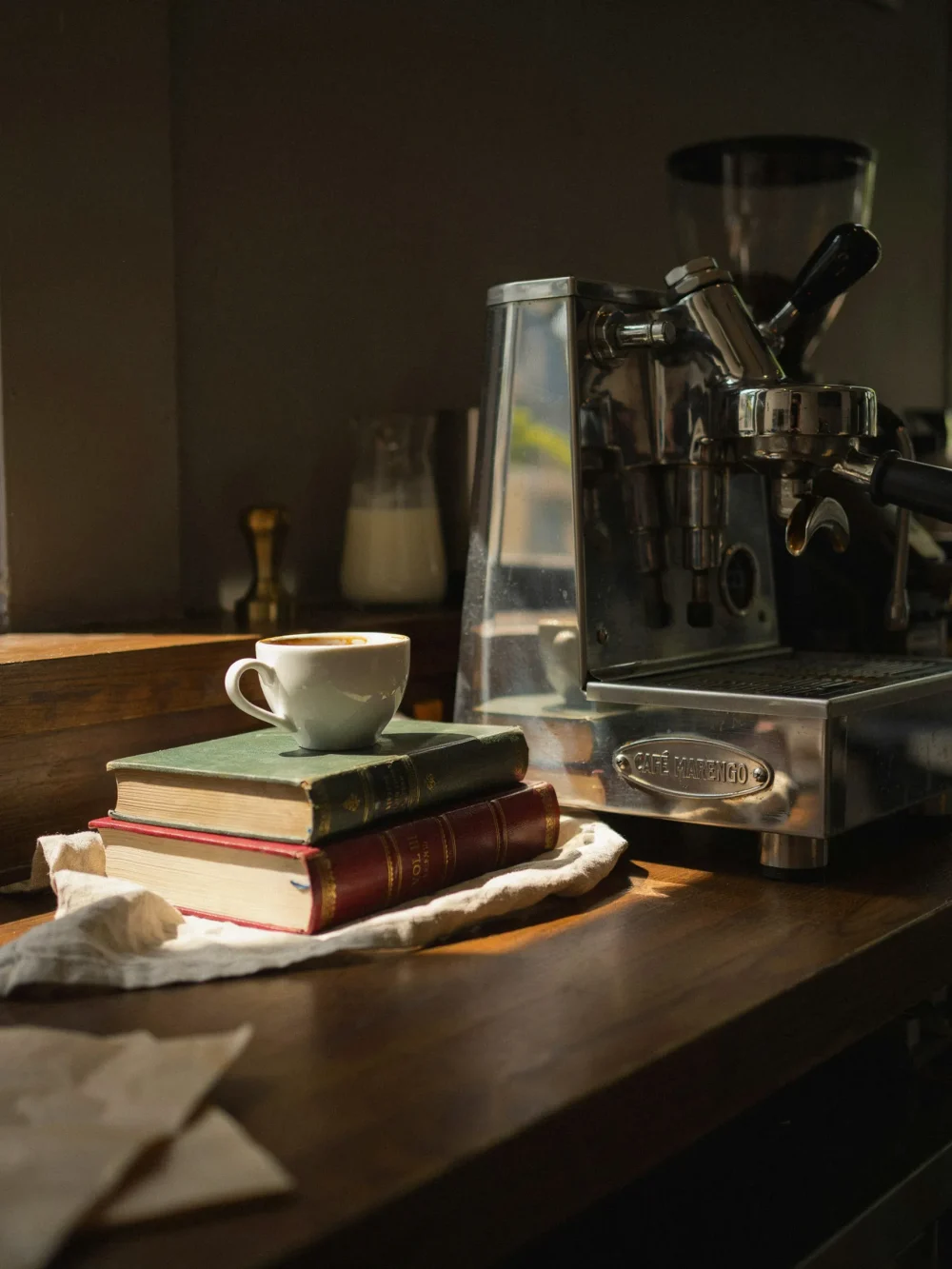
Stacking two or three leather-bound recipe books or vintage cookbooks beside your espresso machine adds intellectual texture that no decorative object from a big box store can replicate. Look for deep burgundy, oxblood, or forest green spines at estate sales or thrift stores for under five dollars each. The books do not need to be coffee-related — any aged leather binding reads as sophisticated and intentional.
7. Amber Glass Apothecary Jars for Coffee Storage
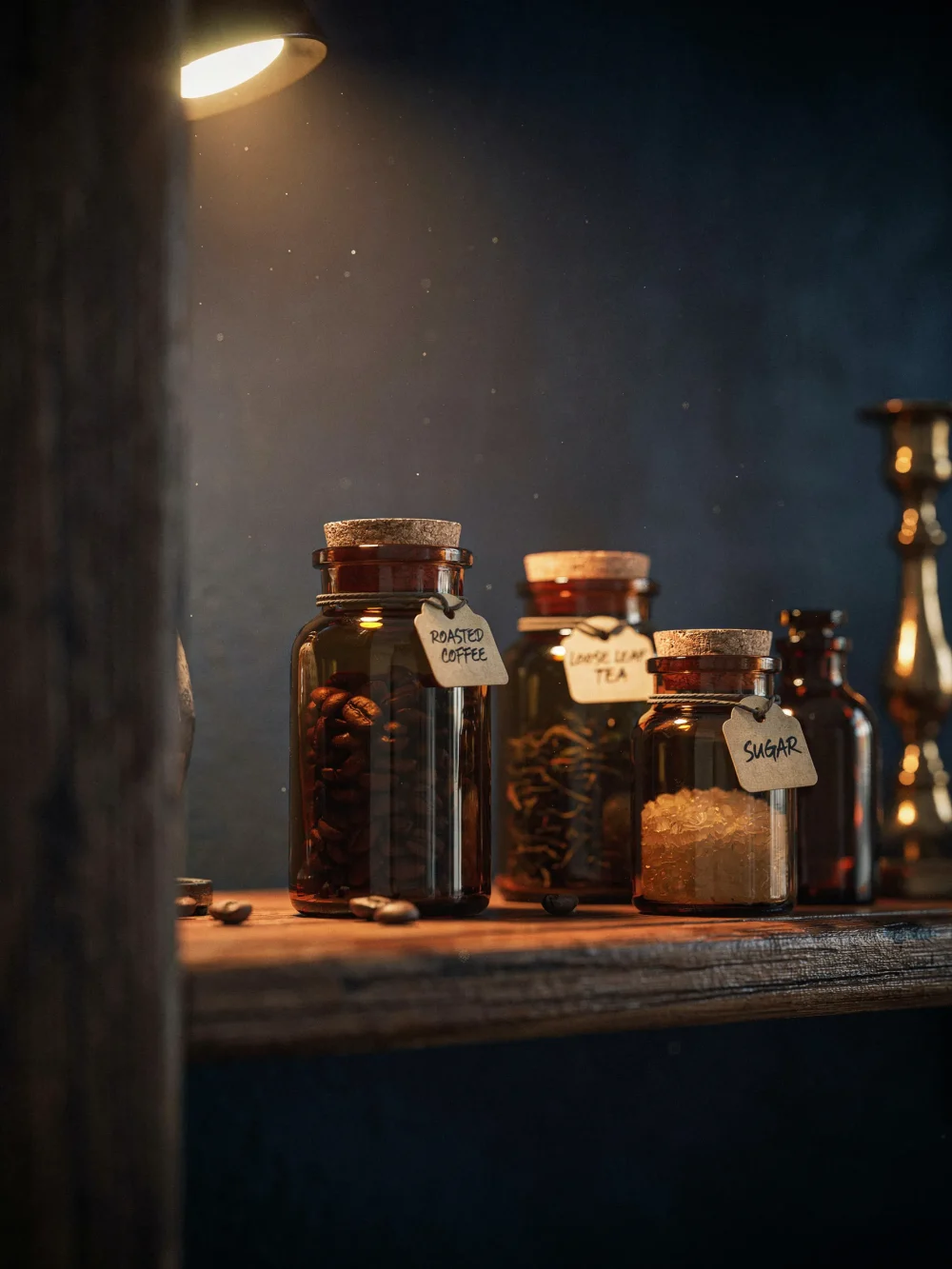
Storing your coffee beans, sugar, and loose-leaf tea in amber glass apothecary jars with cork or metal lids is both functional and deeply atmospheric. The amber glass filters light in a way that makes even a plain shelf look like a Victorian chemist’s counter. Avoid clear glass here — it does not carry the same warmth and makes the contents look clinical rather than curated.
8. Vintage Portrait Art Frames Above the Station
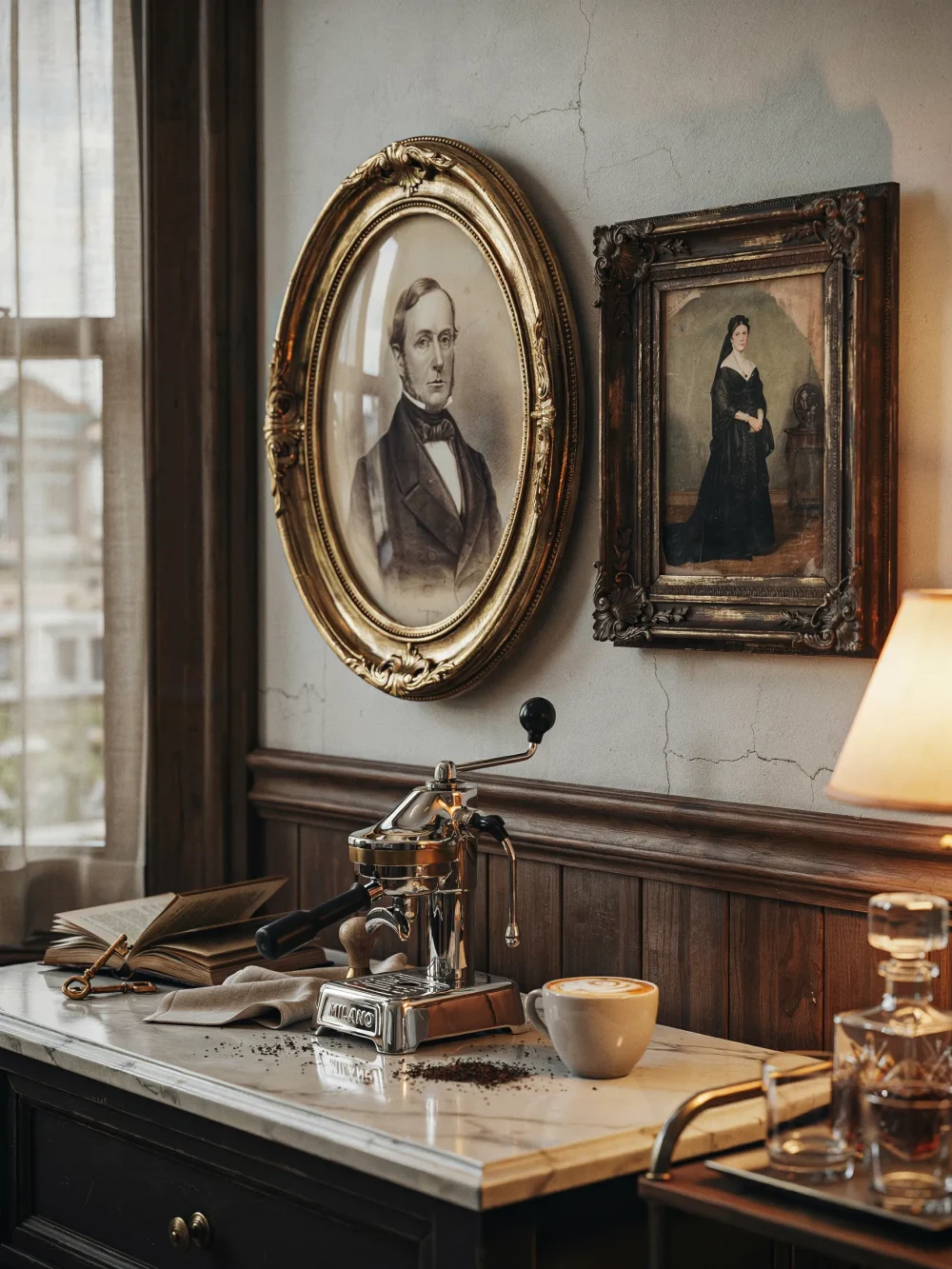
Hanging one or two dark-framed vintage portrait prints above your coffee bar immediately anchors the space with a sense of inherited history. Oval frames with convex glass or ornate gilt frames in a darkened finish work especially well. You are not decorating a wall — you are building a backstory for the room.
9. Antique Silver or Pewter Serving Pieces
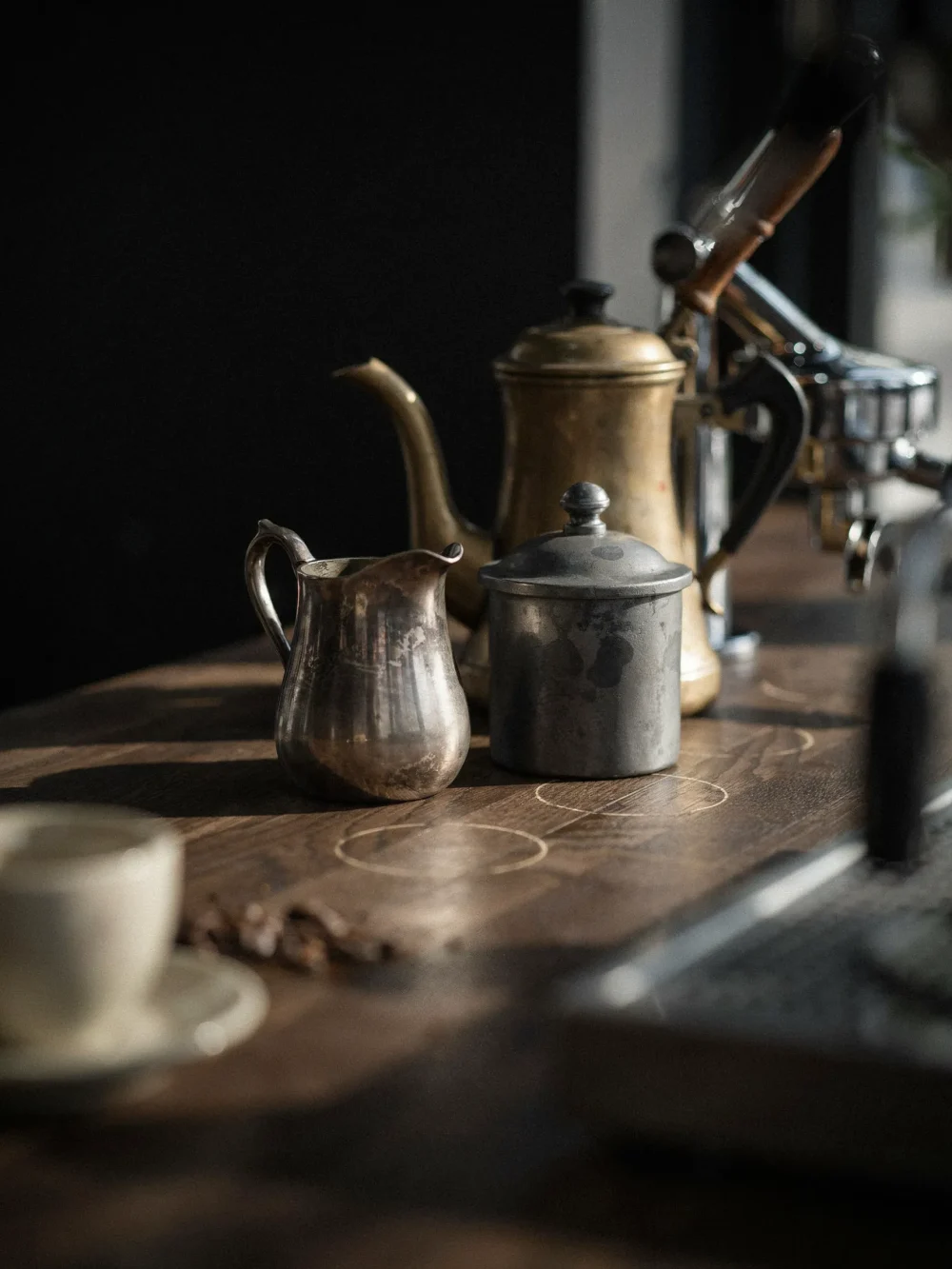
A tarnished silver creamer, a pewter sugar bowl, or an antique coffee pot used purely as a display object adds the kind of patina that dark academia spaces desperately need. These pieces are almost always inexpensive at antique markets because modern buyers overlook them. Do not polish them — the tarnish is the entire point.
10. Old World Map or Botanical Print in a Deep Frame
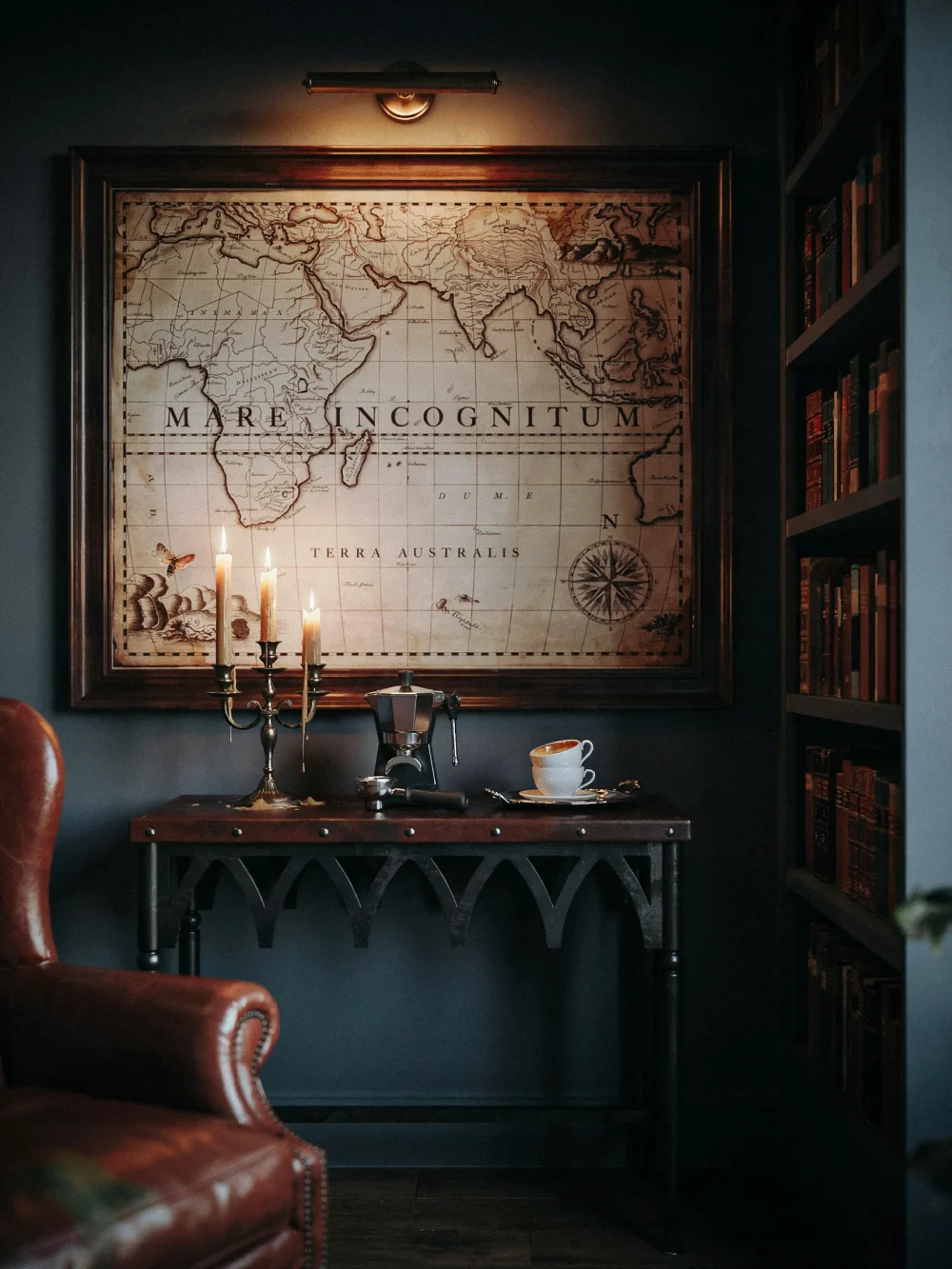
A sepia-toned antique map or a Victorian botanical print in a wide, dark wood frame adds visual narrative to your coffee corner without requiring any actual antiques. Prints from Etsy sellers who specialize in aged reproductions are surprisingly convincing and cost under twenty dollars. Size matters — go larger than feels comfortable and the effect will be more dramatic and intentional.
Lighting Choices That Do the Heavy Lifting
Lighting is where most people underinvest, and it is genuinely the single most powerful tool in this entire aesthetic.
11. Single Edison Bulb Pendant Over the Counter
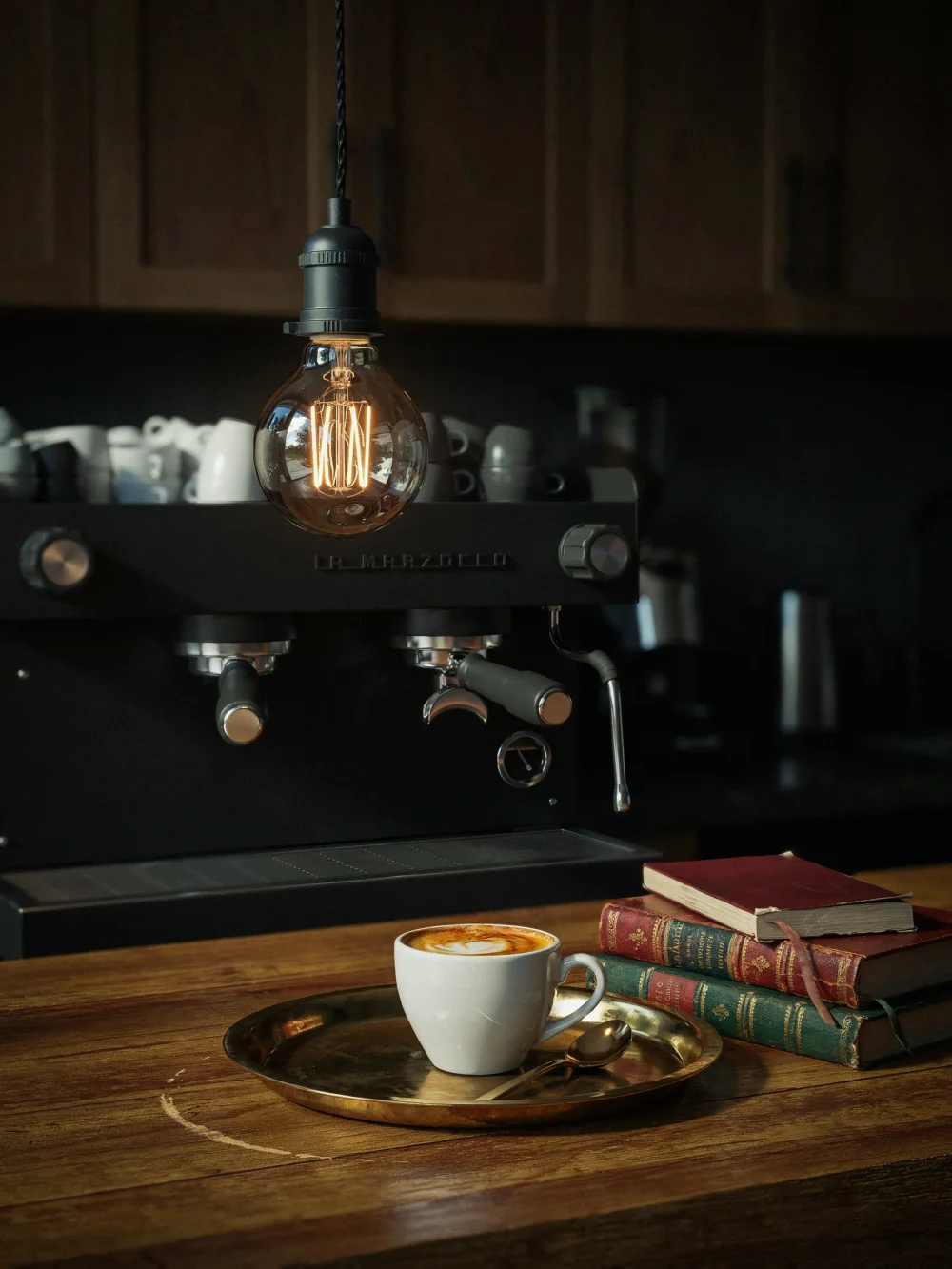
One warm-filament Edison bulb pendant hung low over your espresso machine creates a theatrical pool of amber light that makes everything underneath it look like a still-life painting. Choose a bulb in the 2200K range — warmer than standard warm white — for that authentic low-lumen candlelight quality. Resist the urge to add a second pendant; the singularity of the light source is what creates the drama.
12. Brass Wall Sconce with a Fabric Shade
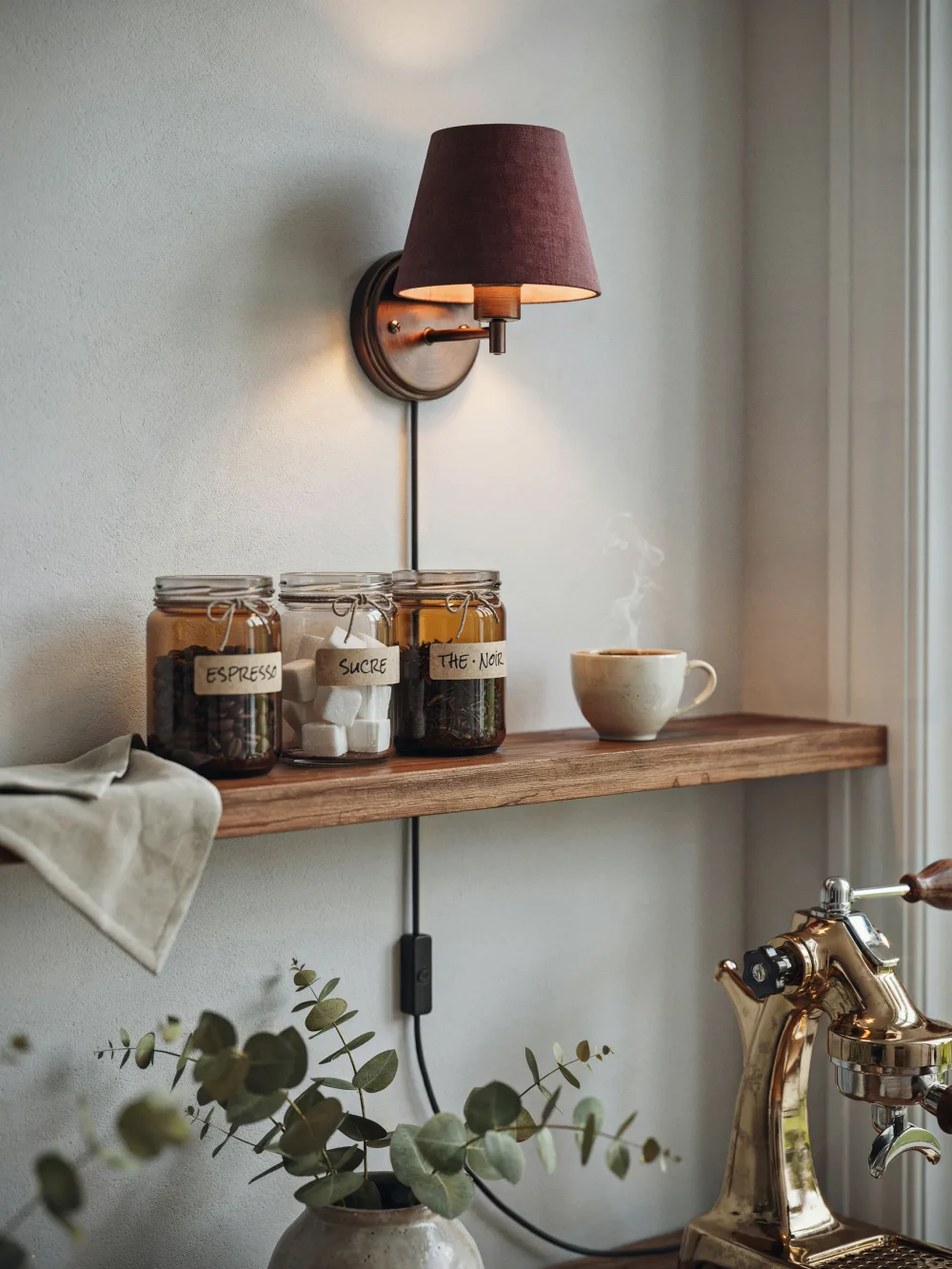
A dark brass accent coffee station almost always benefits from a wall-mounted sconce rather than overhead lighting, because sconces throw light sideways and downward in a way that creates shadows and depth. Choose a shade in deep burgundy, forest green, or aged ivory linen rather than white. This is also a renter-friendly option if you use a plug-in sconce model with a cord cover.
13. Candlelight Clusters on a Brass Tray
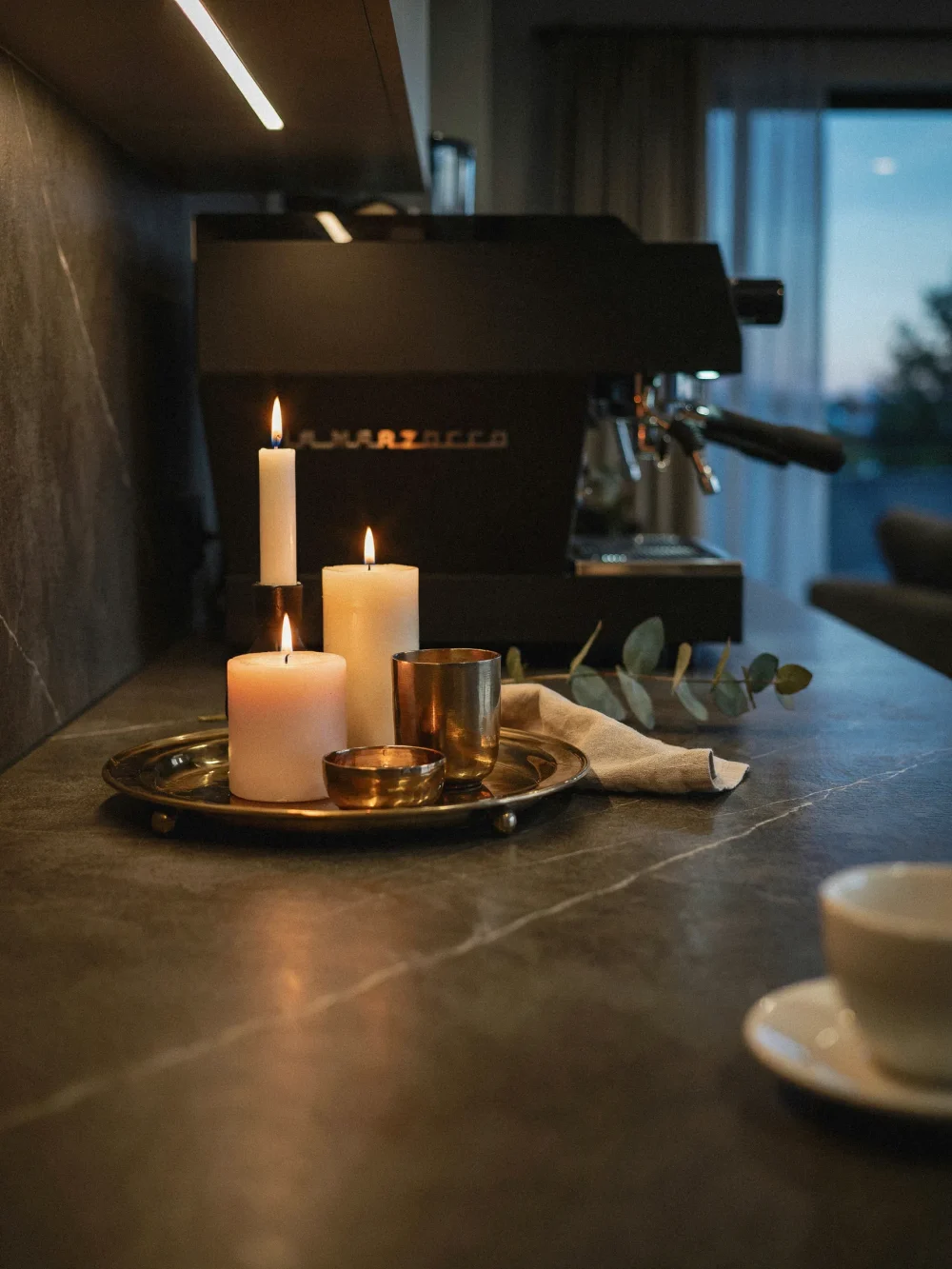
Grouping three to five pillar candles or taper candles in brass or iron holders on a tray beside your coffee station adds flickering warmth that no electric light fully replicates. Use beeswax or unscented black candles for the most visually cohesive result. Even if you never light them, the candles alone read as deeply atmospheric as a decorative element.
14. Recessed Puck Lights Inside Dark Cabinetry
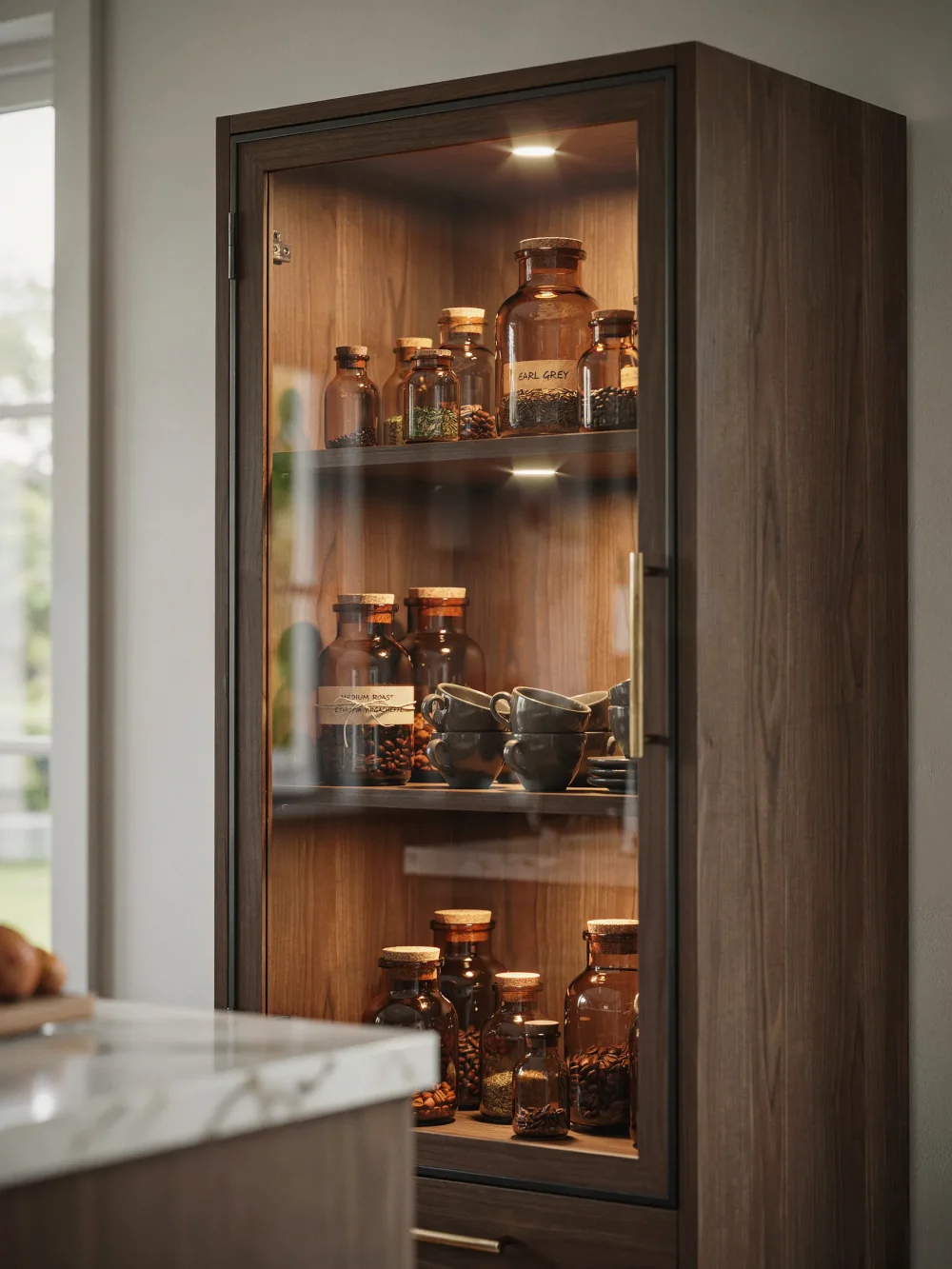
Installing small warm-toned LED puck lights inside glass-front cabinets creates a glowing display case effect that looks expensive and intentional even on a budget. Set them to the warmest available color temperature and place them at the back of the shelf so the light spills forward through your objects. This technique works beautifully with amber glass jars and dark ceramic cups.
15. Vintage Table Lamp with a Dark Pleated Shade
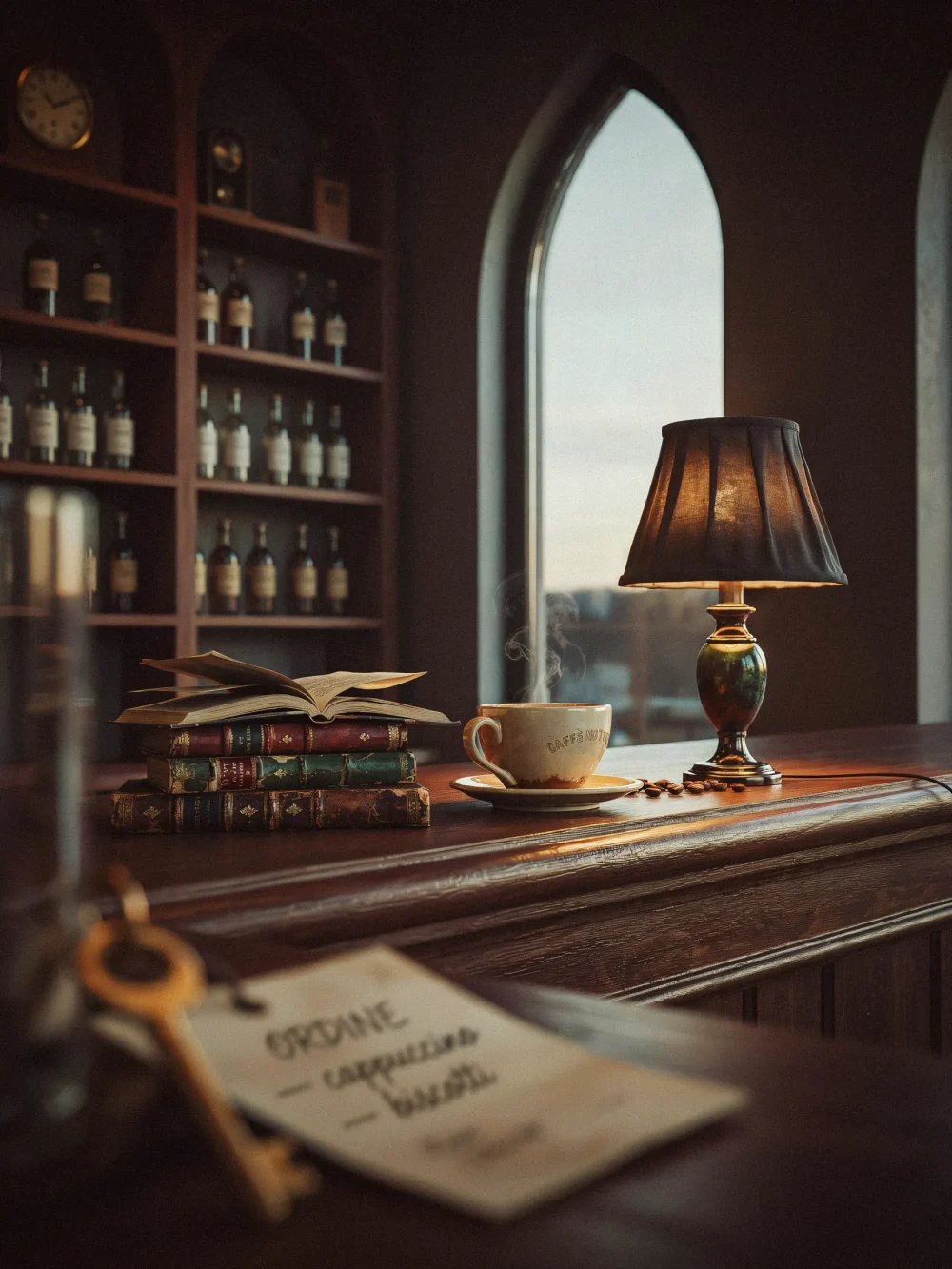
A small vintage table lamp with a pleated fabric shade in charcoal, black, or deep wine placed at one end of your coffee station adds asymmetric warmth that feels genuinely lived-in. Brass or verdigris bases work best for this aesthetic. The lamp should feel like it belongs to the room, not like it was purchased specifically for the coffee bar.
How to Layer Textures Without It Looking Chaotic
Before you keep reading, here is something worth sitting with for a moment. The reason most dark academia coffee corners fail is not a lack of good objects — it is a lack of editing. People collect moody things and then display all of them at once, which creates visual noise rather than atmosphere. The spaces that genuinely feel like old-world European cafes are actually quite spare. There are gaps. There are surfaces that breathe. Every object earns its place because nothing is competing for attention.
The layering principle that changed everything for me was this: work in threes and vary the height within each group. One tall object, one medium, one low. A brass candlestick, a stack of books, a small ceramic cup. That trio creates a visual rhythm that reads as curated rather than crowded. Once you internalize that rule, you can style any surface in this aesthetic in under ten minutes and it will look like you spent an hour on it.
16. Linen or Velvet Runner on the Counter Surface
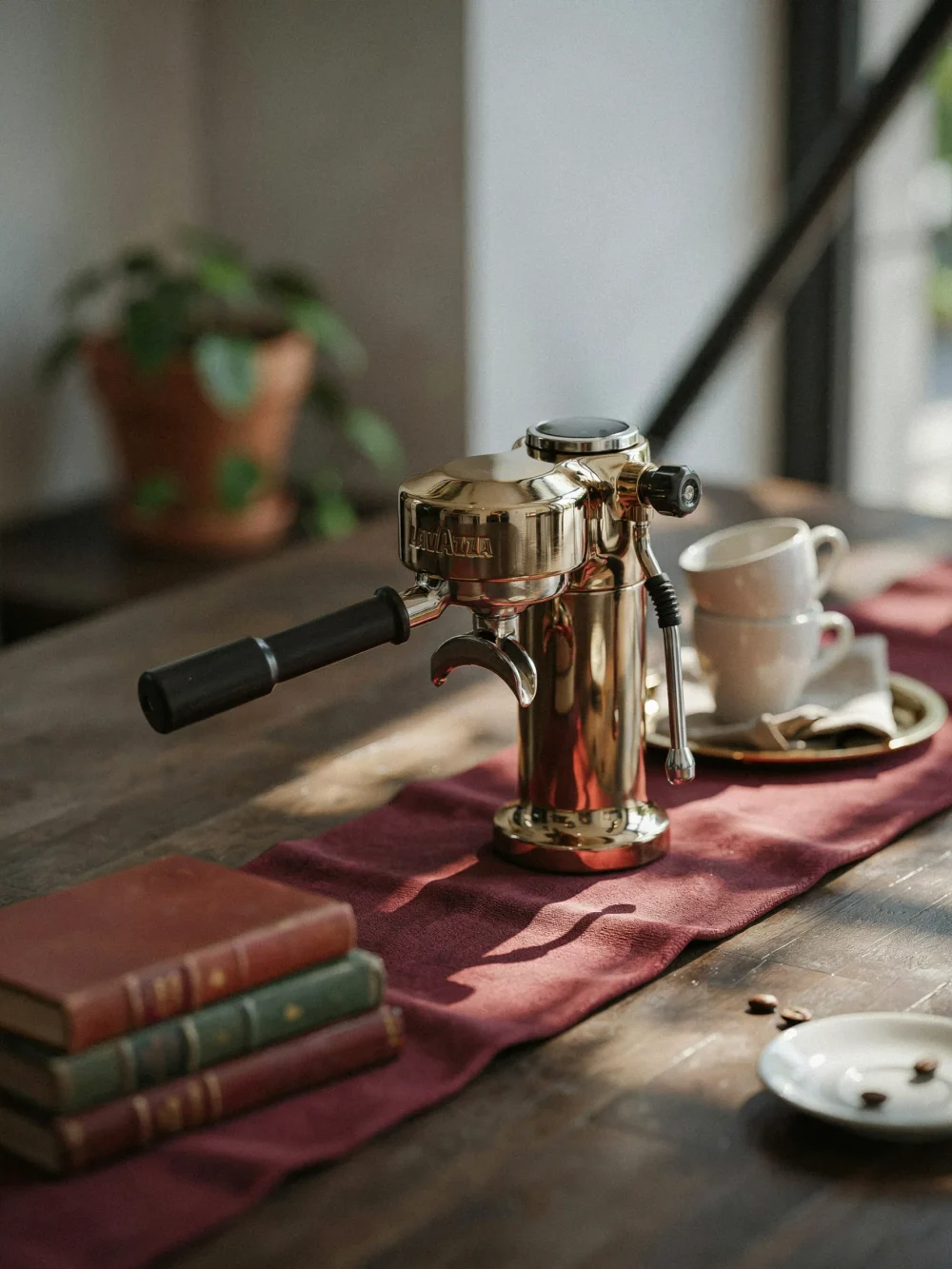
Laying a narrow linen or velvet runner in charcoal, deep burgundy, or aged gold along your coffee counter softens the hard surface and adds a textile layer that the eye reads as luxurious. This is especially effective on white or light-colored countertops that would otherwise fight the dark aesthetic. A runner also protects the surface and makes the whole setup feel more like a styled vignette than a kitchen appliance area.
17. Woven Rattan or Dark Wicker Storage Basket
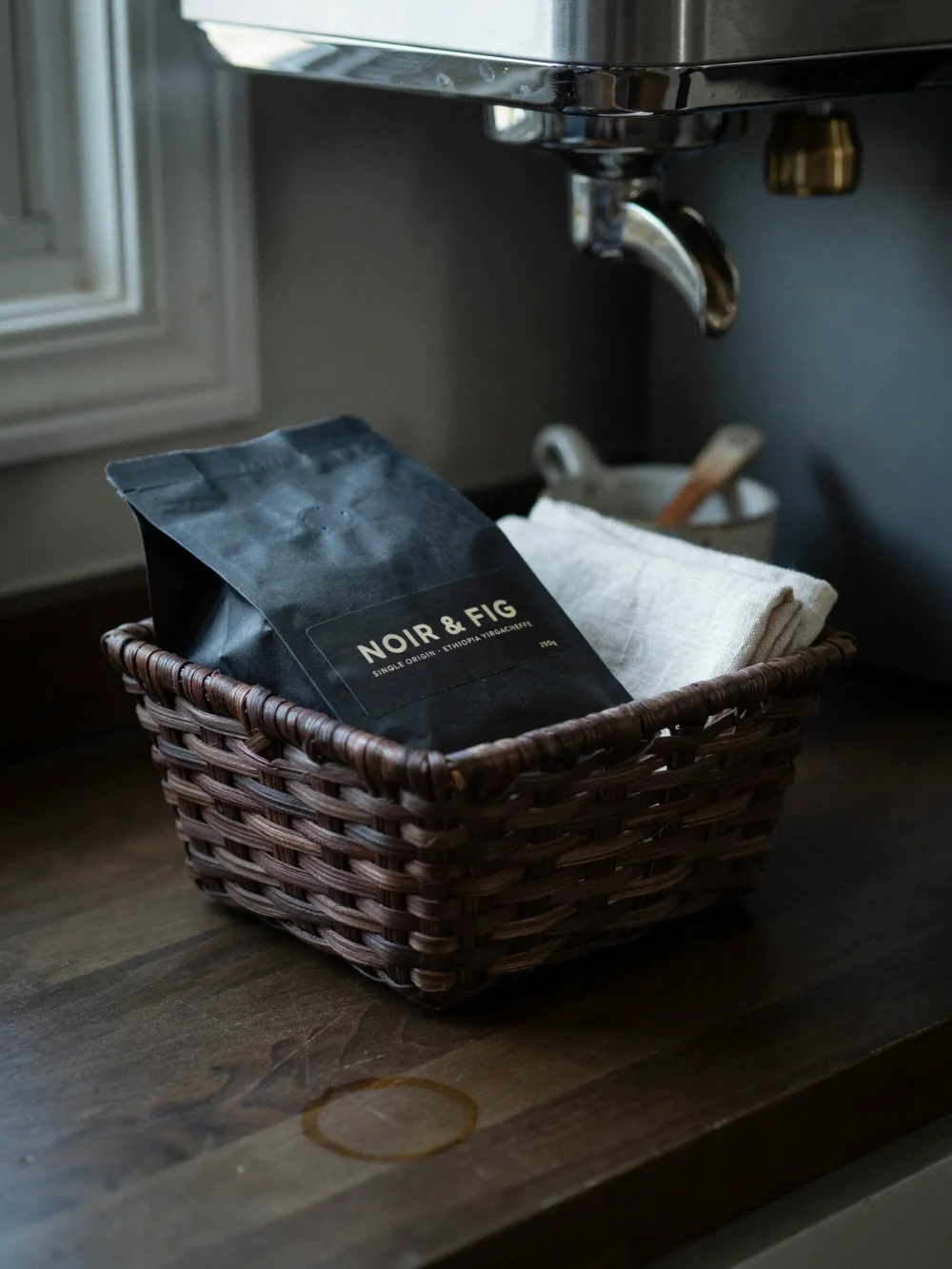
A dark-stained rattan or wicker basket tucked underneath the counter or on a lower shelf adds organic texture that balances out the harder materials like brass and glass. Use it to store extra pods, napkins, or a spare bag of beans — practical and atmospheric at once. Avoid natural blonde rattan here; the stained or smoked versions are what keep the palette cohesive.
18. Aged Leather Catchall Tray for Small Items
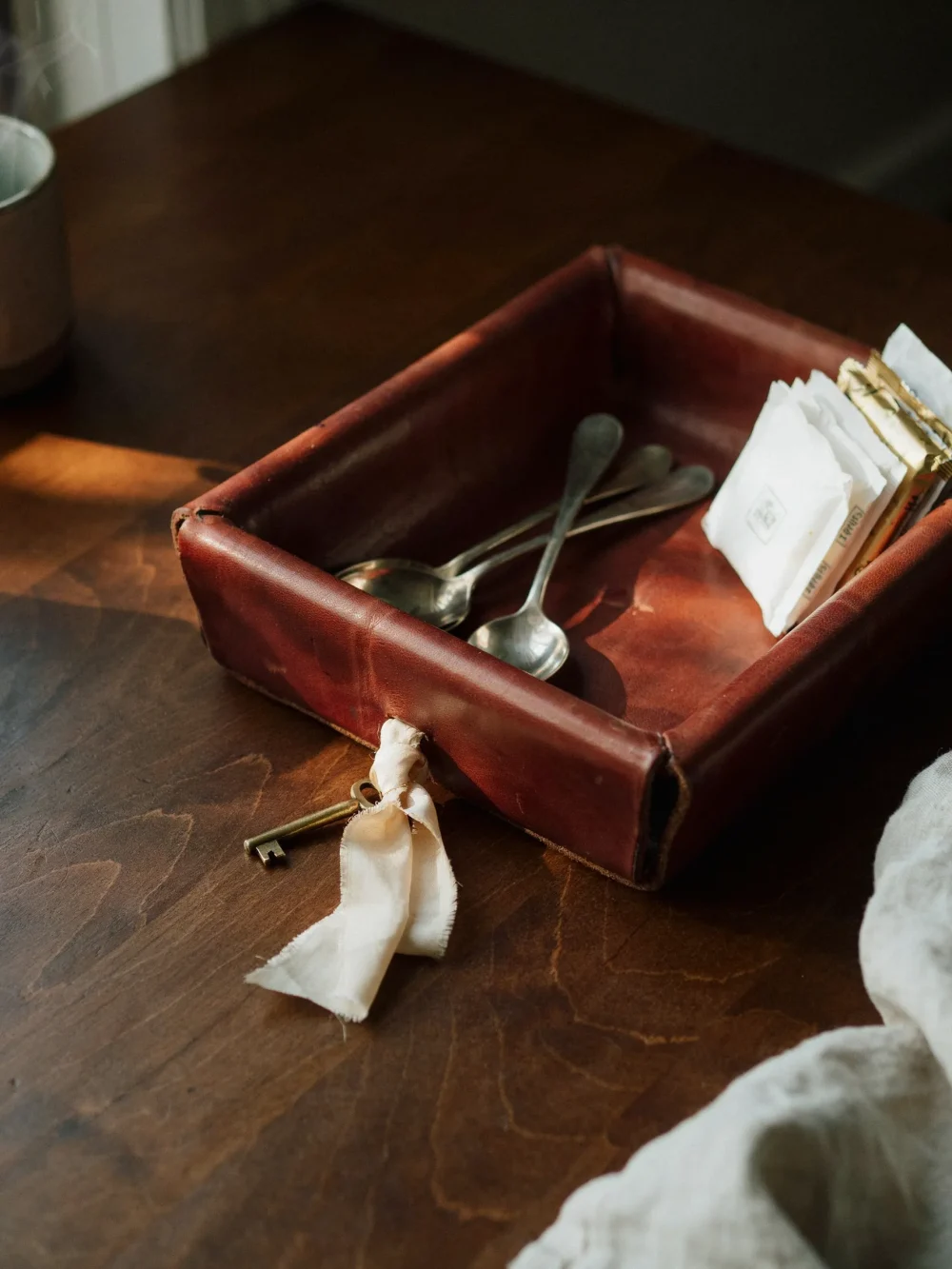
A small aged leather tray corrals your spoons, sugar packets, and small accessories while adding a rich material texture that feels genuinely old-world. Oxblood, cognac, or near-black leather all work well within this palette. The tray creates a visual boundary that makes even a slightly messy collection of small objects look intentional.
19. Dark Ceramic Espresso Cups as Display Objects
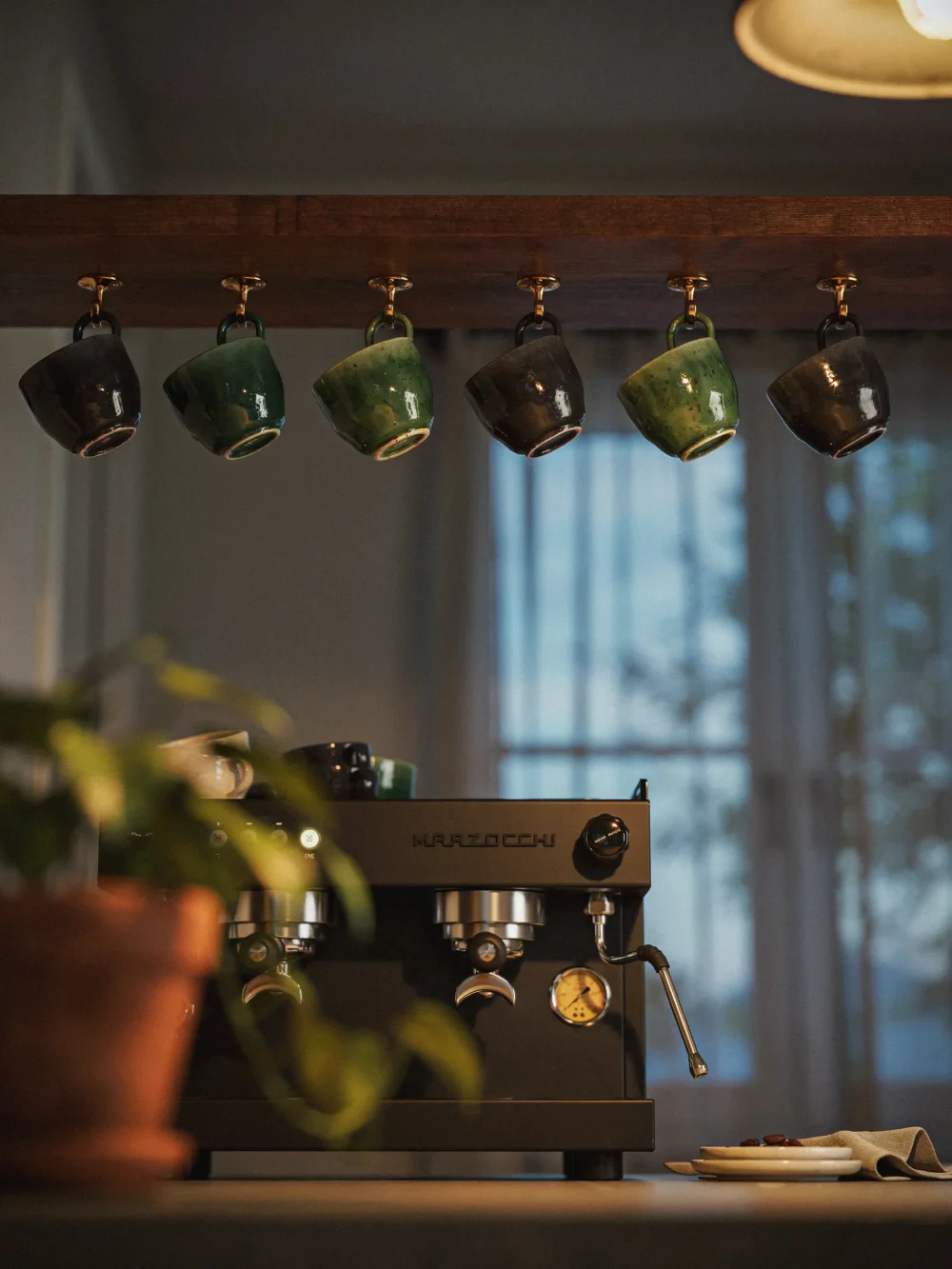
Displaying your actual espresso cups on cup hooks or a small open rack turns a functional item into part of the decor — which is deeply in the spirit of a working European cafe. Choose handmade or artisan ceramics in matte black, deep navy, or forest green rather than standard white. The imperfections in handmade ceramics add character that mass-produced cups simply do not have.
20. Velvet Upholstered Stool at the Bar Counter
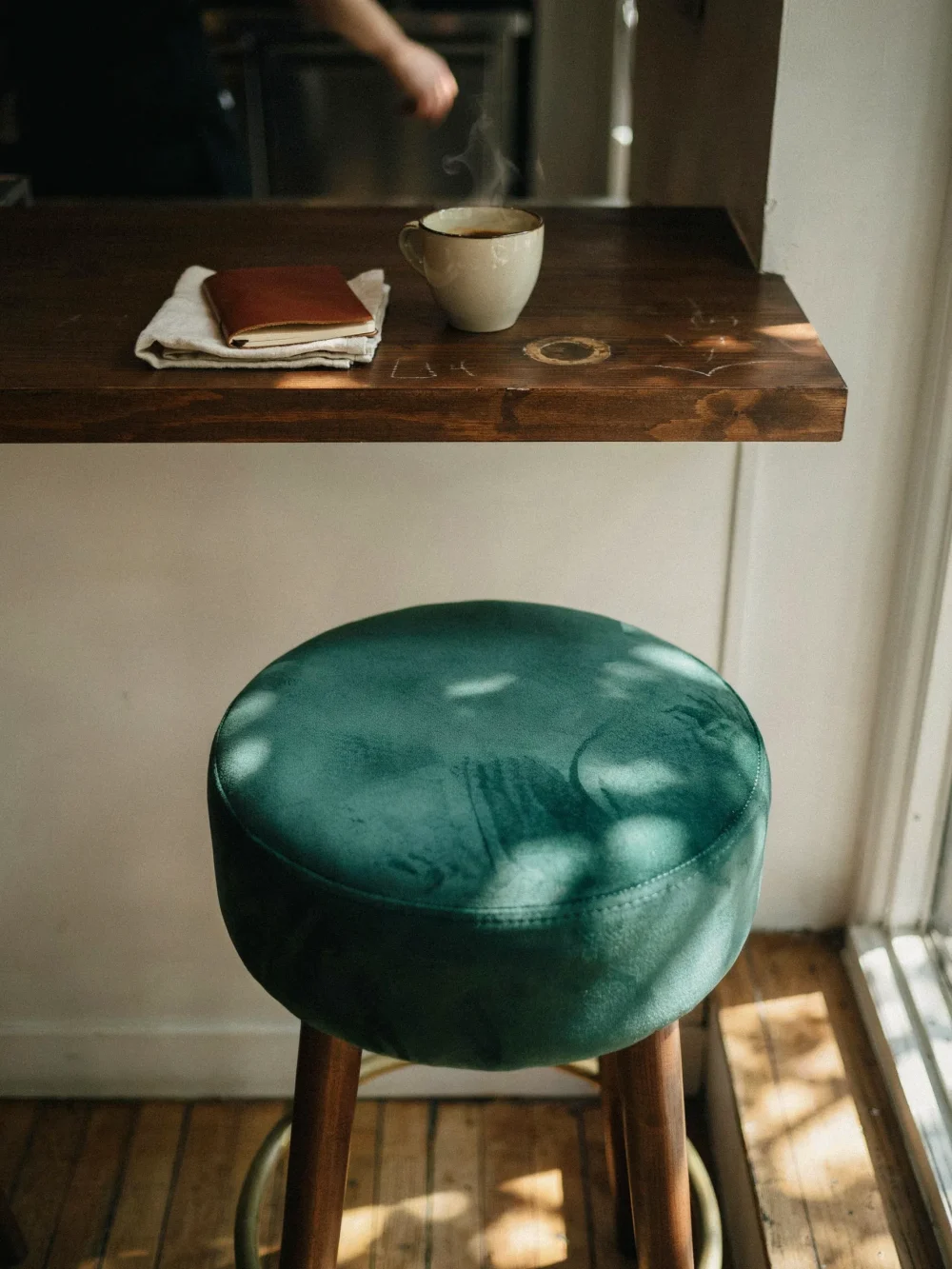
If your coffee station has any counter height surface, a single velvet upholstered stool in deep emerald, plum, or charcoal completes the cafe illusion better than almost any other single addition. Turned wood legs in walnut or ebony finish keep it period-appropriate. One stool reads as intentional and intimate; two starts to look like a breakfast bar rather than a moody espresso corner.
Advanced Details for a Truly Sophisticated Moody Coffee Bar
These are the finishing touches that separate a good dark academia setup from one that genuinely stops guests in their tracks.
21. Custom Chalkboard Menu Panel in an Ornate Frame
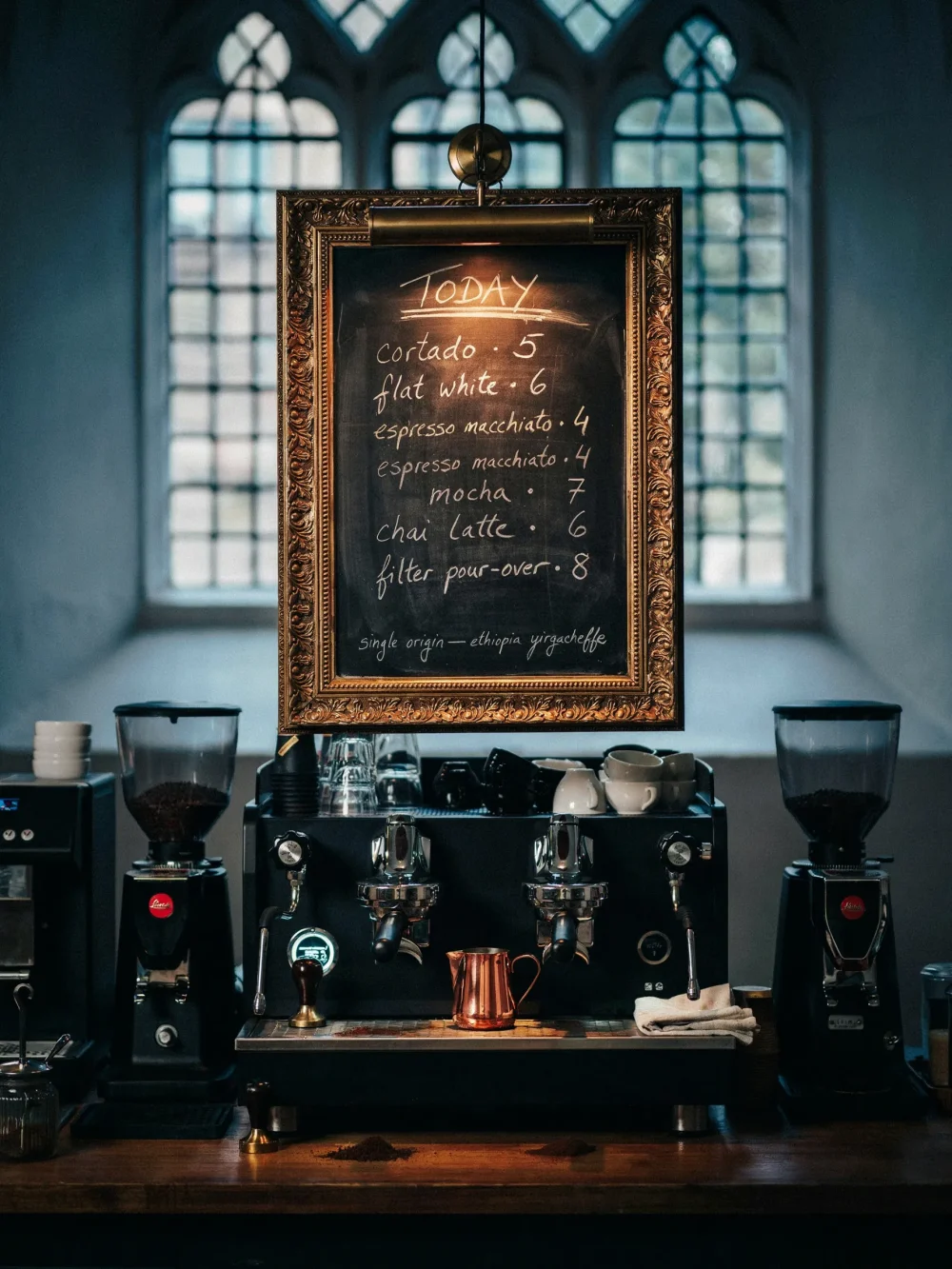
A small chalkboard panel set inside an ornate dark wood or gilded frame and hung above the station with a handwritten drink menu is one of the most charming details you can add to a sophisticated moody coffee bar. Write it in a loose, slightly imperfect hand — not a printed font. The handwriting is what makes it feel human and cafe-authentic rather than Pinterest-staged.
22. Antique Clock as a Functional Display Piece
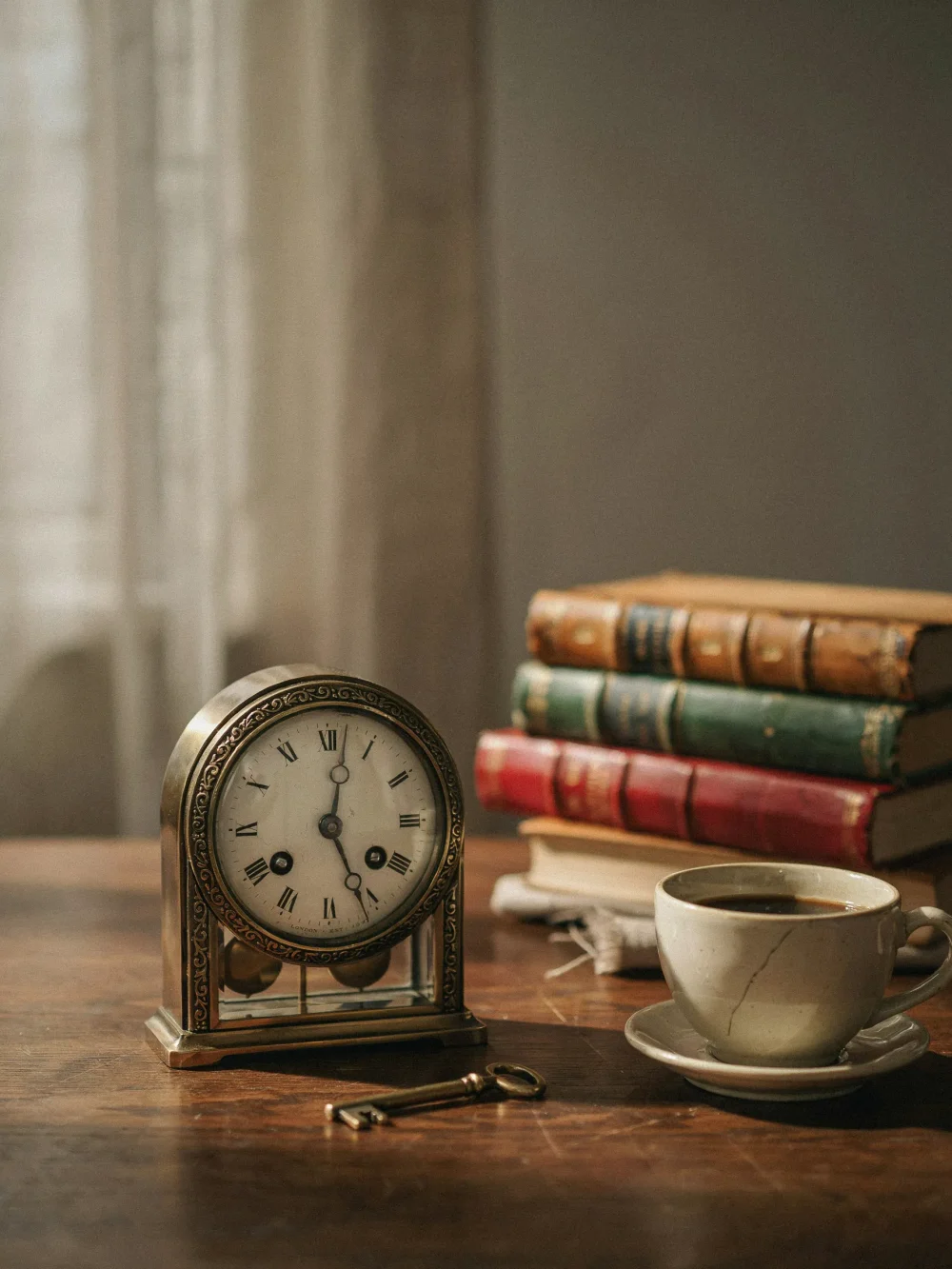
A small antique mantel clock or a dark-framed wall clock with a Roman numeral face adds the kind of quiet gravitas that makes a space feel like it has been here for decades. Brass or oil-rubbed bronze cases work best within this palette. Even a non-working clock is fine — it is the object itself, not the function, that carries the atmosphere.
23. Dark Damask or Toile Wallpaper Panel Behind the Station
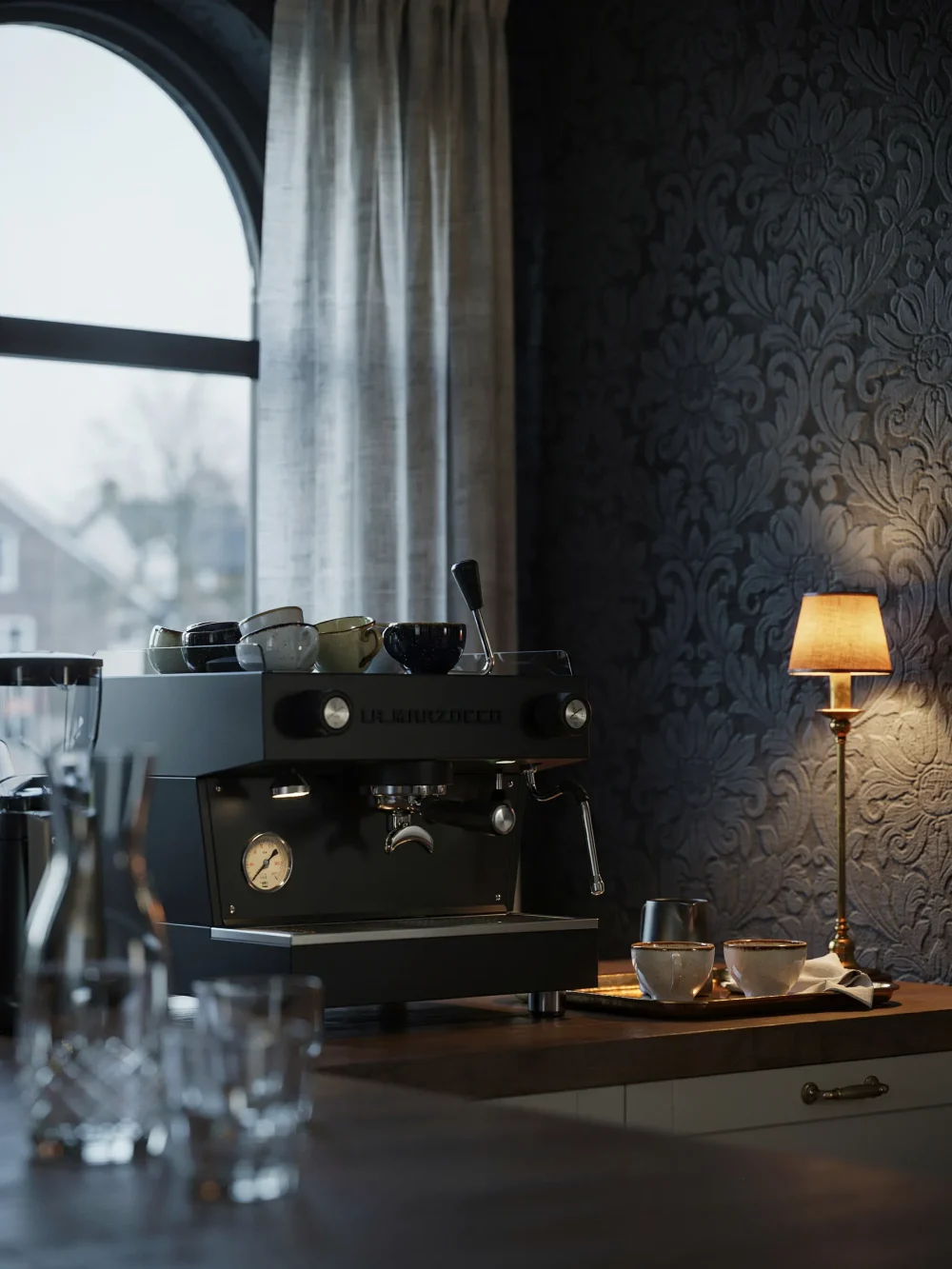
Installing a single panel of dark damask or toile wallpaper as an accent behind your coffee station creates an instant period-room effect without requiring you to paper an entire wall. Deep charcoal on black, burgundy on cream, or forest green on black are the most effective colorways for this aesthetic. Peel-and-stick versions make this completely renter-friendly and surprisingly convincing from a normal viewing distance.
24. Brass Espresso Machine as a Statement Object
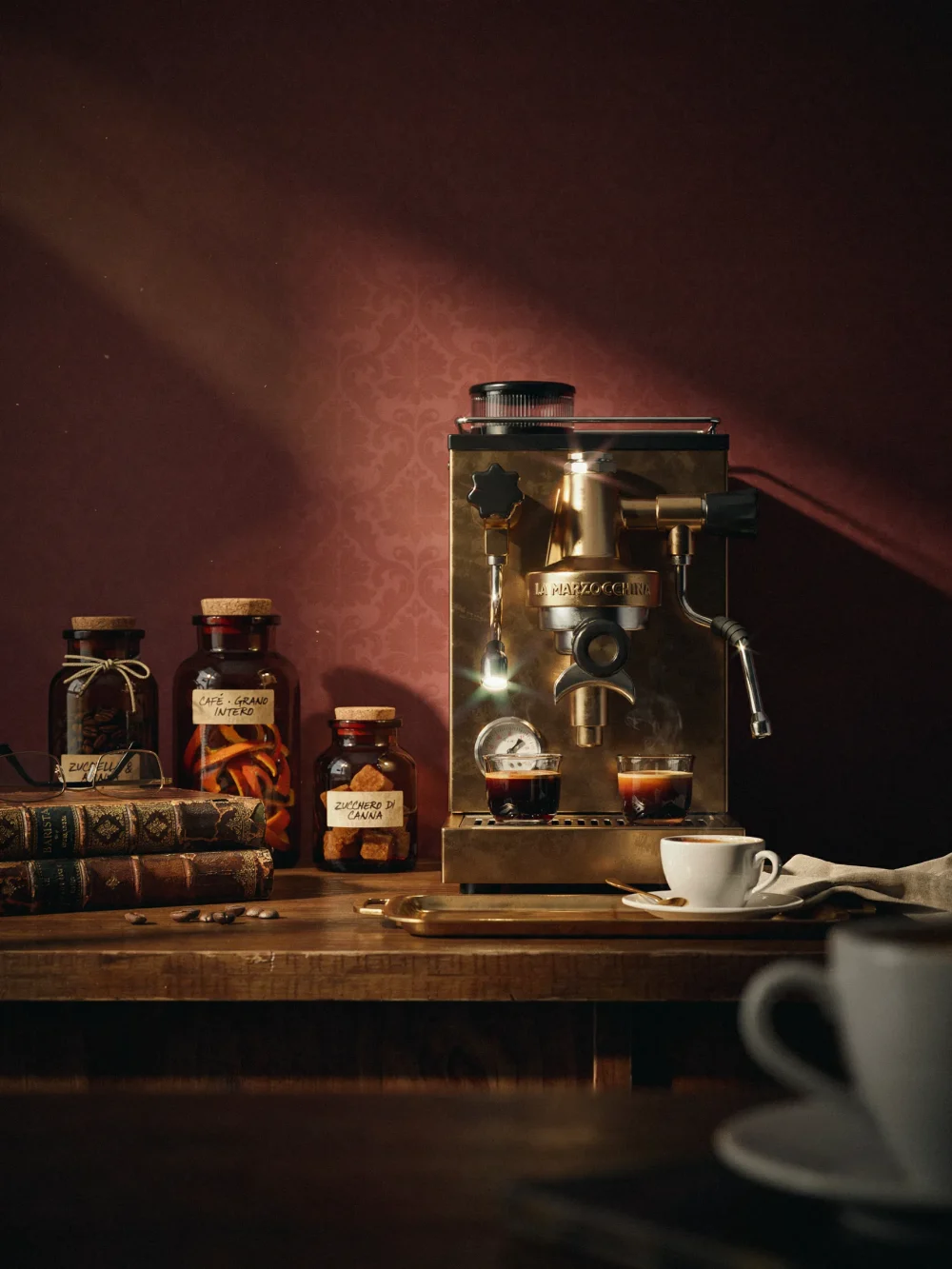
If you are investing in one single piece of equipment, a brass or copper-finished espresso machine does more aesthetic work than any decorative object you could place beside it. The Delonghi La Specialista in a metallic finish or the Smeg espresso machine in cream with brass accents both fit this aesthetic beautifully. This is one case where the appliance is genuinely the centerpiece.
25. Dried Botanicals in a Dark Ceramic Vase
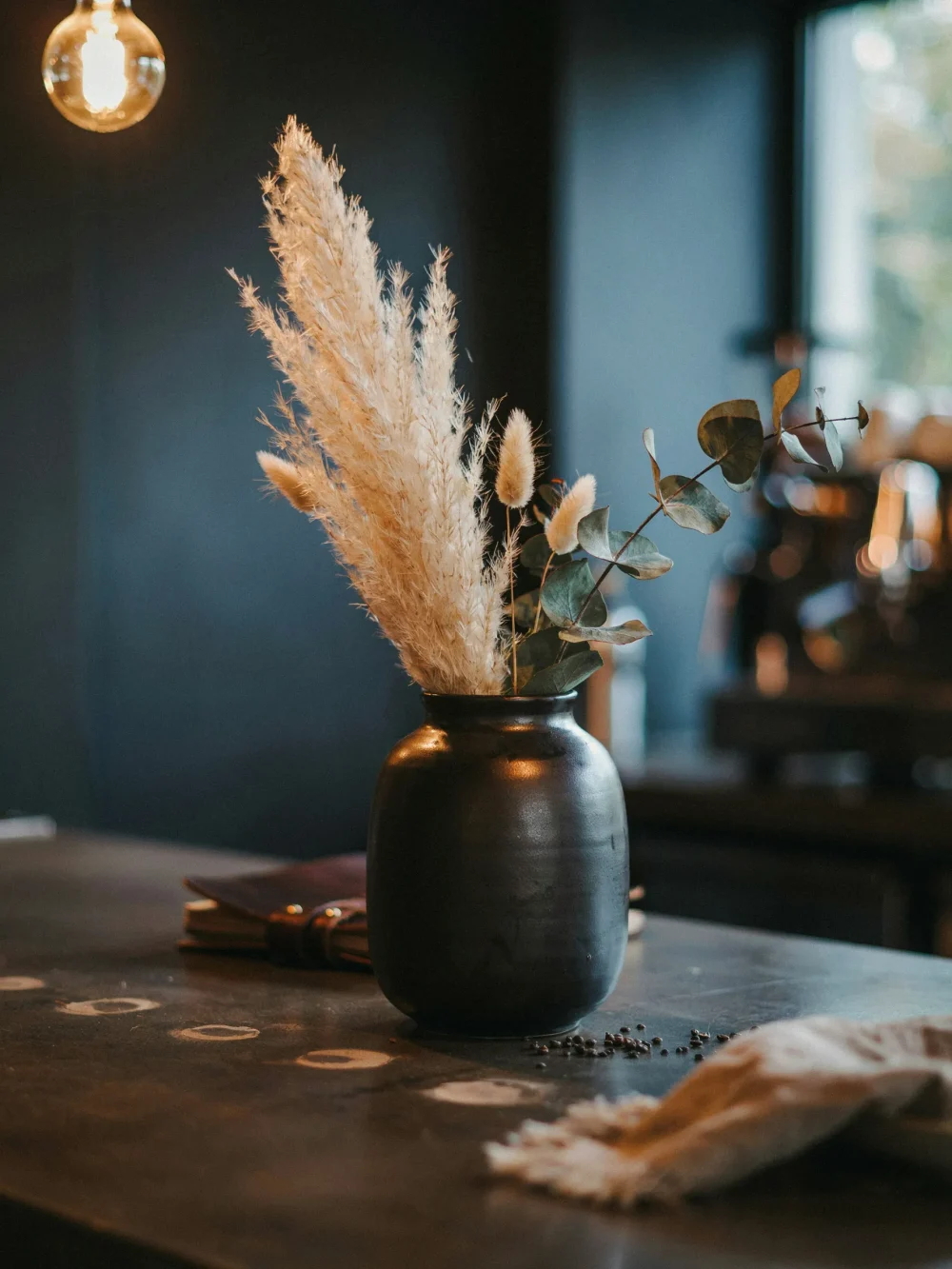
A small arrangement of dried pampas, eucalyptus, or black-dyed botanicals in a matte dark ceramic vase adds organic life to the station without the maintenance of fresh flowers. Dried arrangements also photograph beautifully under warm amber light because the textures catch the shadows. Keep the arrangement loose and slightly imperfect — over-arranged dried florals look like a craft project rather than a found object.
26. Glass Cloche Over a Small Decorative Object
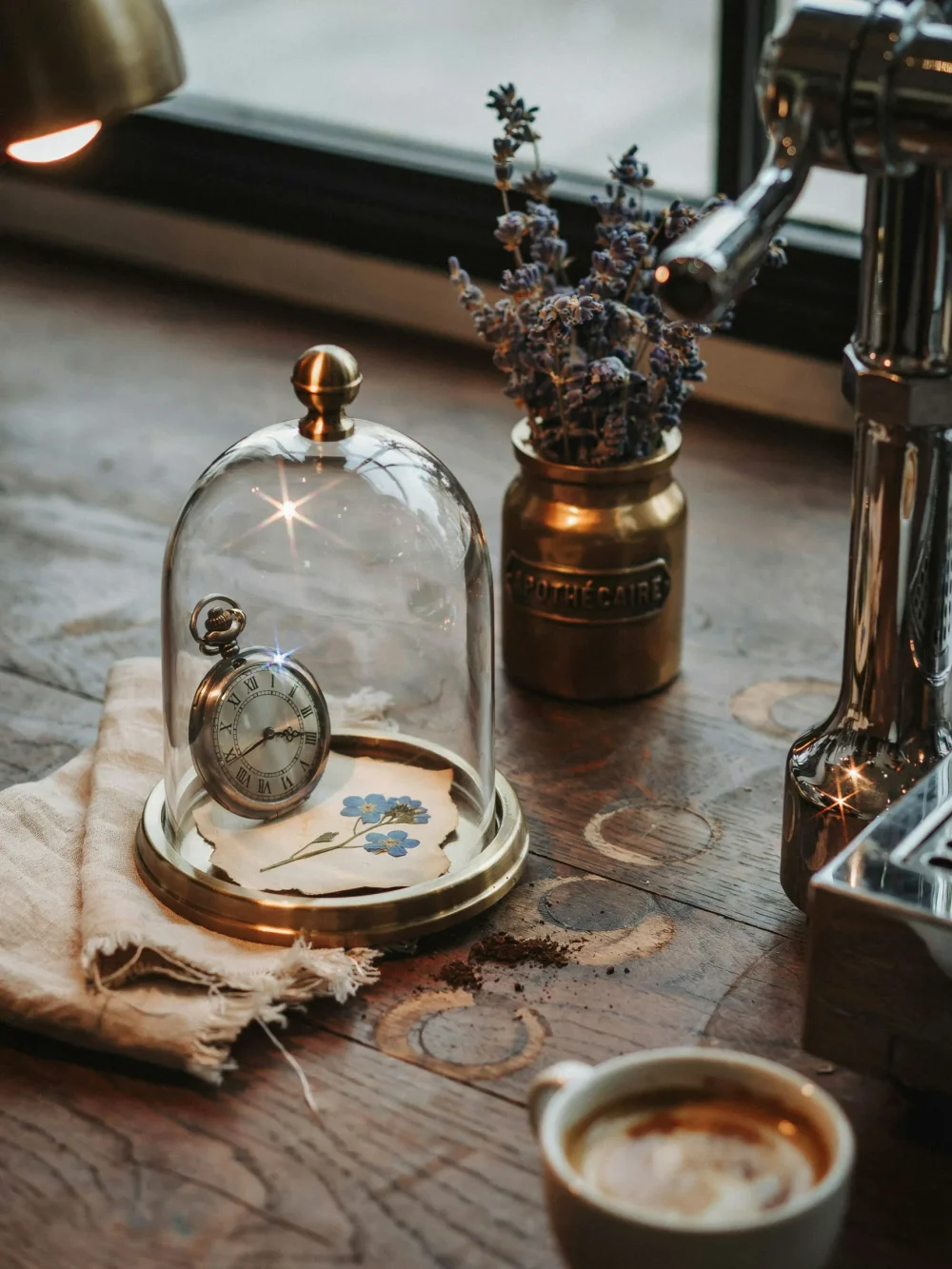
Placing a glass cloche over a small skull, a pocket watch, a single flower, or a stack of tiny antique books adds a Victorian apothecary quality that is deeply on-theme for this aesthetic. The cloche creates a miniature world within your coffee station that draws the eye and invites closer inspection. This is one of the most inexpensive ways to add a genuinely high-end curatorial feeling to the space.
27. Dark Academia Inspired Coffee Menu Print
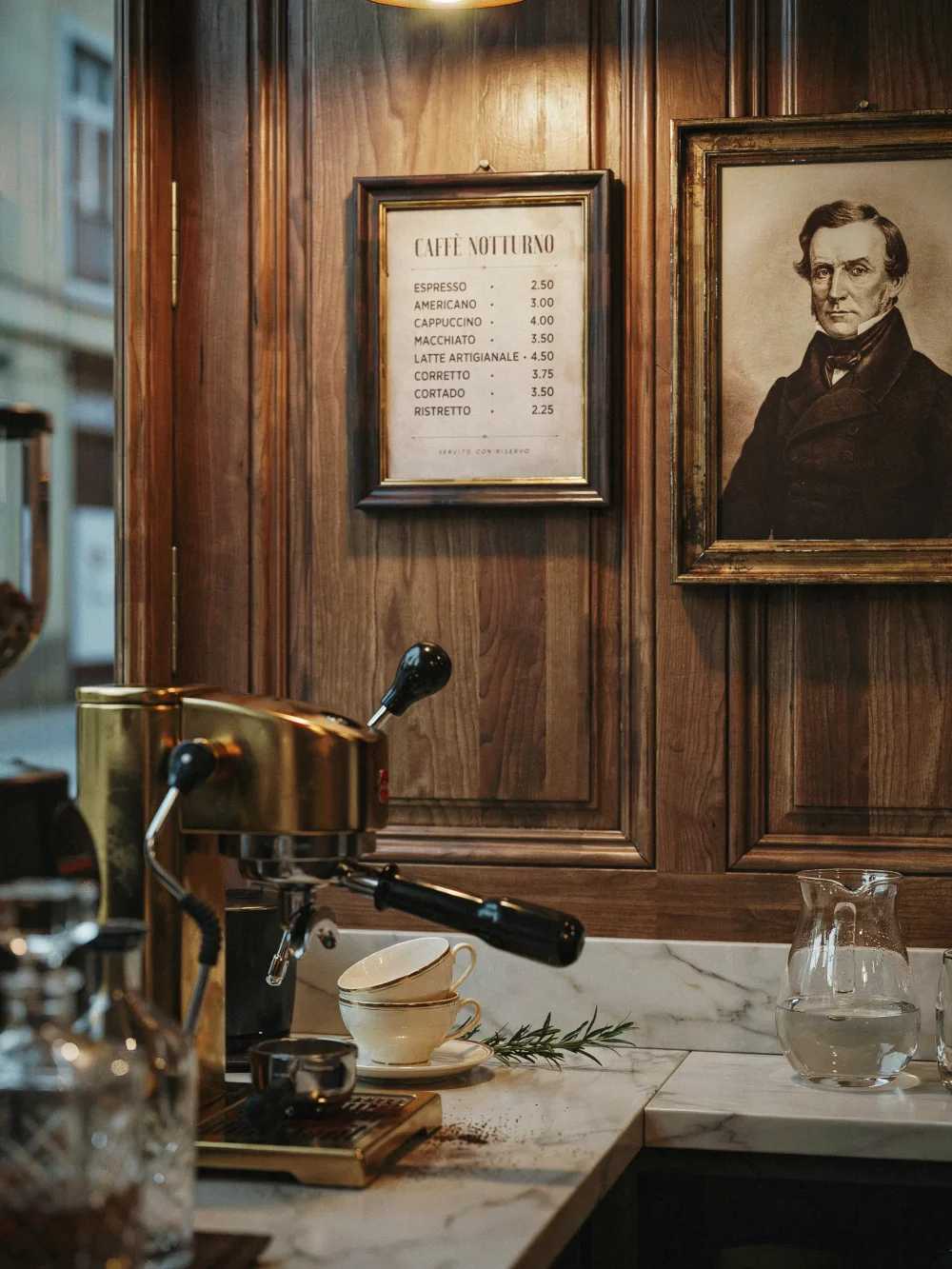
A printed menu card in an aged parchment style — listing your actual drinks in an old-world serif font — framed in a small dark wood frame adds a layer of narrative specificity that makes the whole setup feel like a real establishment. You can design one yourself in Canva using aged paper textures and classical typefaces for under two dollars to print. The specificity of a real menu, even a small one, is what makes guests feel like they have walked into somewhere rather than just looked at something.
28. Integrating a Small Library Ladder on Rail
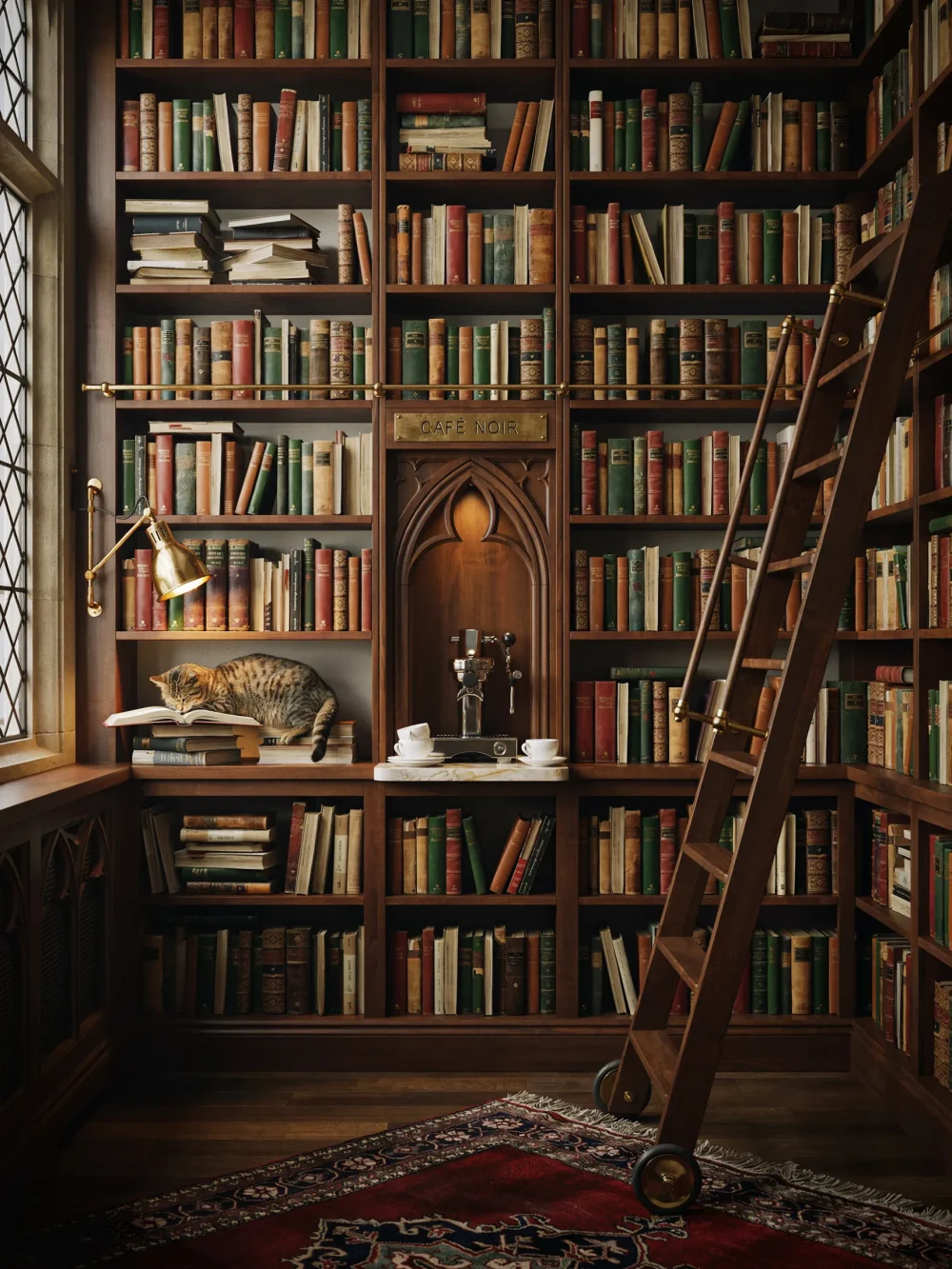
If your coffee station is part of a larger built-in or bookshelf wall, a small rolling library ladder on a brass rail is the single most dramatic detail you can add to achieve a true antique library style coffee bar. Even a short decorative ladder leaned against the shelving creates the visual reference without requiring installation. This detail photographs so well it almost feels unfair to the rest of the room.
29. Layered Rugs on Stone or Dark Wood Flooring
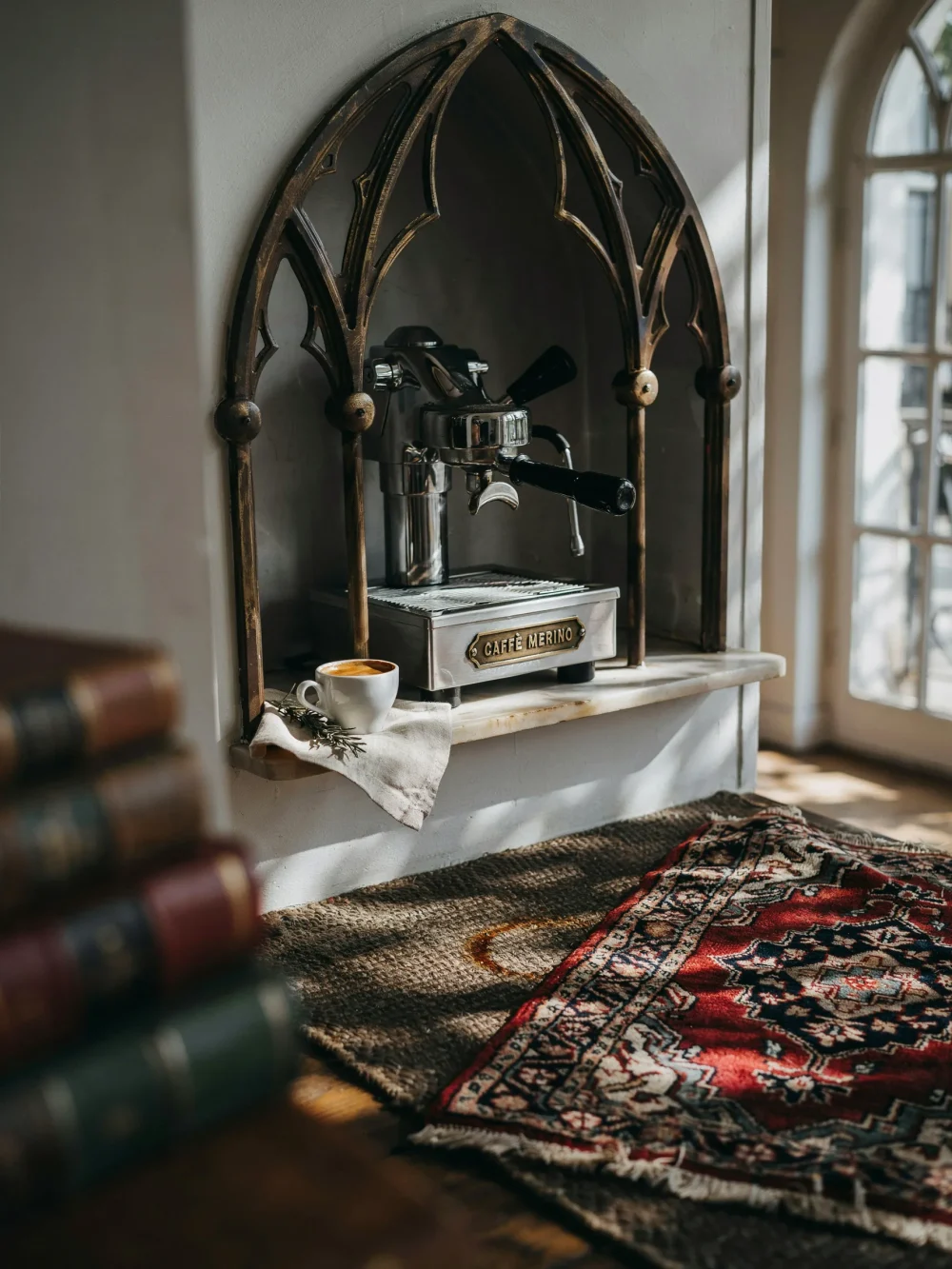
Layering a small Persian or kilim rug over a larger dark jute or sisal rug in front of your coffee station grounds the whole vignette and adds the kind of underfoot warmth that European cafes always seem to have. Look for rugs with deep jewel tones — burgundy, navy, forest green — or faded antique patterns. The rug signals that this is a destination within the room, not just a counter.
30. A Dedicated Espresso Nook in the Master Bedroom
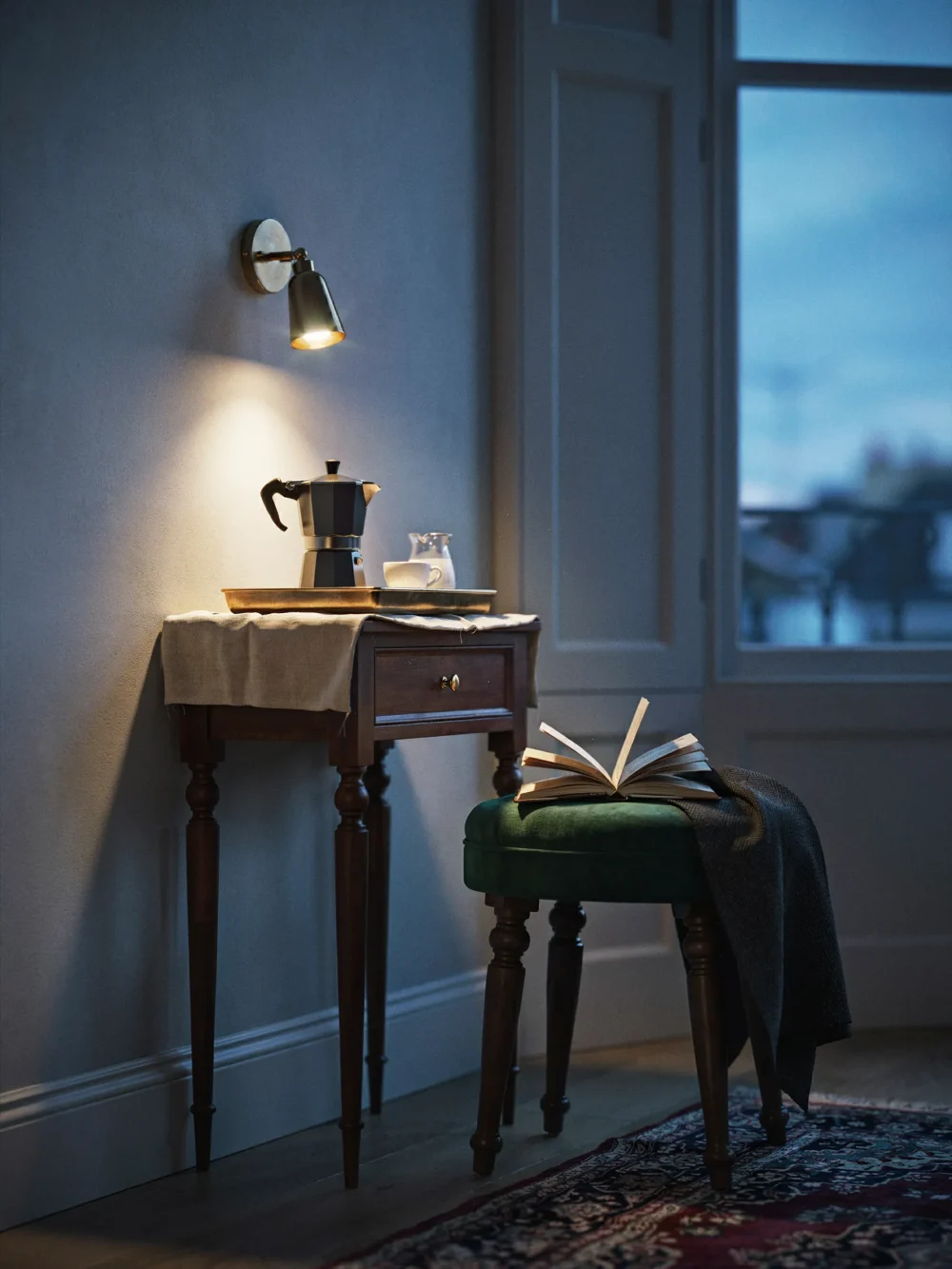
Carving out a dedicated luxury dark academia master bedroom coffee and espresso station in a bedroom corner — with a small dark cabinet, a brass tray, an espresso machine, and a single sconce above — creates the most private and atmospheric version of this entire aesthetic. This setup pairs beautifully with layered bedroom design concepts that prioritize calm and intentional living. A bedroom espresso corner is not an indulgence — it is the most honest version of what dark academia is actually about: solitude, ritual, and beauty in the ordinary.
Your Practical Guide to Building This Aesthetic Without Losing Your Mind
If you are staring at your current coffee corner right now feeling overwhelmed, start with just one surface and one light source. Pick the shelf or counter where your espresso machine already lives, swap any overhead bright light for a single warm-toned bulb or plug-in sconce, and place three objects of varying height beside the machine. That is your foundation. Everything else is layered on top of that over time — this aesthetic actually improves with gradual accumulation rather than a single shopping trip.
Renters have more options here than they think. Plug-in sconces with cord covers, peel-and-stick wallpaper panels, freestanding open shelving, and removable cup hooks all work without a single drill hole. The right mirror placement can also add depth and drama to a small coffee corner without any permanent installation. The only thing you genuinely cannot do as a renter is paint the alcove — and for that, a large dark-framed piece of art or a wallpaper panel does most of the same visual work.
Budget-wise, this is one of the most thrift-store-friendly aesthetics in interior design. Estate sales, antique markets, and secondhand apps are full of exactly the objects this style needs — tarnished brass trays, leather books, old frames, pewter pieces — because they are overlooked by people shopping for modern minimalist homes. A full dark academia coffee station setup can cost under sixty dollars in objects if you are patient and shop secondhand. The right furniture sources can also help you find statement pieces at accessible price points.
The mistake beginners consistently make is buying everything in the same finish. All matte black, or all antique brass, or all dark wood — and the result looks like a themed display rather than a lived-in space. Mix your metals deliberately: unlacquered brass beside oil-rubbed bronze beside a single silver piece. Mix your textures: smooth glass beside rough leather beside polished wood. The contrast is what creates the sense of depth and history. If everything matches perfectly, it reads as a store display, not a home.
To make it look intentional rather than random, the rule is simple: every object needs a reason to be there. Not a functional reason — an aesthetic one. Ask yourself whether each piece adds warmth, texture, height, or narrative. If it does none of those four things, it does not earn its place on the counter. The most sophisticated moody coffee bars you will ever see are actually quite edited — they just contain objects that are individually so interesting that the space feels full even when it is spare. For more inspiration on creating rooms that feel both bold and deeply personal, the bold interior design ideas collection is worth a long browse.
Start today by doing one specific thing: go find the warmest light bulb in your home — the most amber, lowest wattage one you own — and put it in whatever fixture is closest to your coffee station. Just that one change will show you immediately what direction you are heading. The rest follows naturally once you can see the potential in the warm light. And honestly, once you have made your morning espresso in that kind of glow, surrounded by a few objects that feel like they have stories, you will never want a bright white kitchen counter again. That is the real magic of a dark academia coffee station — it does not just look beautiful. It makes the ritual feel like it matters. You can also draw seasonal inspiration from atmospheric chandelier and lighting ideas and even rustic outdoor decor concepts when thinking about how texture and natural materials translate indoors.

