20 Rustic Wall Sconce Ideas That Will Instantly Make Your Living Room Feel Cozy
You know that feeling when you walk into someone’s living room and immediately want to sit down, take your shoes off, and never leave? Nine times out of ten, it’s the lighting doing that work — specifically the warm, layered glow of well-placed wall sconces. I spent two years living with one harsh overhead light in my living room, wondering why the space never felt right despite all the throw pillows and vintage rugs I kept adding. The answer was always the same: farmhouse sconce lighting was the missing layer I kept ignoring.
The Honest Mistake I Made With My Own Sconces
I bought two beautiful matte black gooseneck sconces, hung them on either side of my fireplace, and felt incredibly proud of myself for about four days. Then I noticed something off — they were mounted at eye level when standing, which meant every time I sat on the sofa, I was staring directly into the bare Edison bulbs. The glare was constant and genuinely uncomfortable. I had completely skipped the step of sitting in my actual furniture before marking the wall.
The single biggest lesson: always sit in your sofa before you mark your mounting height. Sconces should sit roughly 60 to 66 inches from the floor in most living rooms, but that number shifts depending on your ceiling height, your furniture scale, and where your eyes land when you’re actually relaxing. I had to patch and repaint before re-hanging — a very avoidable afternoon of frustration that I want to save you from entirely.
Classic Farmhouse Sconce Lighting Styles That Never Go Out of Fashion
These are the foundational looks — the ones that work in almost every living room and age beautifully over time.
1. The Matte Black Barn Light With a Dome Shade
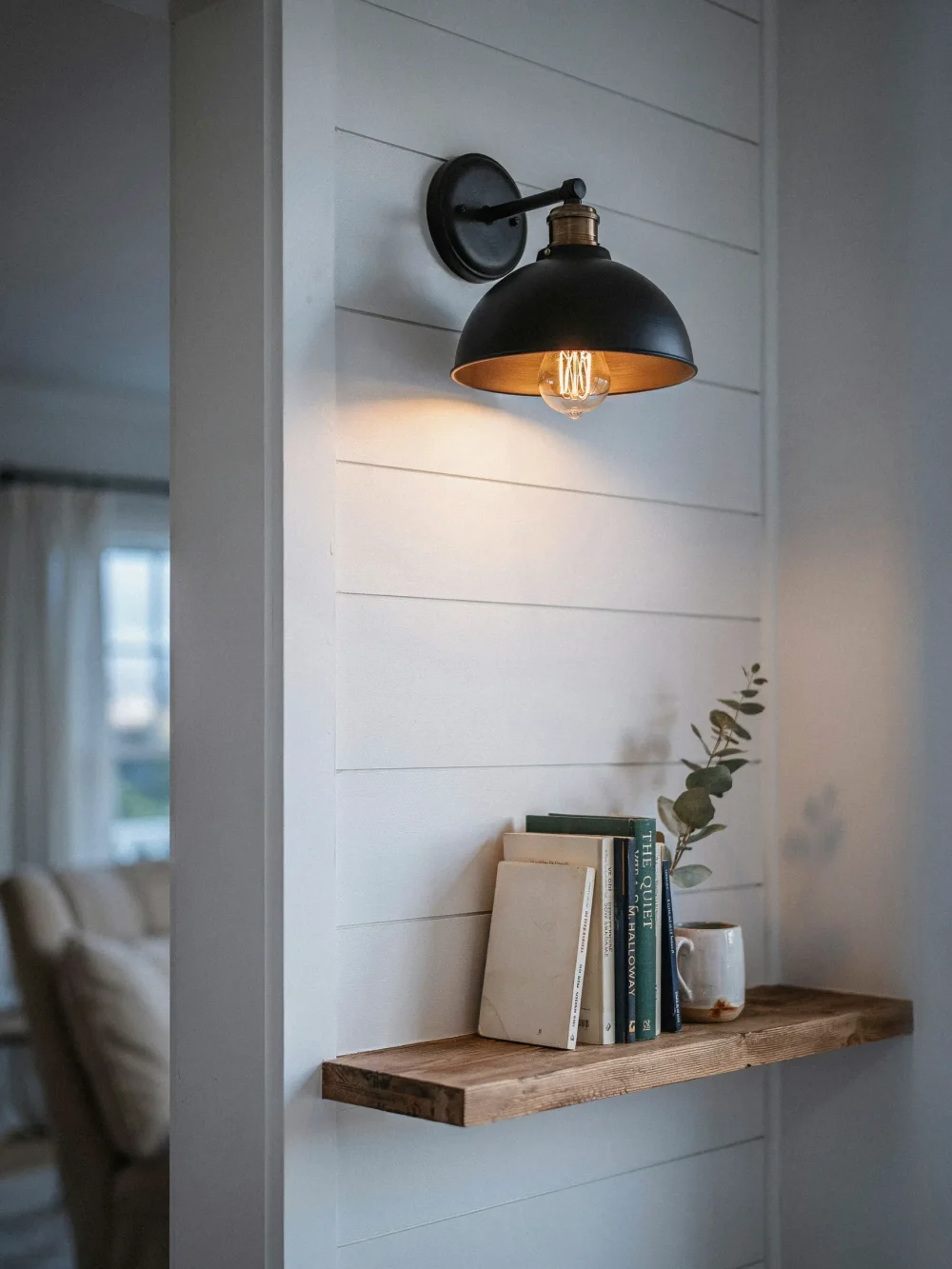
This is the workhorse of rustic wall light fixture ideas — a simple dome-shaped shade on a straight arm, finished in matte black, that reads as both industrial and farmhouse at once. Pair it with a warm 2700K Edison filament bulb and it throws the most flattering amber glow onto a shiplap or board-and-batten wall. If you’re only ever going to try one sconce style, this is the one.
2. Seeded Glass Globe Sconces in Oil Rubbed Bronze
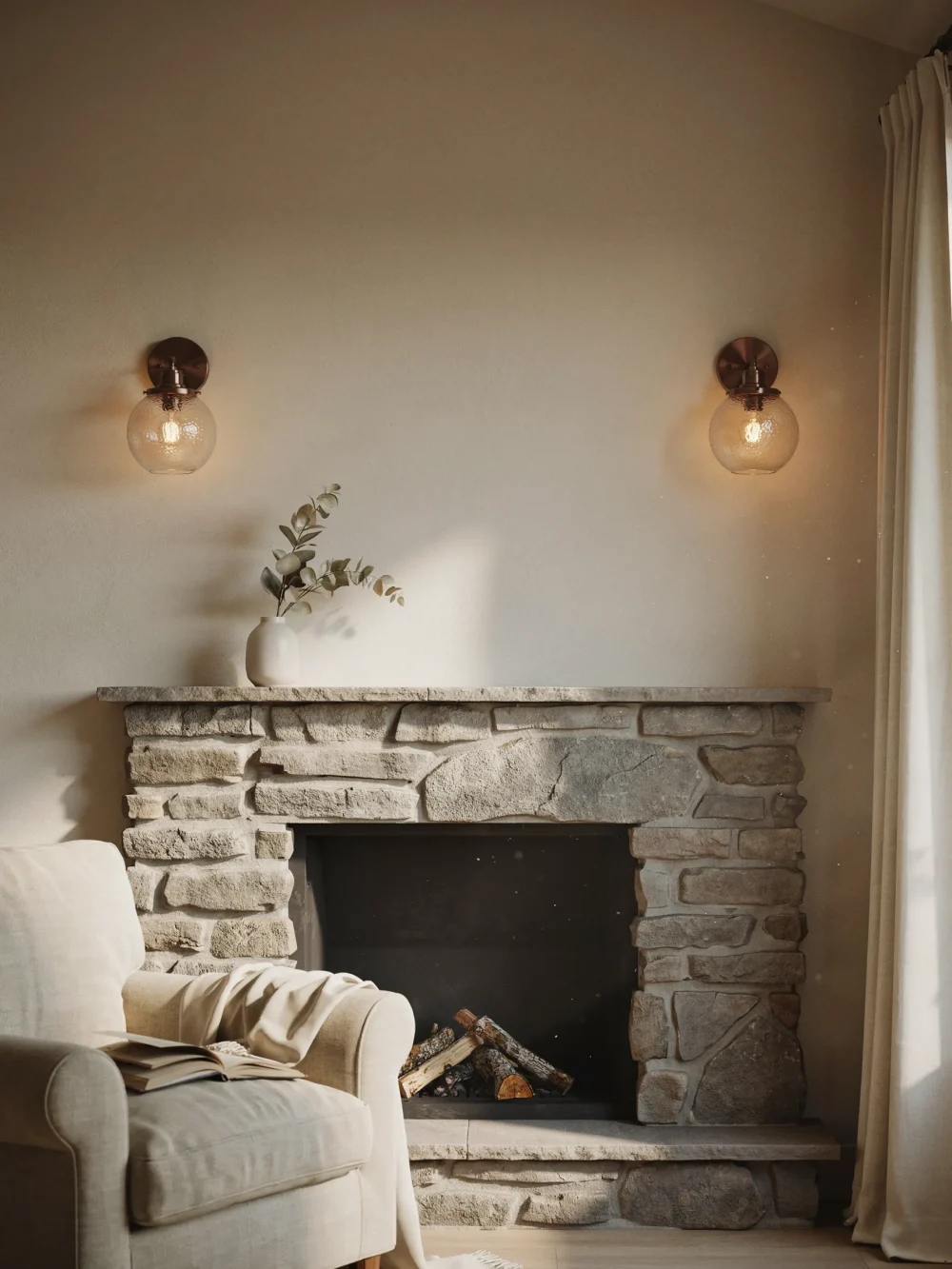
Seeded glass shade sconces add texture even when the light is off — the tiny bubbles in the glass catch ambient light and create a quiet visual interest that plain glass simply can’t match. Oil rubbed bronze hardware grounds the look with warmth and pairs naturally with leather sofas, wood beams, and aged brass accents. Don’t mix oil rubbed bronze with cool-toned metals in the same room — it will look unintentional rather than eclectic.
3. Gooseneck Arm Sconces Flanking a Fireplace
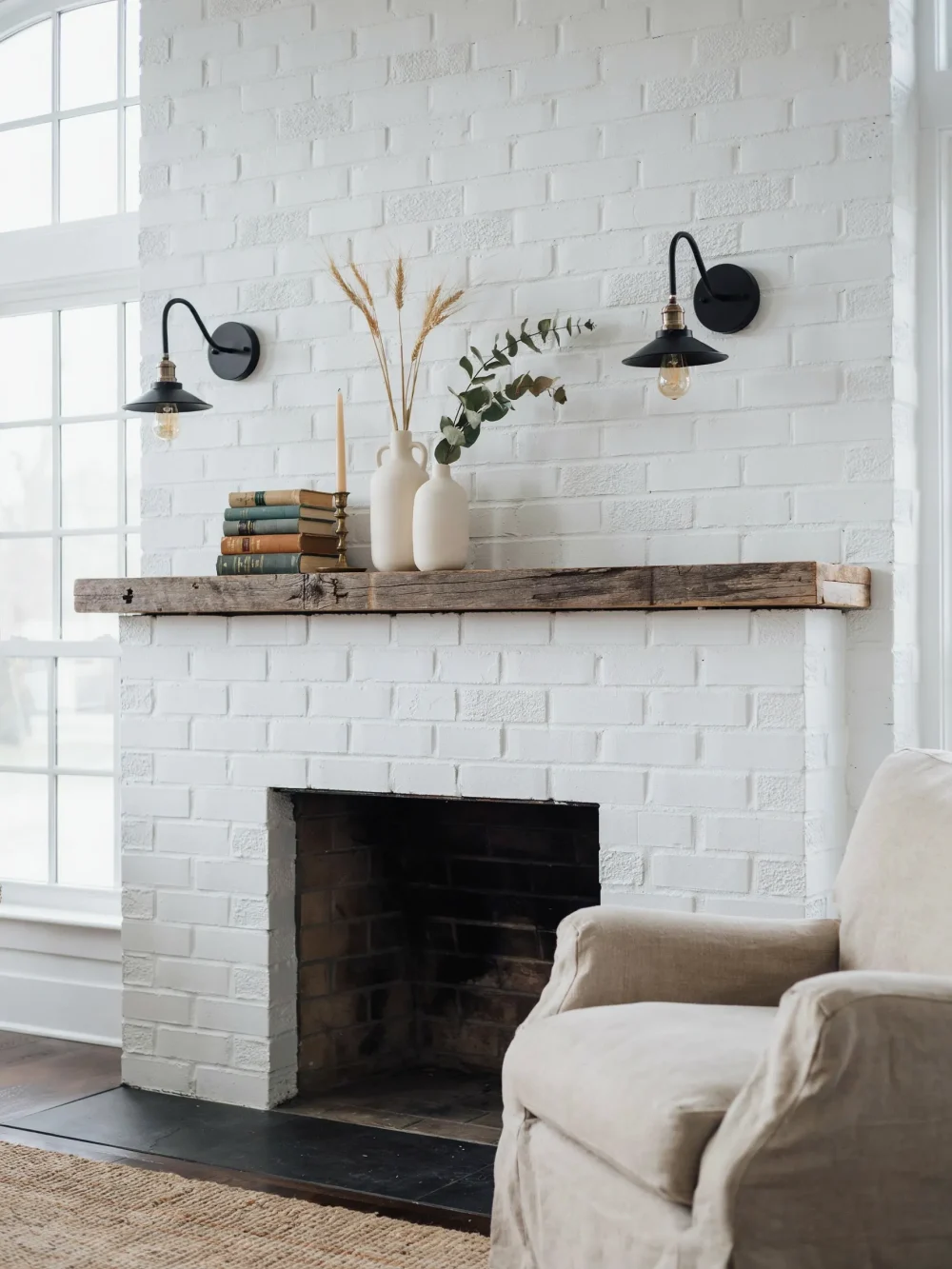
A pair of matte black gooseneck arms on either side of a fireplace is one of the most satisfying symmetrical arrangements in living room fireplace accent lighting. The curved arm adds movement and a slightly industrial edge that softens the rigidity of a symmetrical layout. Mount them at 62 inches from the floor if your mantel sits at the standard 54-inch height — they’ll frame the fireplace without competing with it.
4. Cage-Style Sconces With Edison Filament Bulbs
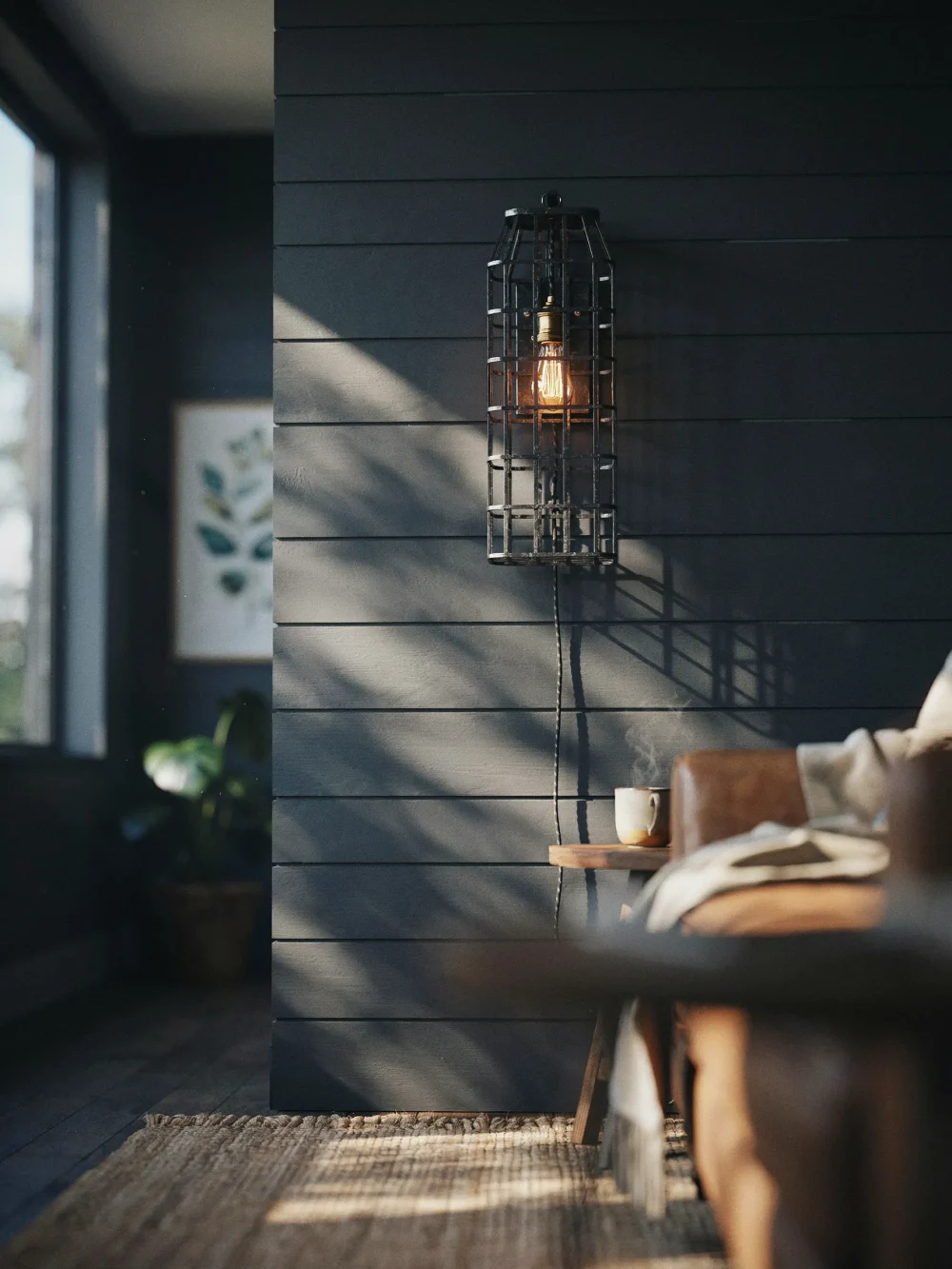
Open metal cage sconces let the Edison style filament bulbs become the visual feature, which means the fixture itself can be quite minimal without the room feeling bare. These work especially well in industrial farmhouse wall fixture arrangements where you want raw, honest materials — exposed wire, dark metal, visible bulb. Use a bulb no brighter than 40 watts equivalent or the exposed filament will feel harsh rather than cozy.
Modern Farmhouse Sconce Pairings That Feel Current, Not Trendy
These ideas blend the warmth of rustic style with cleaner lines — perfect if your living room leans more contemporary than cottagey.
5. Black Metal Barn Light Sconces Over Open Shelving
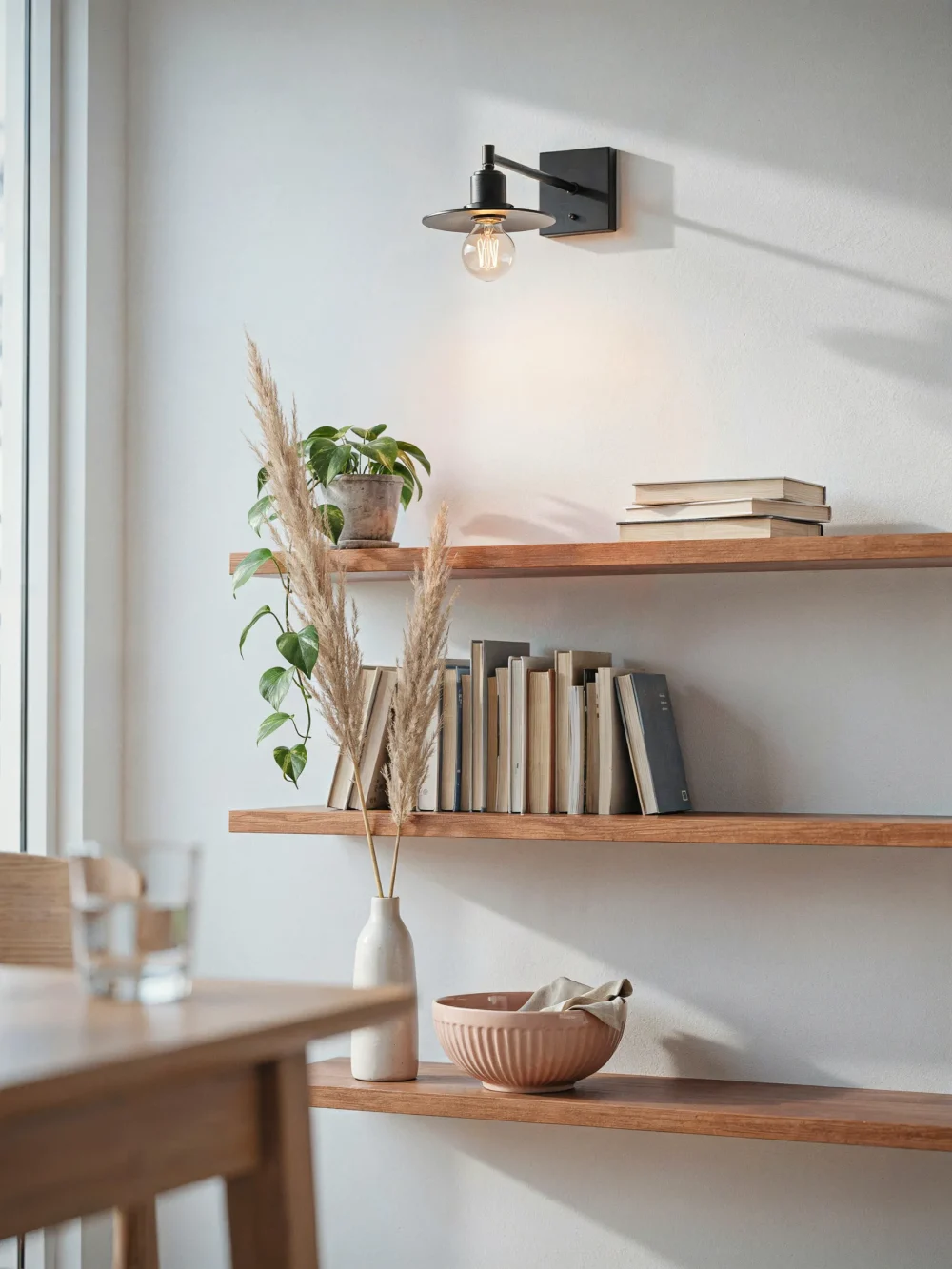
Styling rustic barn light wall sconces over open living room shelves is one of the smartest dual-purpose moves you can make — the light illuminates your shelf display while also functioning as ambient wall lighting. Black metal barn light sconces in a straight-arm configuration sit flush enough to clear shelf brackets without looking forced. This is one of those ideas that looks like you planned it for months even if you decided on it in an afternoon.
6. White Enamel Sconces Against Dark Shiplap
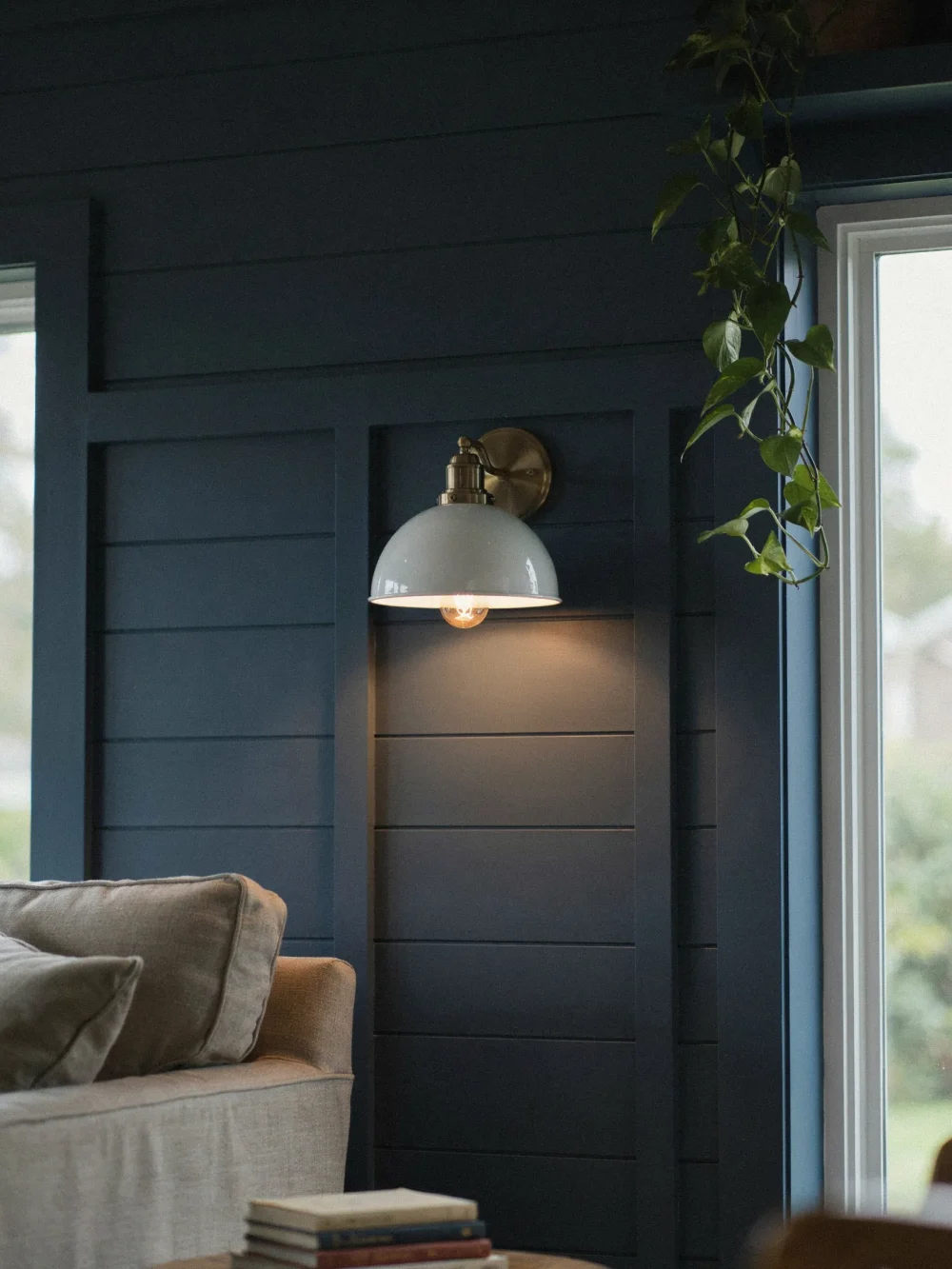
White enamel dome sconces against charcoal or dark navy shiplap create a contrast that feels graphic and intentional — very much in the spirit of modern farmhouse living room sconces done with confidence. The white finish pops cleanly against dark walls without needing any other light source to make the wall interesting. Choose a sconce with a slightly curved shade rather than a perfectly flat dome — it softens the look just enough.
7. Swing Arm Sconces Framing a Large Mirror
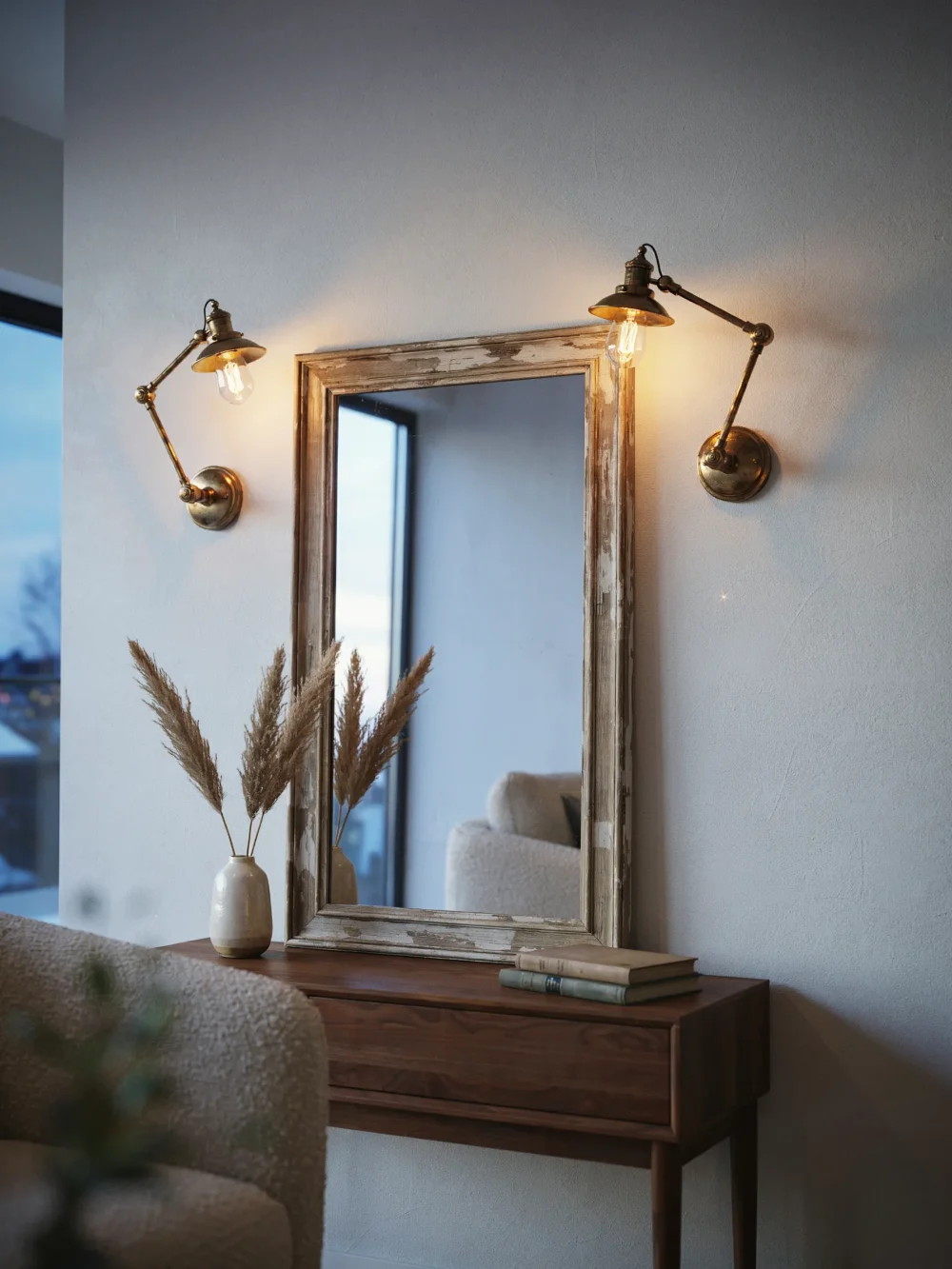
Modern farmhouse sconce lighting ideas to frame a large living room mirror work best when the sconces have swing arms — they let you angle the light toward the mirror’s surface, which bounces warmth back into the room. Brass or antique bronze swing arm sconces feel especially refined when paired with a raw wood or distressed frame mirror. Mount them 28 to 30 inches apart from center to center for a balanced, intentional look that doesn’t crowd the mirror.
8. Transitional Sconces in Brushed Nickel With Linen Shades
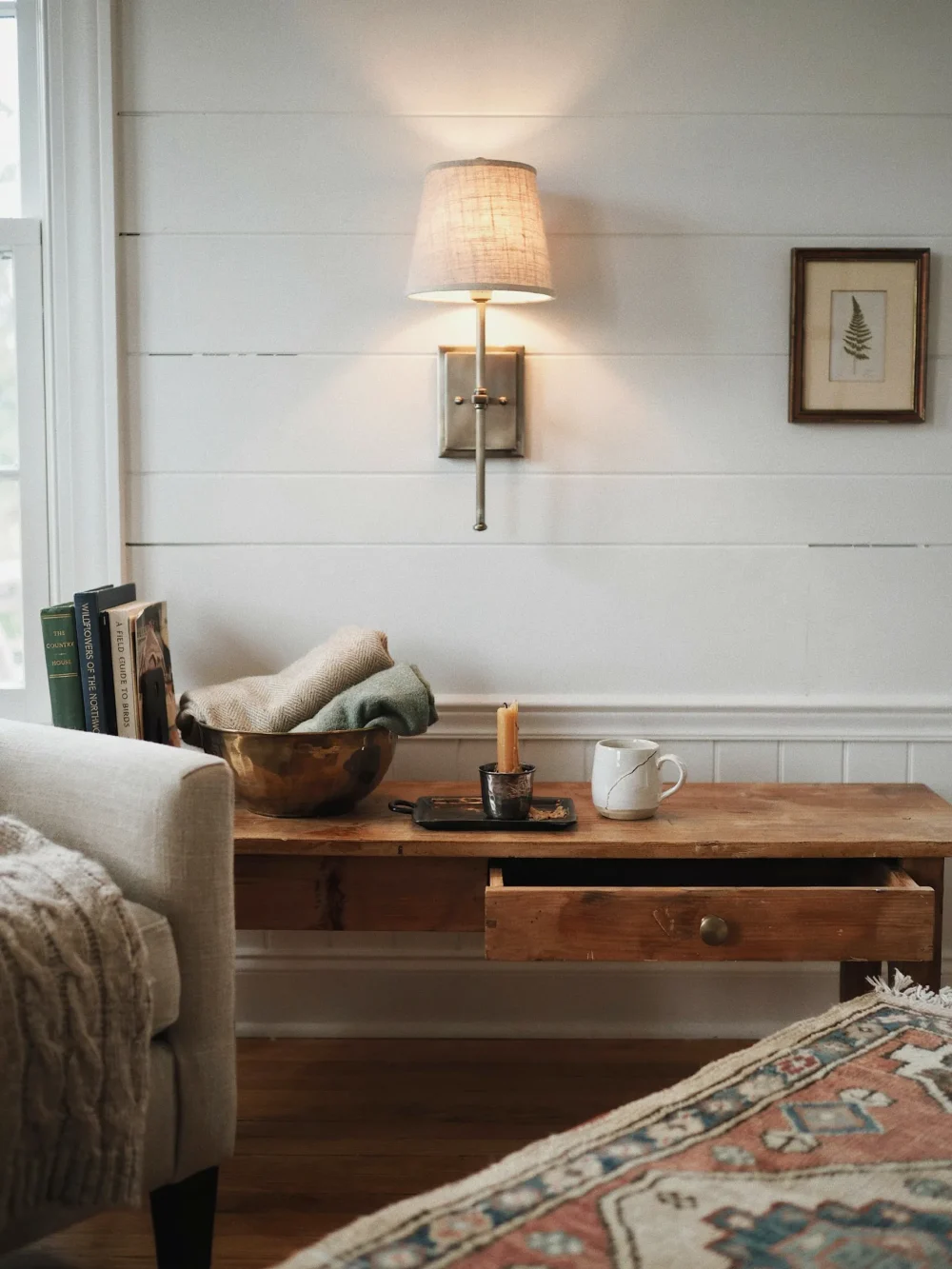
Transitional farmhouse style wall sconces for a cozy living room makeover often land in brushed nickel with fabric shades — it’s a combination that bridges the gap between rustic warmth and modern restraint beautifully. A slightly wrinkled linen shade diffuses light softly and adds texture that a glass shade simply cannot replicate. This is the style I’d recommend if your living room already has a mix of metals and you’re trying to unify without starting over.
Renter-Friendly and Budget-Conscious Sconce Solutions
No wiring, no drilling permission, no problem — these ideas are specifically for people who need flexibility without sacrificing style.
9. Battery Operated Plug-In Sconces With Cord Covers
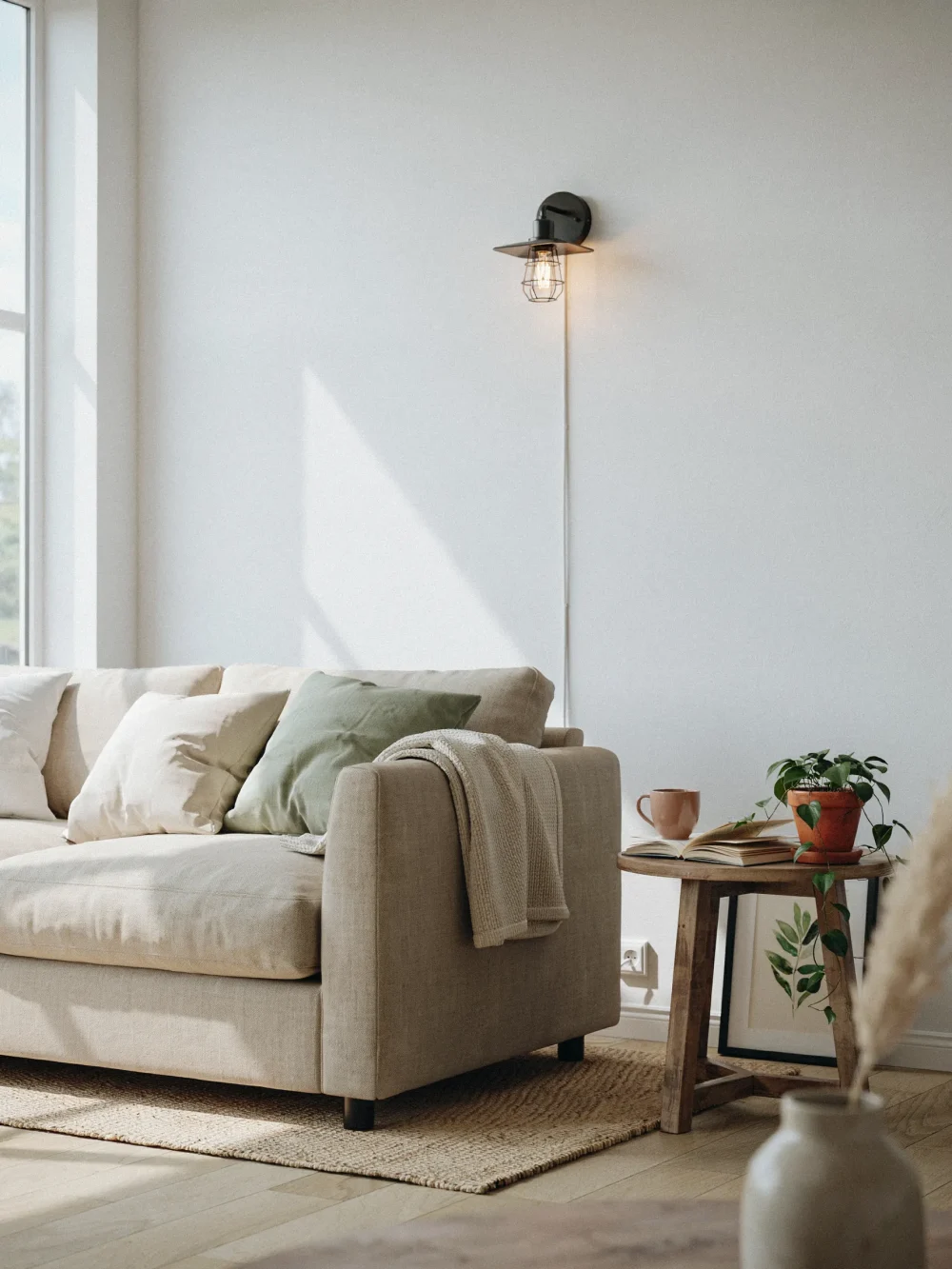
The best cordless battery operated farmhouse wall lights for renter-friendly homes have come a long way — modern versions with remote controls and adjustable brightness settings look nearly identical to hardwired fixtures from across the room. Pair them with a slim cord cover painted to match your wall color and the cord essentially disappears. Look for models with a warm color temperature setting (2700K–3000K) rather than a fixed “warm white” — the adjustability makes a real difference in different times of day.
10. Plug-In Sconces With Decorative Canopy Covers
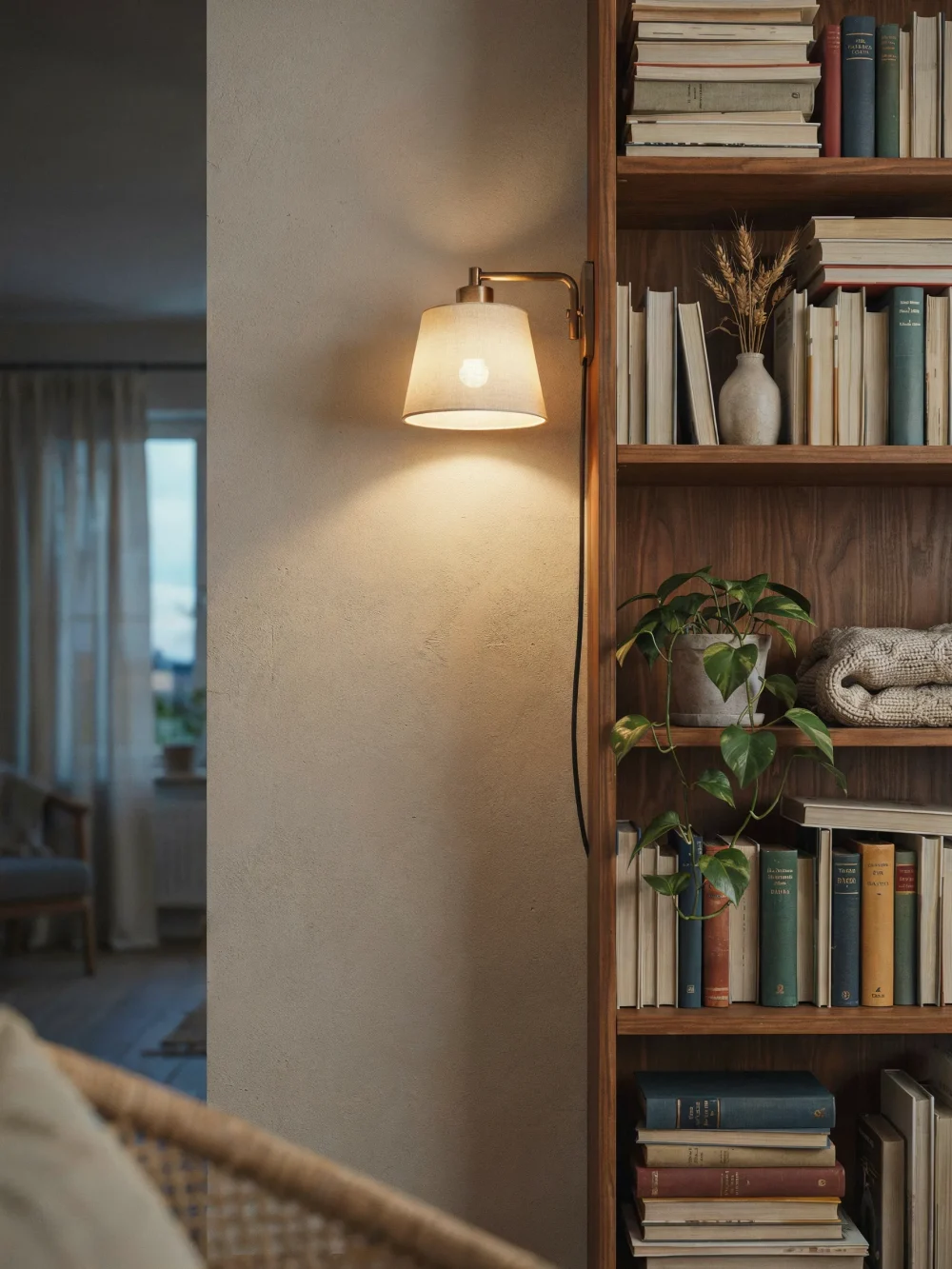
How to hang living room wall sconces without hardwiring on a budget starts with a good plug-in sconce and a canopy cover that hides the cord connection at the wall plate — it creates the illusion of a hardwired installation for under $80 in most cases. Run the cord behind a piece of furniture or down the back of a bookcase for a nearly seamless look. This is genuinely one of the easiest wins in living room lighting and I wish someone had told me about it years earlier.
11. Adhesive-Mounted Battery Sconces for Zero-Damage Walls
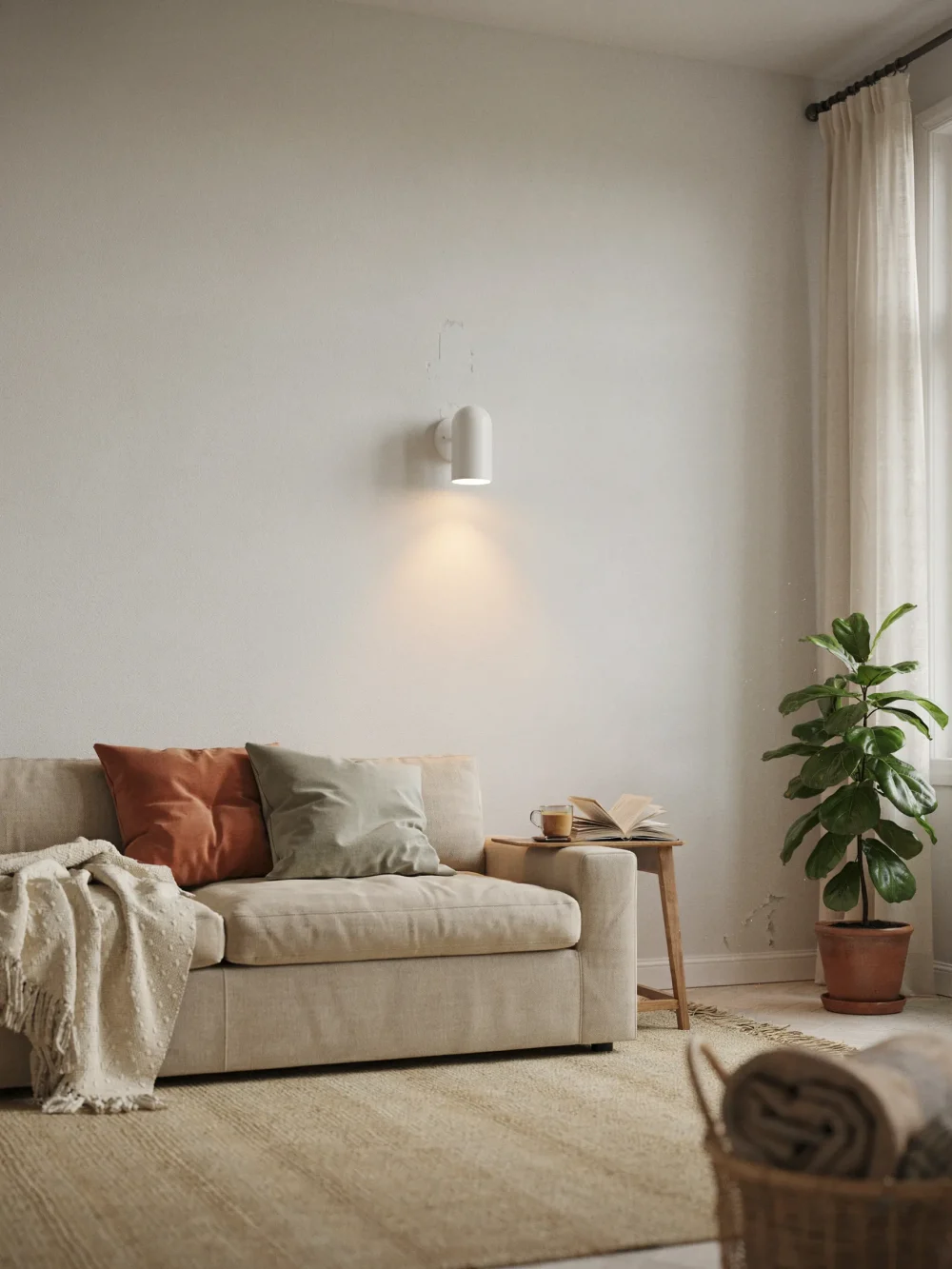
For renters who can’t put a single hole in the wall, adhesive-mounted battery sconces using heavy-duty removable strips are a legitimate option — not a compromise. Choose a fixture that weighs under two pounds and use four adhesive strips instead of two for extra security on textured walls. The warm farmhouse lighting layout still works perfectly; the only thing you’re adjusting is the installation method, not the aesthetic.
What I Wish I’d Known Before I Started
Nobody tells you that the sconce itself is only half the decision. The bulb you put inside it changes everything — the color temperature, the shadow it casts, the mood of the entire wall. I spent months thinking my sconces weren’t working when the real problem was a 5000K daylight bulb I’d accidentally grabbed at the hardware store. Swap it for a 2700K filament bulb and suddenly the same fixture that looked clinical and cold becomes genuinely inviting. Always check the Kelvin number on the box, not just the wattage.
The other thing I didn’t understand until I’d made the mistake twice is that sconces need to be part of a lighting layer, not the whole plan. If your overhead light is still doing all the heavy lifting, your sconces will look like decoration rather than function — and the room will still feel flat. For a more complete approach to layering your living room light sources, the ideas over at CozydreamDecor’s living room lighting guide helped me understand how ambient, task, and accent light actually work together in a real room. It’s worth reading before you buy a single fixture.
Textured and Material-Forward Sconce Ideas
Sometimes the fixture itself is the decor — these ideas lean into material, finish, and form as much as function.
12. Distressed Wood Wall Mount Sconces
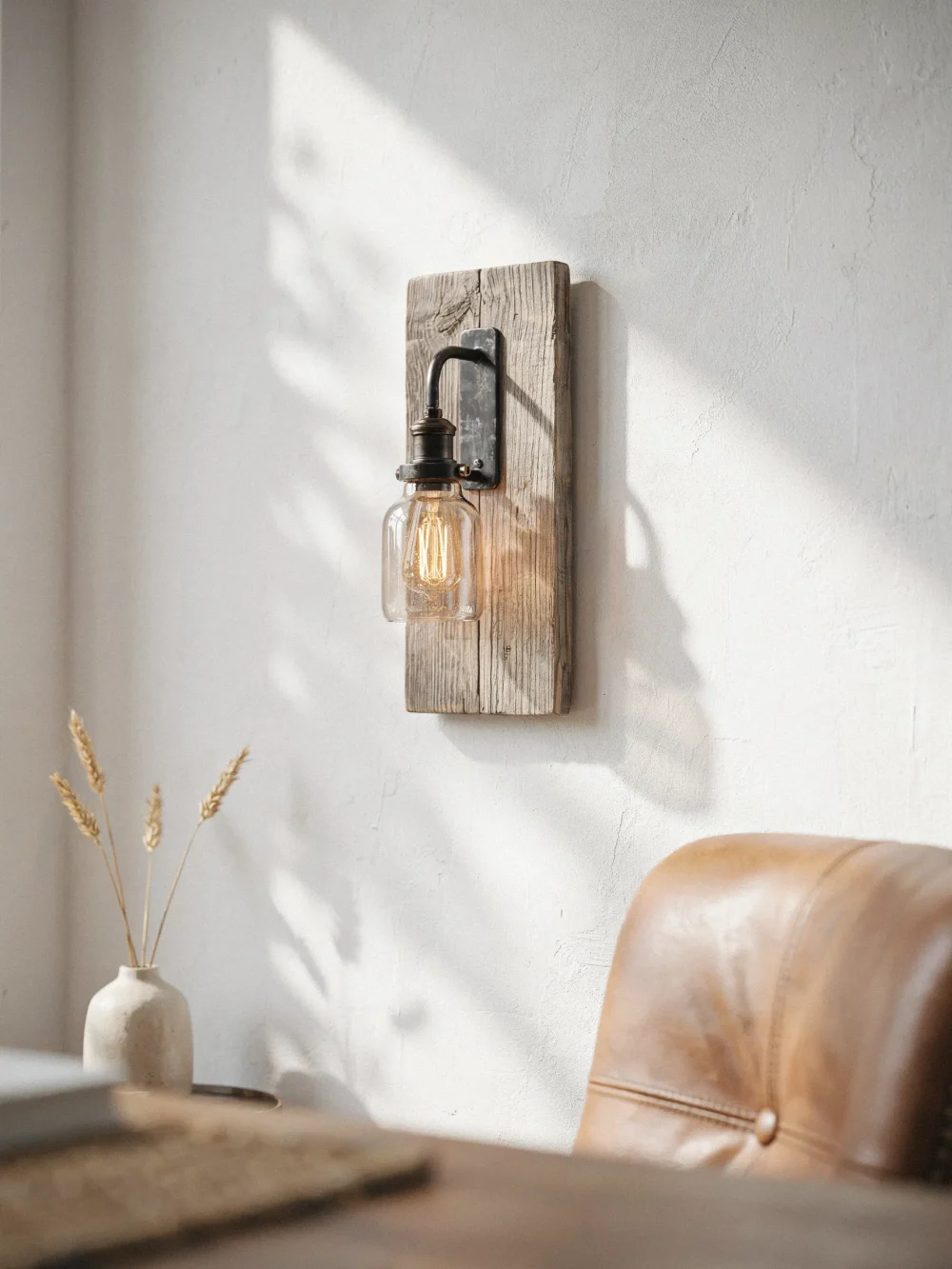
A sconce mounted on a distressed wood backplate adds a layer of rustic material that a metal fixture alone can’t achieve — the wood grain reads as handmade and grounded in a way that feels genuinely cozy rather than styled. Look for reclaimed pine or weathered oak backplates paired with simple iron hardware and a clear glass shade. The wood grain should have visible character — knots, grain variation, slight color inconsistency — otherwise it just looks like a craft store prop.
13. Woven Rattan Shade Sconces
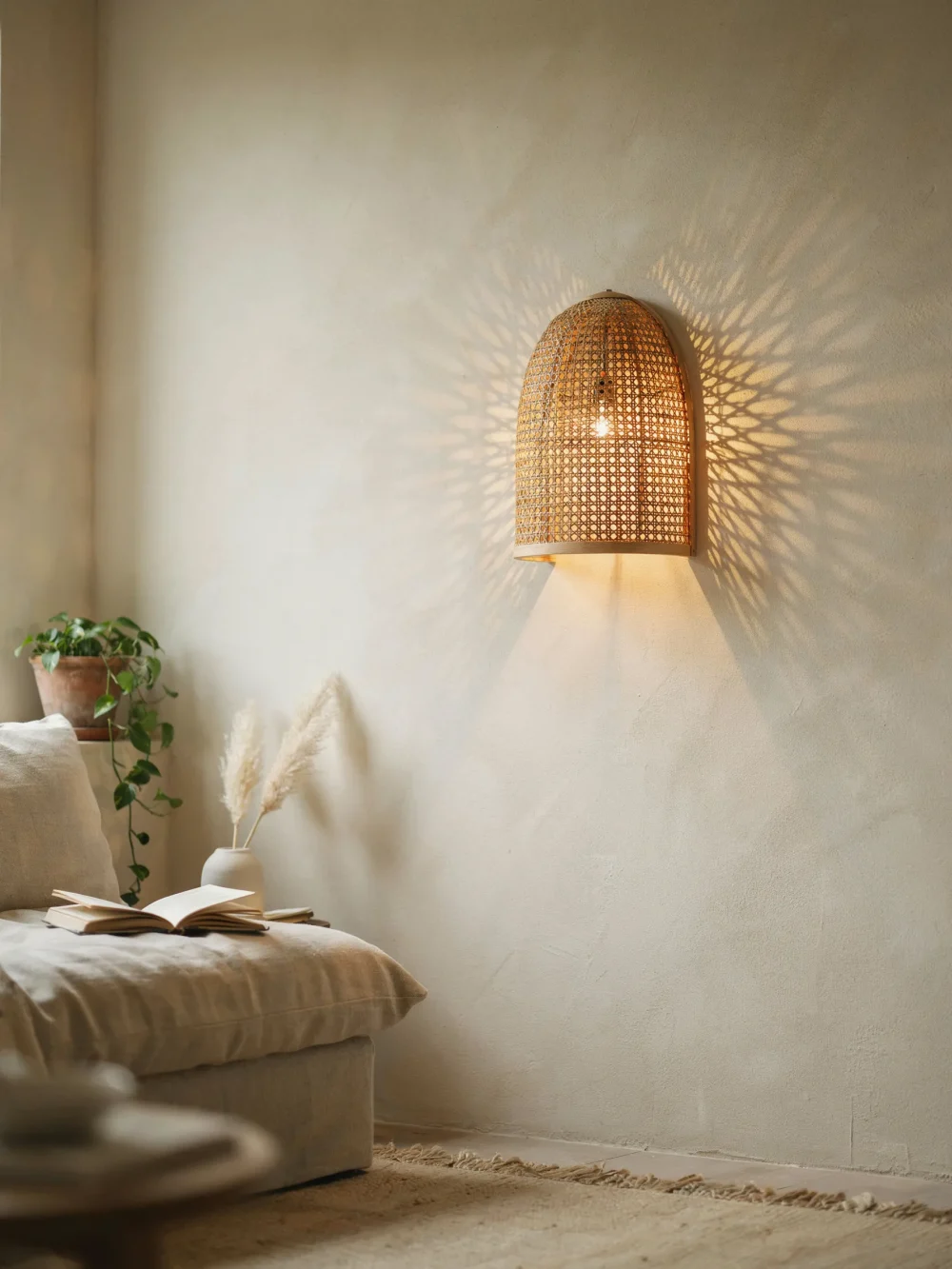
Rattan shade sconces cast the most extraordinary dappled light patterns on the wall behind them — the woven material filters the bulb into dozens of small warm spots that feel almost like candlelight at low wattage. These work beautifully in cozy farmhouse living room inspo settings where you want texture to do the decorating work. Pair with a natural linen sofa and a jute rug and the room starts to feel like a very well-curated retreat.
14. Hammered Metal Sconces in Antique Brass
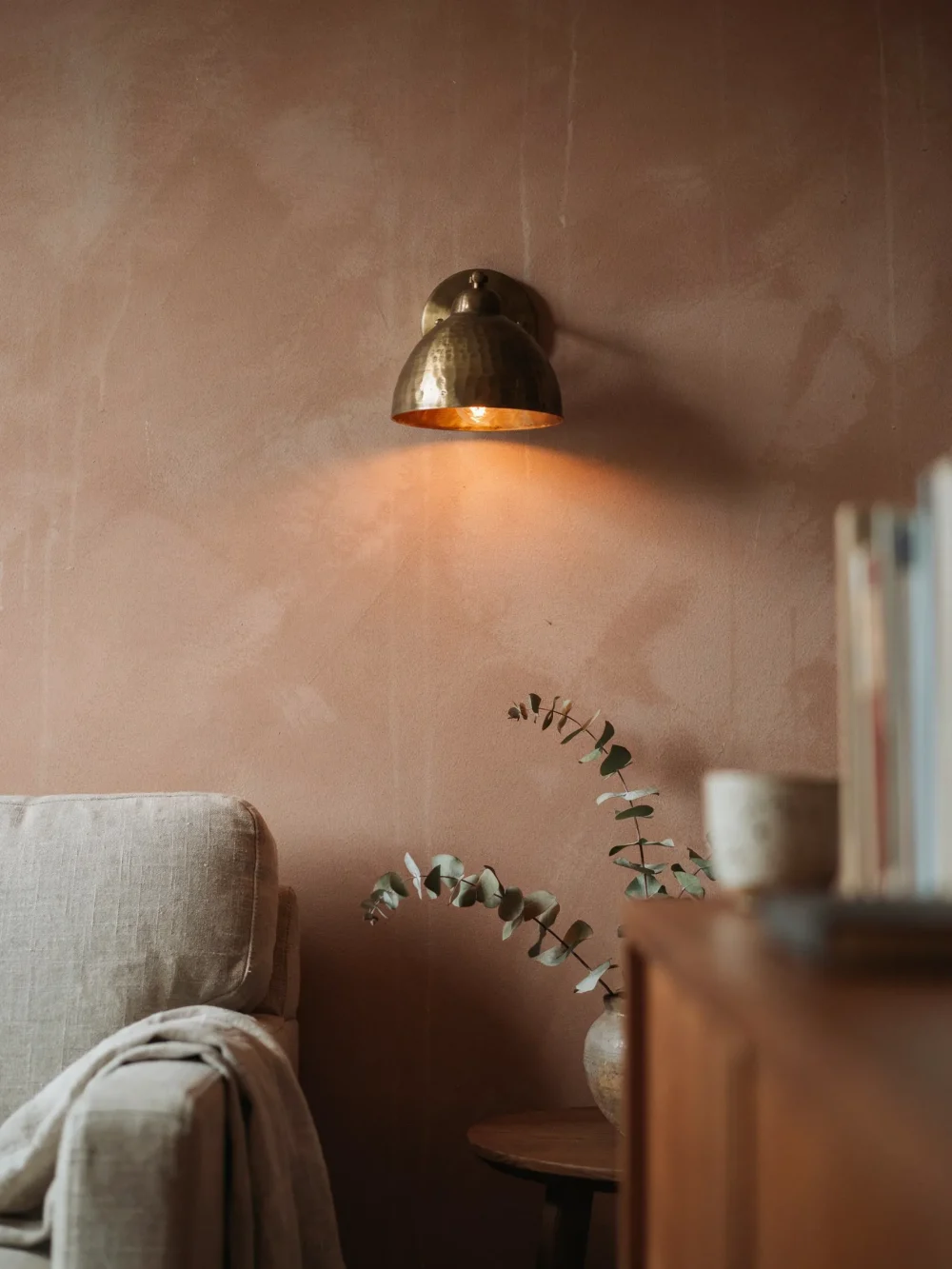
Hammered antique brass sconces bring an artisan quality that machine-finished fixtures simply can’t replicate — each slight variation in the surface catches light differently and creates subtle warmth across the wall. These pair especially well with warm-toned wood furniture, terracotta accents, and linen upholstery for a lived-in, collected-over-time feeling. Don’t over-polish them; the slightly aged surface is the whole point.
15. Concrete and Iron Industrial Sconces
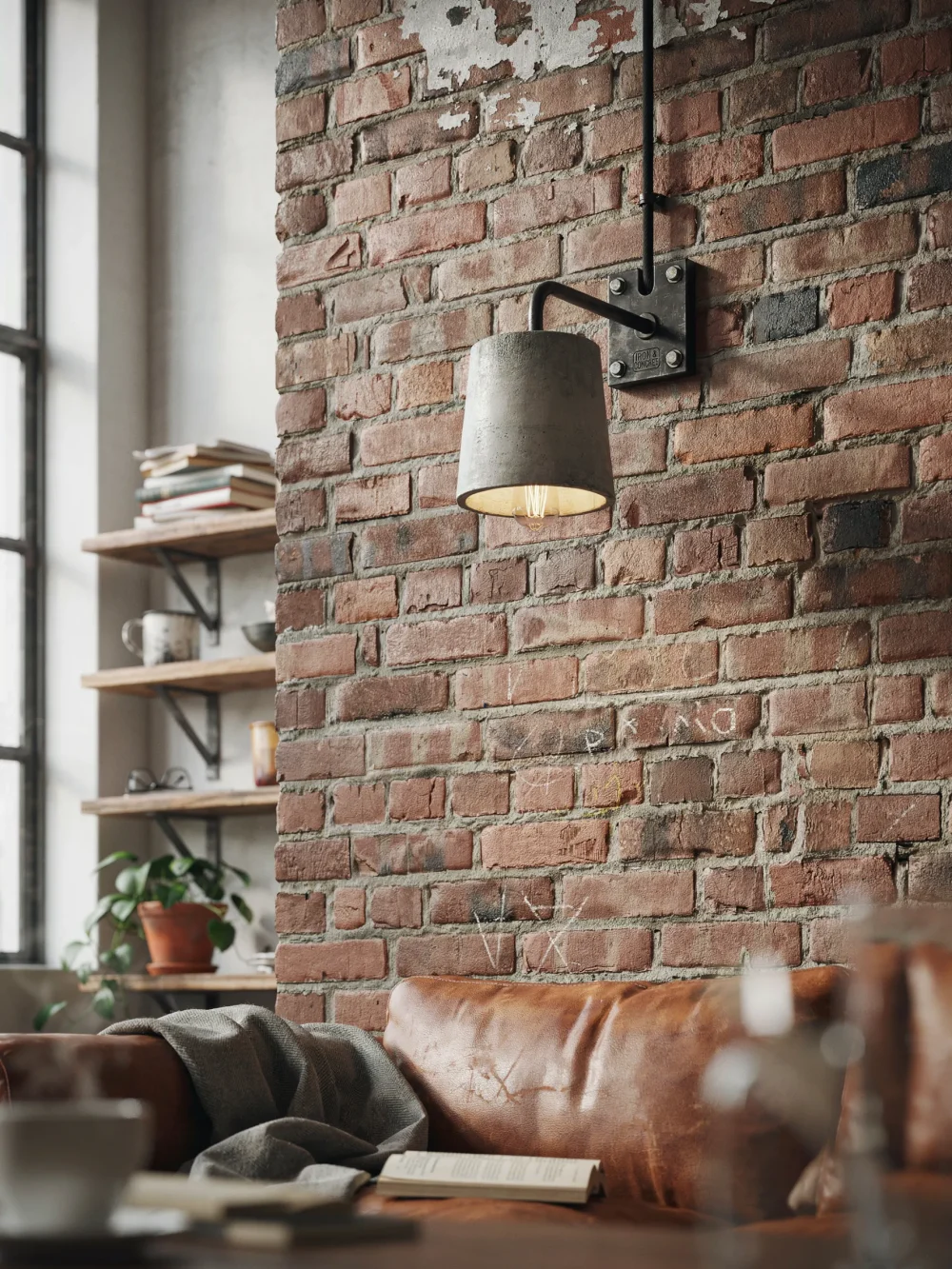
Industrial farmhouse wall fixtures in concrete and raw iron are for the living room that wants to feel a little more rugged — think exposed brick, raw wood shelving, and leather rather than linen. The weight of the materials reads as intentional and permanent even in a rental where nothing is actually permanent. These only work if the rest of your room has at least one other raw or industrial material — otherwise they look like they wandered in from a different house.
Statement Arrangements and Styling Approaches
These ideas are about how you use sconces in the room, not just which fixture you choose.
16. Symmetrical Sofa Framing Lights
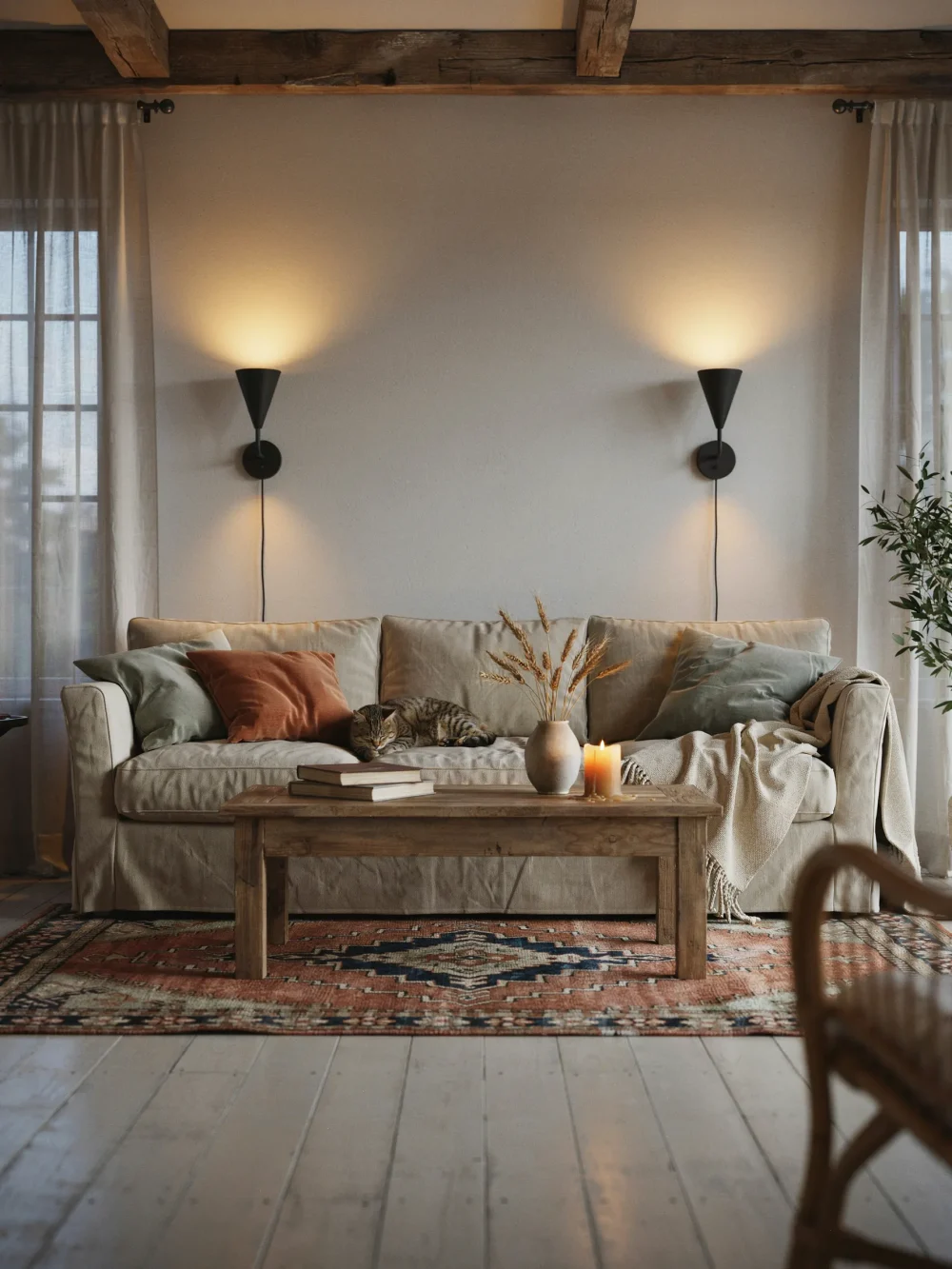
How far apart should living room framing sconces be placed? For symmetrical sofa framing lights, the standard is to mount them roughly 6 to 8 inches wider than your sofa on each side — this frames the seating area without the sconces disappearing behind the sofa arms. This arrangement is one of the most classic warm farmhouse lighting layouts and it works in virtually every room proportion. If your sofa is against the wall, leave at least 12 inches between the sofa back and the sconce shade to avoid a cluttered look.
17. A Single Statement Sconce on an Accent Wall
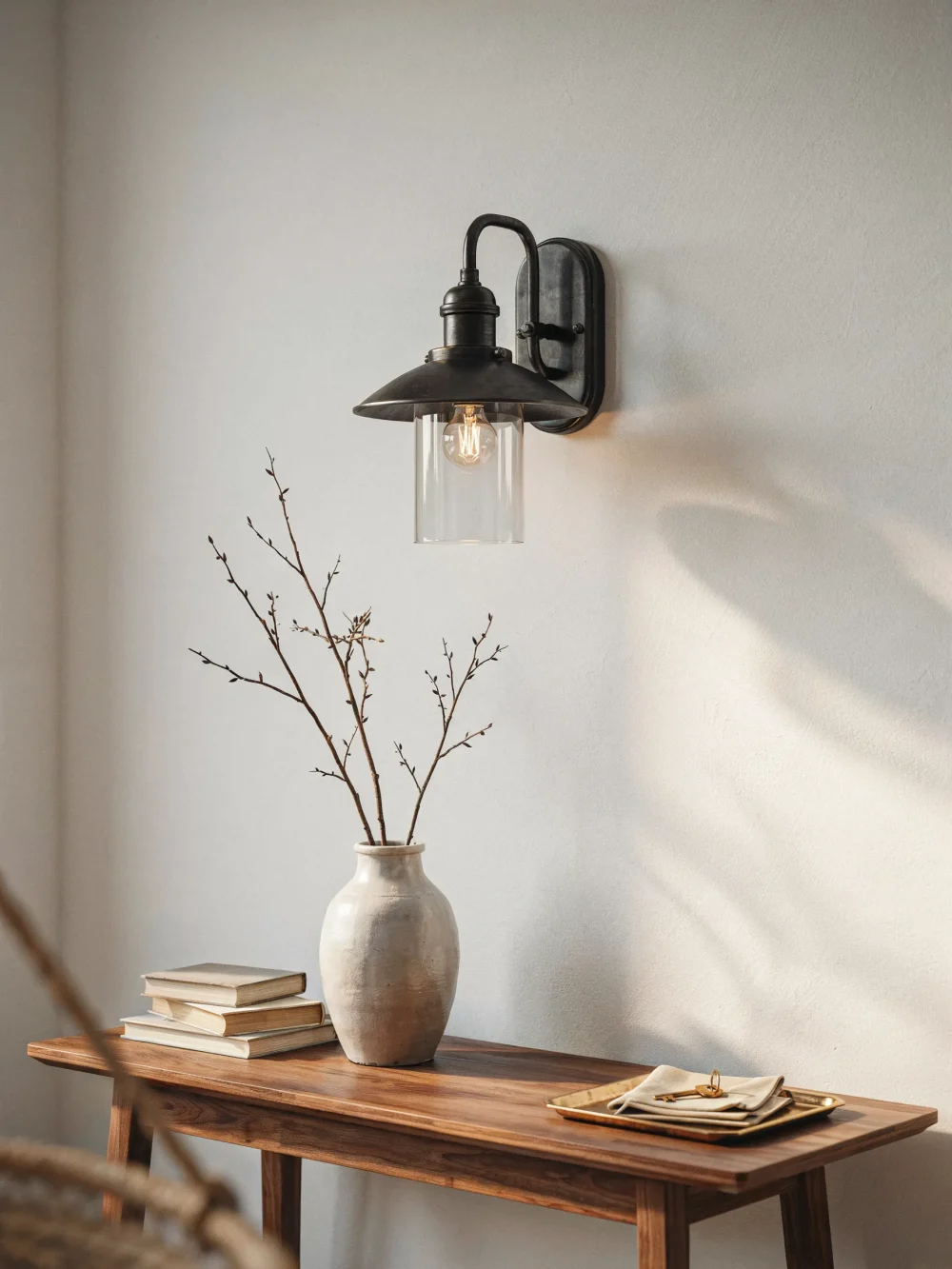
One large, oversized barn sconce centered on an accent wall — especially above a console table or sideboard — creates a focal point that reads like art. Choose a fixture with a 10 to 12-inch shade diameter for the right visual weight, and pair it with something interesting on the surface below: a stack of books, a ceramic vase, a small framed print. The asymmetry of a single sconce in a room full of pairs is genuinely interesting when it’s done with intention.
18. Three Sconces in a Vertical Column
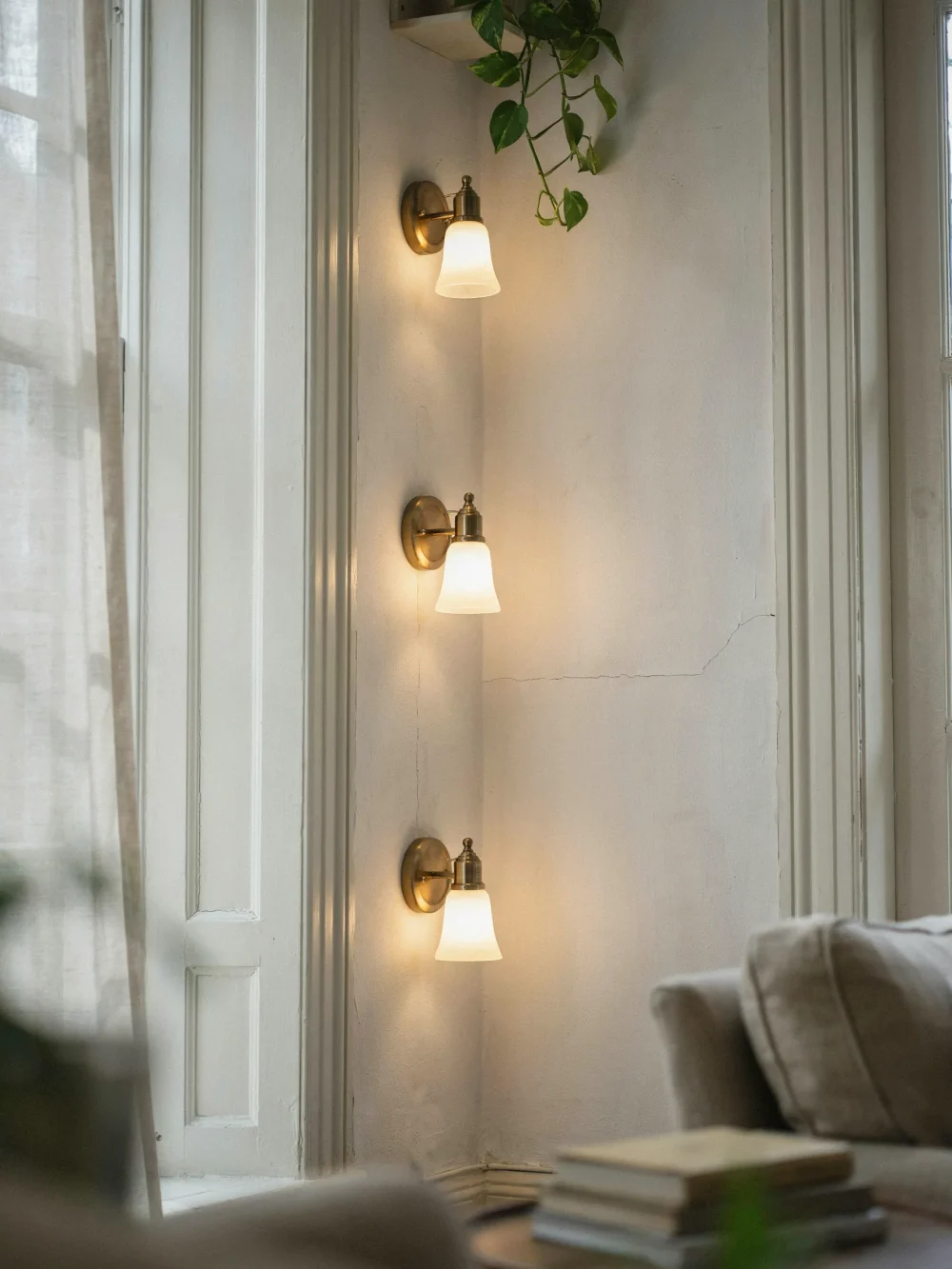
Three small sconces mounted vertically in a column on a narrow wall section — between a window and a doorframe, for example — turns an awkward architectural gap into a deliberate design moment. Space them 14 to 16 inches apart vertically and keep the horizontal alignment perfectly centered on the wall section. This is one of those arrangements that looks like it came from a design magazine but takes about an hour to execute.
19. Sconces Paired With Floating Wood Shelves
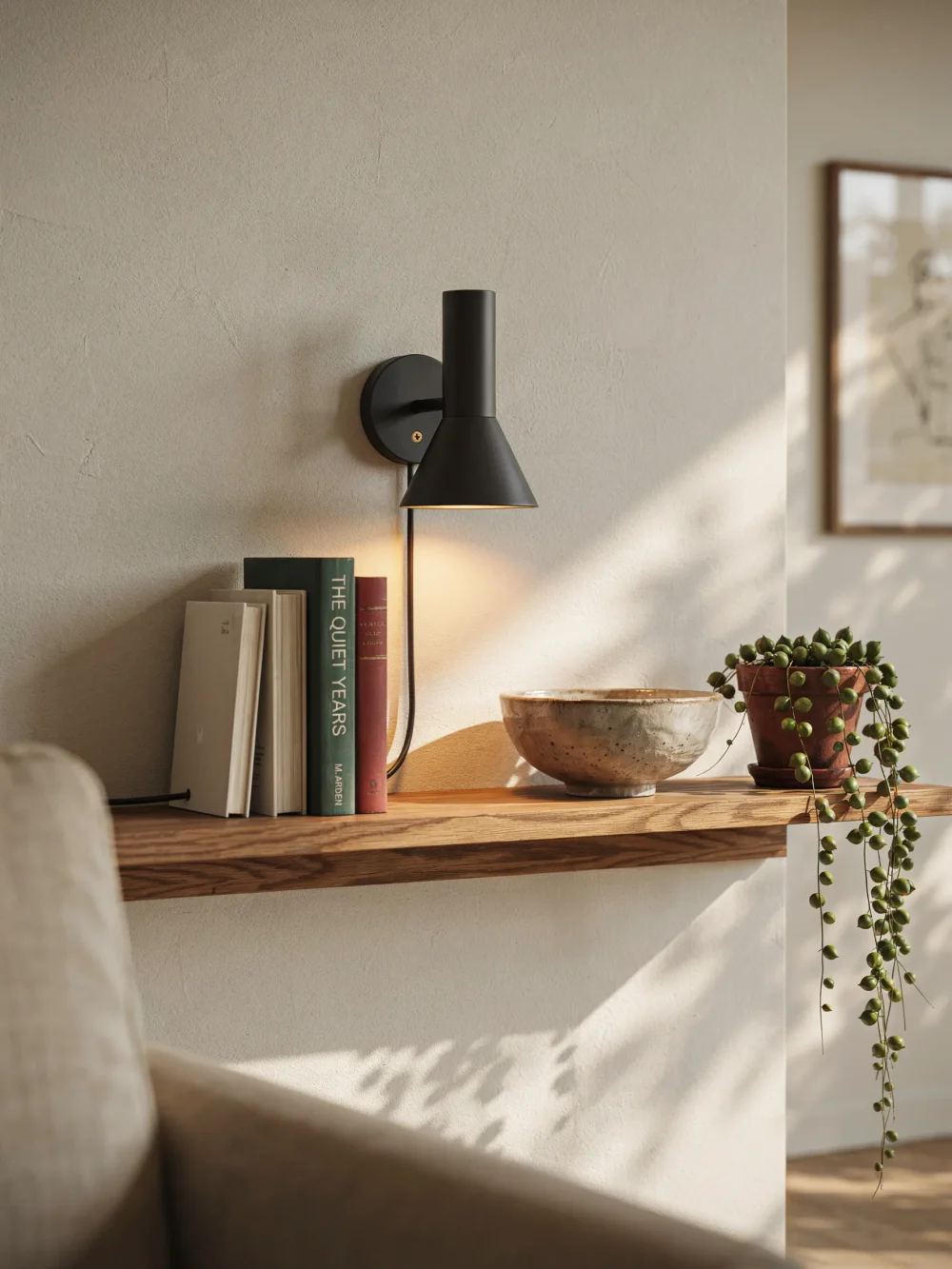
Mounting a sconce directly above or beside a floating wood shelf creates a vignette that functions as both lighting and display — the warm light pools over whatever you’ve styled on the shelf and makes even a simple arrangement of books and plants look considered. Use a plug-in style with a cord routed along the back edge of the shelf for a nearly invisible installation. For more ideas on how shelf styling and wall lighting work together, the wall decor styling guide has some genuinely useful visual frameworks that translate directly to living room walls.
20. Sconces Flanking a Gallery Wall
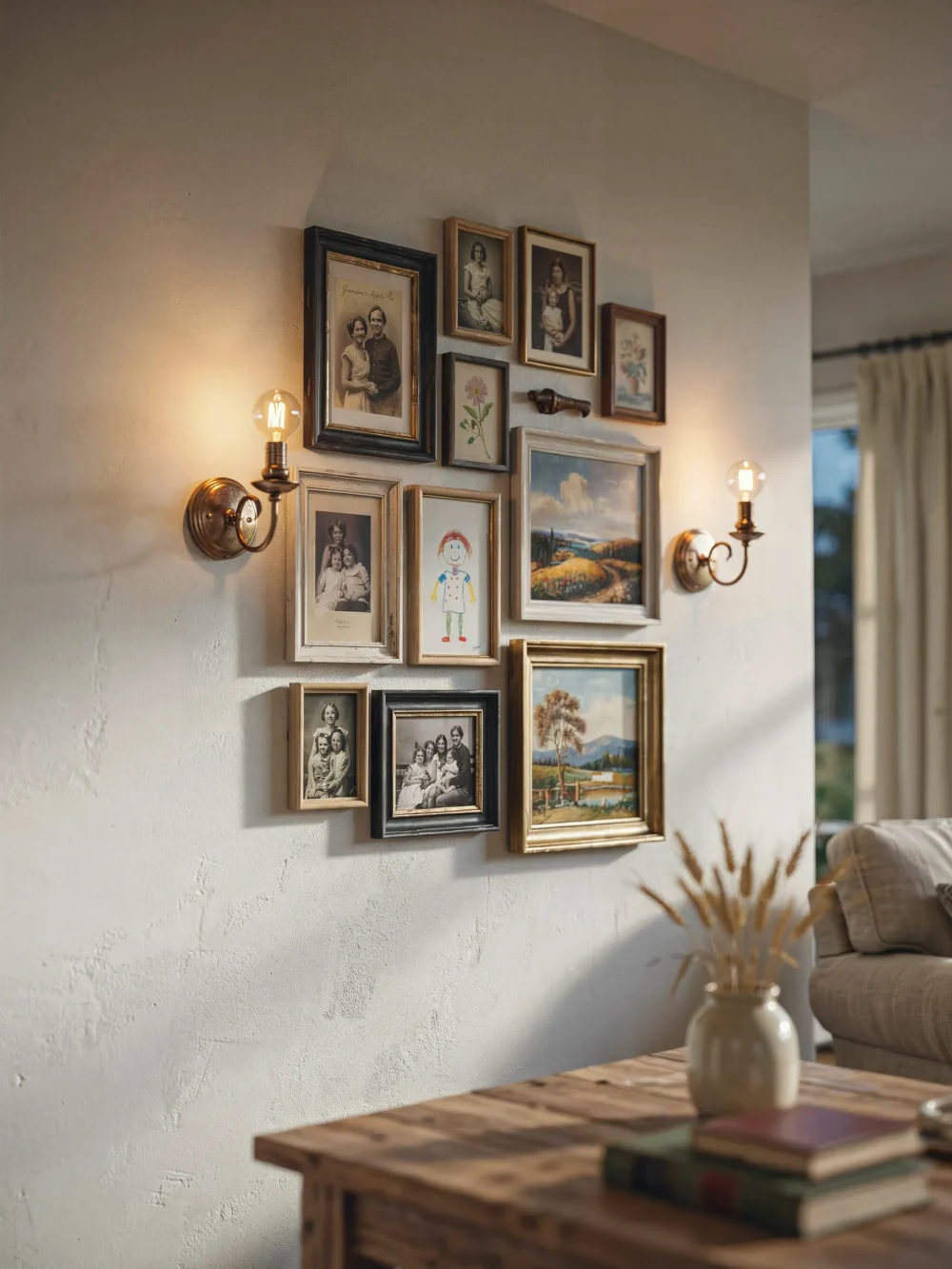
Placing sconces on either side of a gallery wall rather than above or within it solves the common problem of gallery walls feeling flat and unlit in the evening. The side-lit approach casts gentle shadows across the frames that add depth and dimension you simply can’t get from overhead lighting. Keep the sconce style simple and the finish consistent with at least one frame in the gallery — this ties the arrangement together without over-coordinating it.
Your Practical Guide to Getting Farmhouse Sconce Lighting Right
If you’re feeling overwhelmed by choices, start with just one wall and one pair of sconces. Pick the wall you look at most when you’re sitting in your main seating spot — that’s the wall that needs the light most urgently. Once you see how even one pair of warm sconces changes the feeling of the room at night, the rest of the decisions get much easier and much less stressful.
Renters, you have more options than you think. Plug-in sconces with cord covers, battery-operated fixtures with remote dimmers, and adhesive-mounted lightweight sconces are all legitimate design solutions — not workarounds. The key is choosing a fixture that looks intentional, not temporary. A well-chosen plug-in sconce in matte black or antique brass reads exactly the same as a hardwired one from any normal viewing distance. You can also find inspiration for other renter-friendly decorating approaches in ideas like ceiling-mounted curtain rod styling that work beautifully without permanent installation.
On a tight budget, prioritize the bulb as much as the fixture. A $35 sconce with a $6 warm filament bulb will outperform a $120 sconce with the wrong color temperature bulb every single time. Set a budget of $40 to $70 per sconce pair and spend the rest on the right bulbs, the right cord covers, and proper mounting hardware. The room will look expensive if the light color is right — that’s the honest truth of budget decorating.
The one mistake beginners always make is buying sconces without testing the light direction first. Hold a flashlight at the planned mounting height and angle before you commit to anything. This sounds overly simple but it will save you from the specific misery of realizing your sconce throws light straight at the ceiling instead of washing the wall the way you imagined. What finishes match modern farmhouse lighting best? Matte black, oil rubbed bronze, antique brass, and brushed nickel all work — the rule is to repeat a finish at least twice in the room so it reads as a choice, not an accident.
To make the whole arrangement look intentional rather than random, connect your sconces visually to at least one other element in the room — a throw pillow in a matching tone, a lamp base in the same metal finish, or a piece of wall art that echoes the fixture’s shape. Lighting that feels designed always has a visual conversation partner somewhere in the room. If you want to extend this layered, cozy approach beyond the living room, the fairy lights bedroom ideas and blue bedroom styling guide both use the same principle of layered warm light to create rooms that feel genuinely restful.
Start today by sitting in your sofa, looking at the wall across from you, and asking yourself one question: where does my eye want the light to be? Mark that spot with a piece of painter’s tape. That’s your first sconce location — and honestly, that one small decision is how every well-lit living room actually begins.