
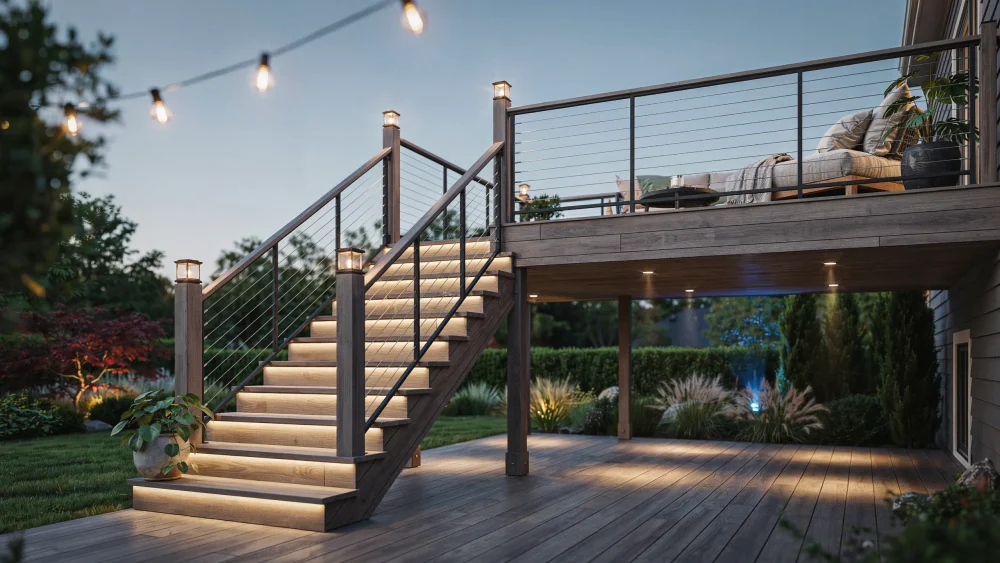
25 Brilliant Ways to Use Low-Voltage LED Lighting Around Your Stairs and Railings
Picture this: it’s a warm evening, you step outside, and your deck glows with this soft, golden light that makes every edge and railing look intentional and beautiful. Not blinding floodlights, not sad little solar mushrooms — actual modern deck lighting that feels like it was designed by someone who genuinely cares. That feeling is completely achievable, and it doesn’t require a licensed electrician or a five-figure renovation budget.
I’ve spent years fussing over outdoor lighting setups, making expensive mistakes, and eventually landing on combinations that actually work. Whether your stairs are concrete, composite wood, or wrought iron, there’s a low-voltage LED approach that will make them look like they belong in an architectural magazine. Keep reading — I promise the details here are worth your time.
The Mistake I Made That Cost Me Two Seasons of Bad Lighting
My first attempt at stair lighting involved buying a bulk pack of cheap solar stake lights and lining them along the railing posts. They looked fine in the product photos. In reality, by 9 PM they were already dimming, and by October they were completely dead from one frost. I had prioritized price over system design, and it showed every single night I walked outside embarrassed by my own backyard.
The real lesson: low-voltage hardwired systems almost always outperform solar for stairs and railings. Solar works beautifully for path markers and accent spots, but stairs need consistent, reliable illumination for safety. Once I switched to a 12V transformer system with dedicated runs to each step, the difference was immediate and permanent. Don’t repeat my two wasted summers.
Modern Deck Lighting Ideas Using Recessed and Flush-Mount Fixtures
These are the cleanest, most architectural options — perfect if you want light without visible hardware.
1. Flush-Mount Riser Panels That Disappear Into the Step
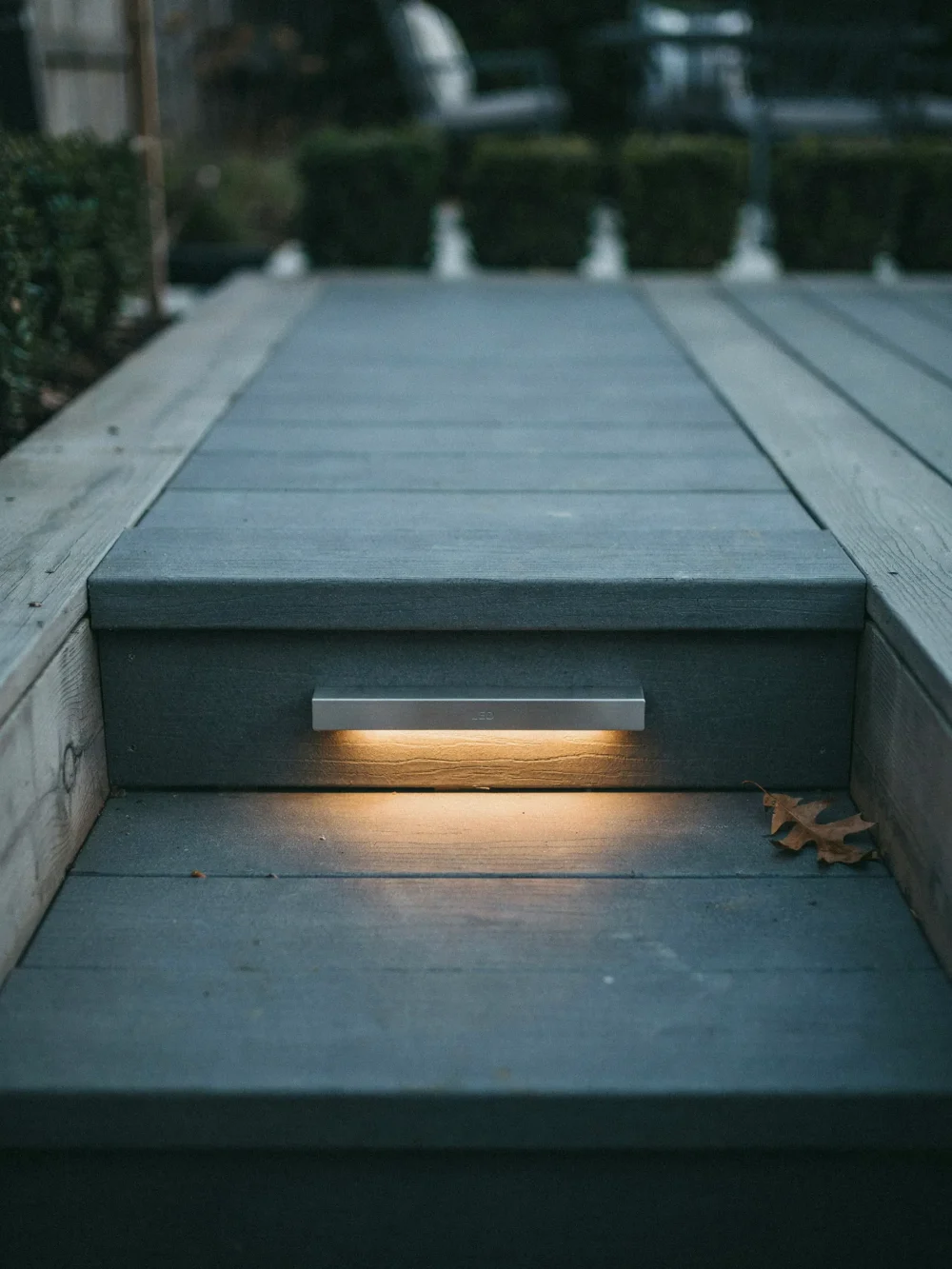
Flush-mount LED riser lights sit completely flat against the vertical face of each stair tread, casting light downward onto the walking surface. A 3000K warm white panel in brushed nickel blends into composite decking beautifully. Route your wiring through the stair frame before decking is installed — retrofitting is a nightmare.
2. Recessed Deck Post Inserts at Base Level
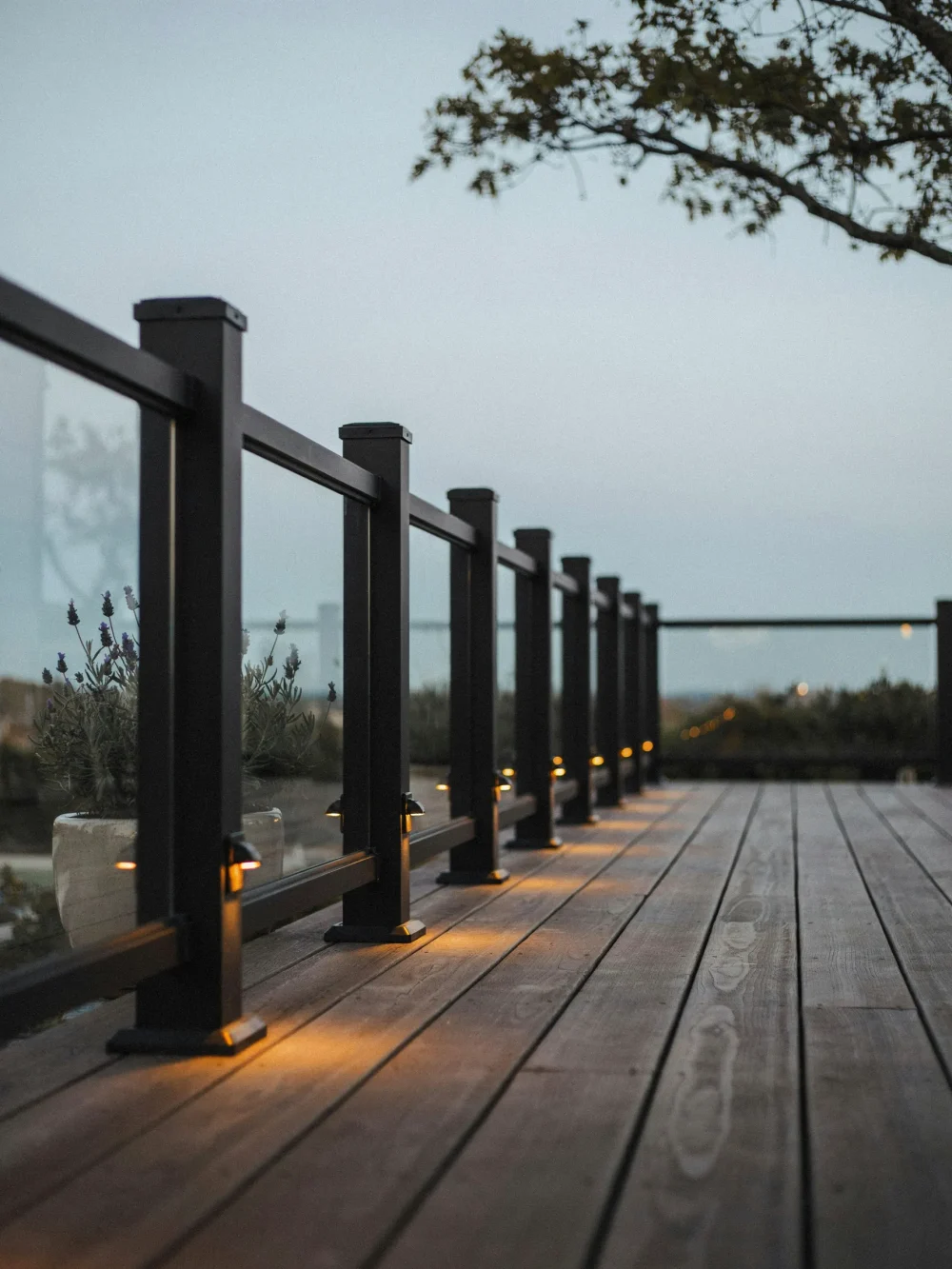
Small recessed LED pucks installed at the base of each railing post create a ground-grazing glow that defines the perimeter of your deck without any glare. Brass-finish units against dark Trex decking create a genuinely stunning contrast. These are one of the most underused fixtures in residential outdoor design.
3. In-Tread Step Lights Routed Into the Nosing
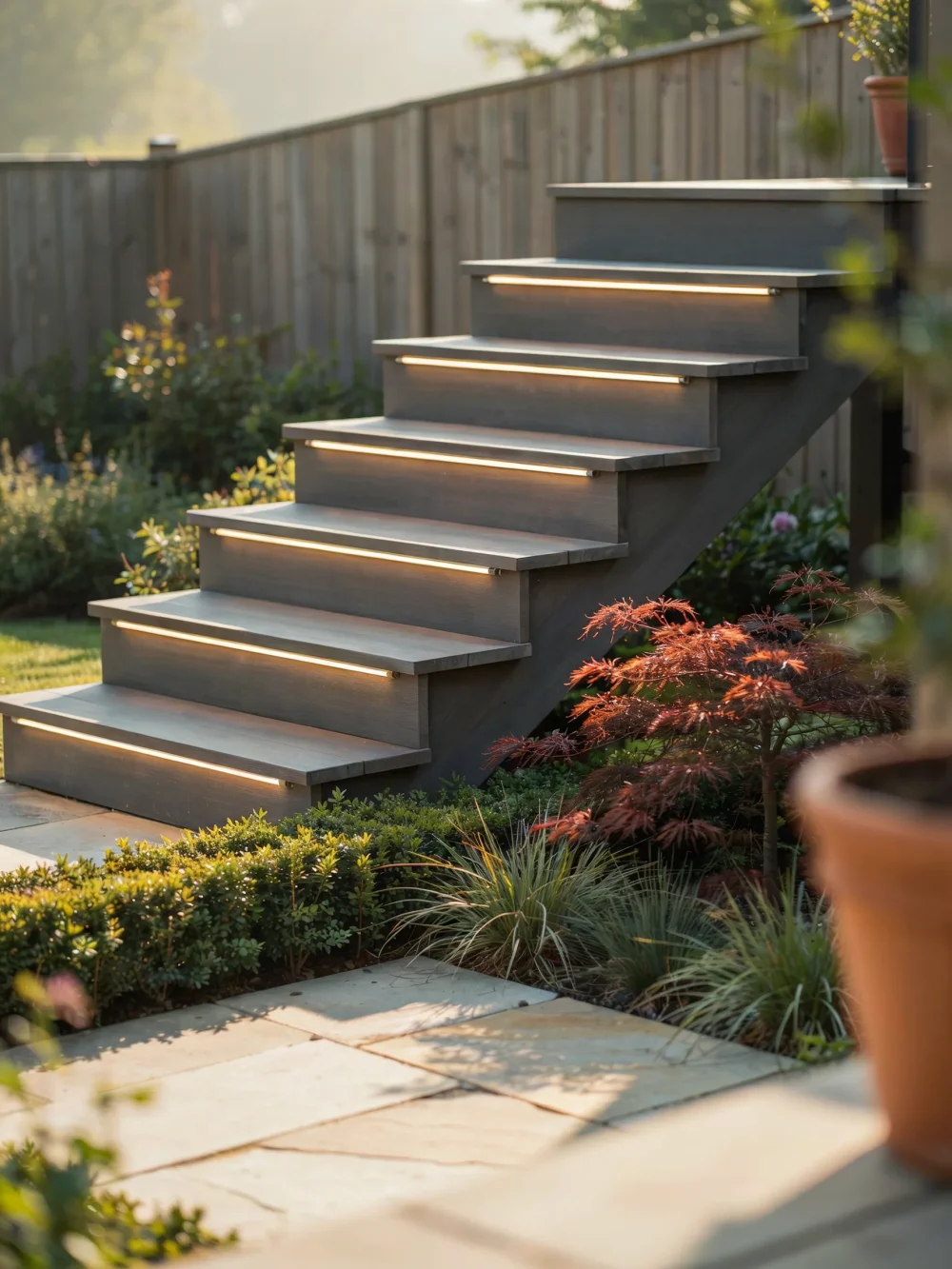
Cutting a small channel into the front lip of each stair tread and installing a linear LED module creates a seamless, hotel-quality effect. Use IP67-rated strips to handle rain and standing water without degradation. Always use aluminum channel extrusions — they protect the strip and diffuse the light evenly.
4. Under-Cap Recessed Post Cap LEDs
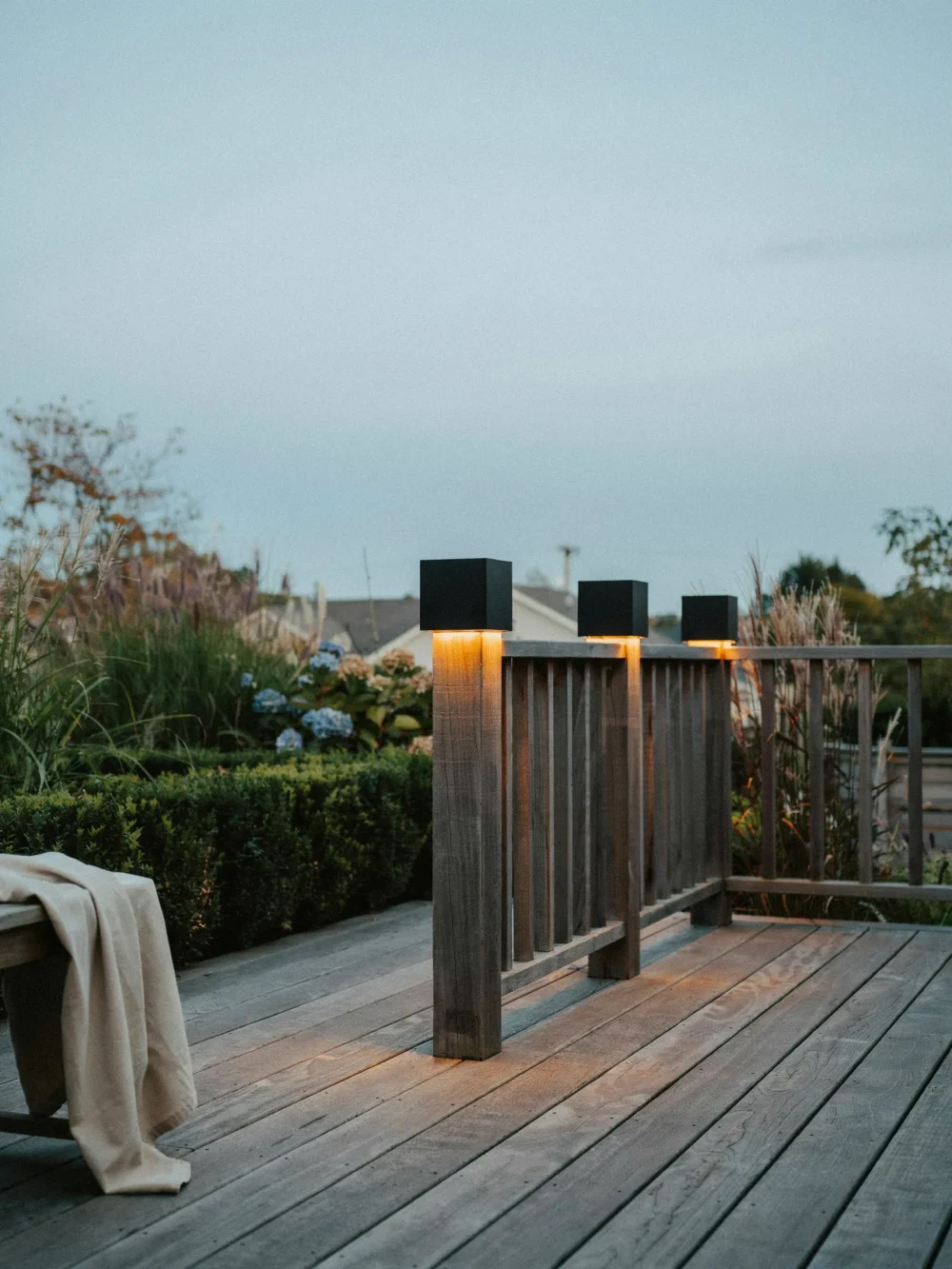
Post cap lights with a recessed LED ring underneath the cap throw a soft downward halo around each post without pointing light outward into eyes. Square matte-black caps on 4×4 cedar posts look genuinely architectural. This is one of those details that guests notice without knowing exactly why the deck looks so polished.
Under-Rail and Linear Strip Lighting Designs
Linear lighting along railings is where modern deck design really separates itself from generic setups.
5. Continuous Under-Rail LED Channel Strip
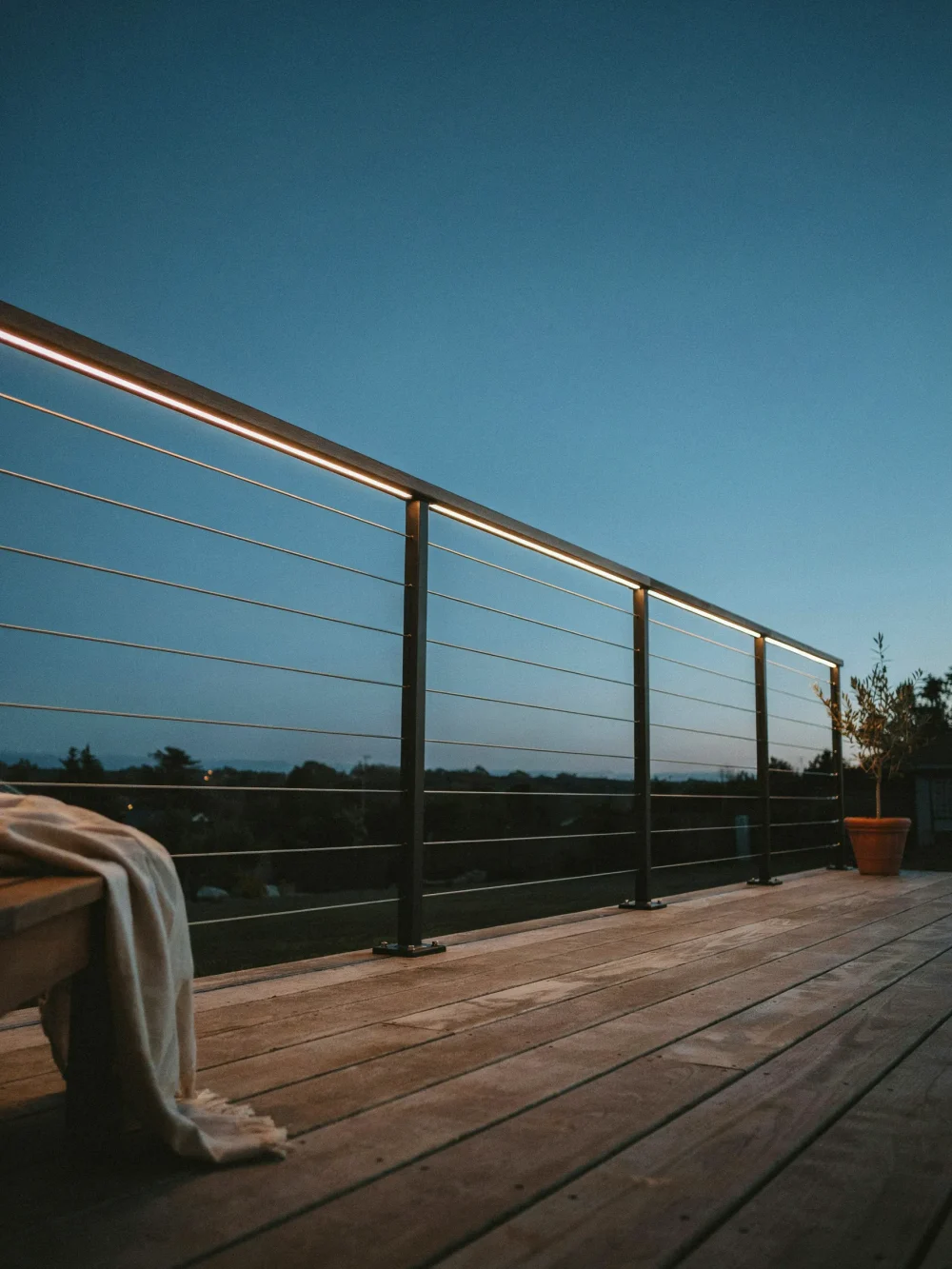
Mounting an aluminum LED channel strip along the underside of your top railing rail creates a continuous wash of light across the deck floor below. A 2700K warm white strip in a frosted diffuser channel gives the softest, most flattering glow. This single detail does more for evening ambiance than almost any other fixture choice.
6. Dual-Sided Railing Strips for Layered Depth
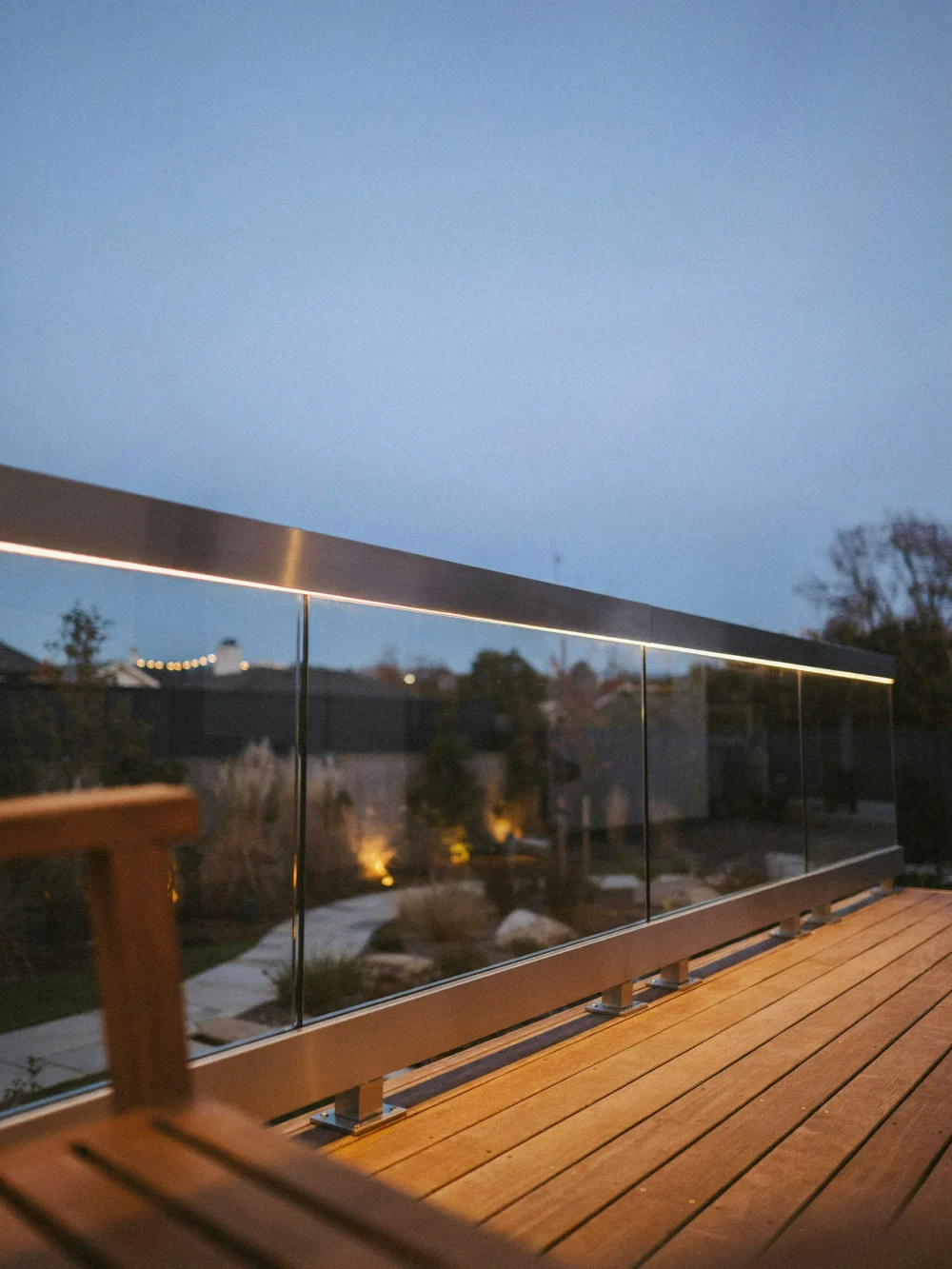
Running LED strips on both the interior and exterior faces of a glass or cable railing creates a floating, layered lighting effect that looks incredible from inside and outside the home. Use matching color temperatures on both sides — mixing 2700K and 4000K on the same railing looks accidental and cheap. This works especially well on second-story decks overlooking a yard.
7. Minimalist Linear Deck Illumination Along Stair Stringers
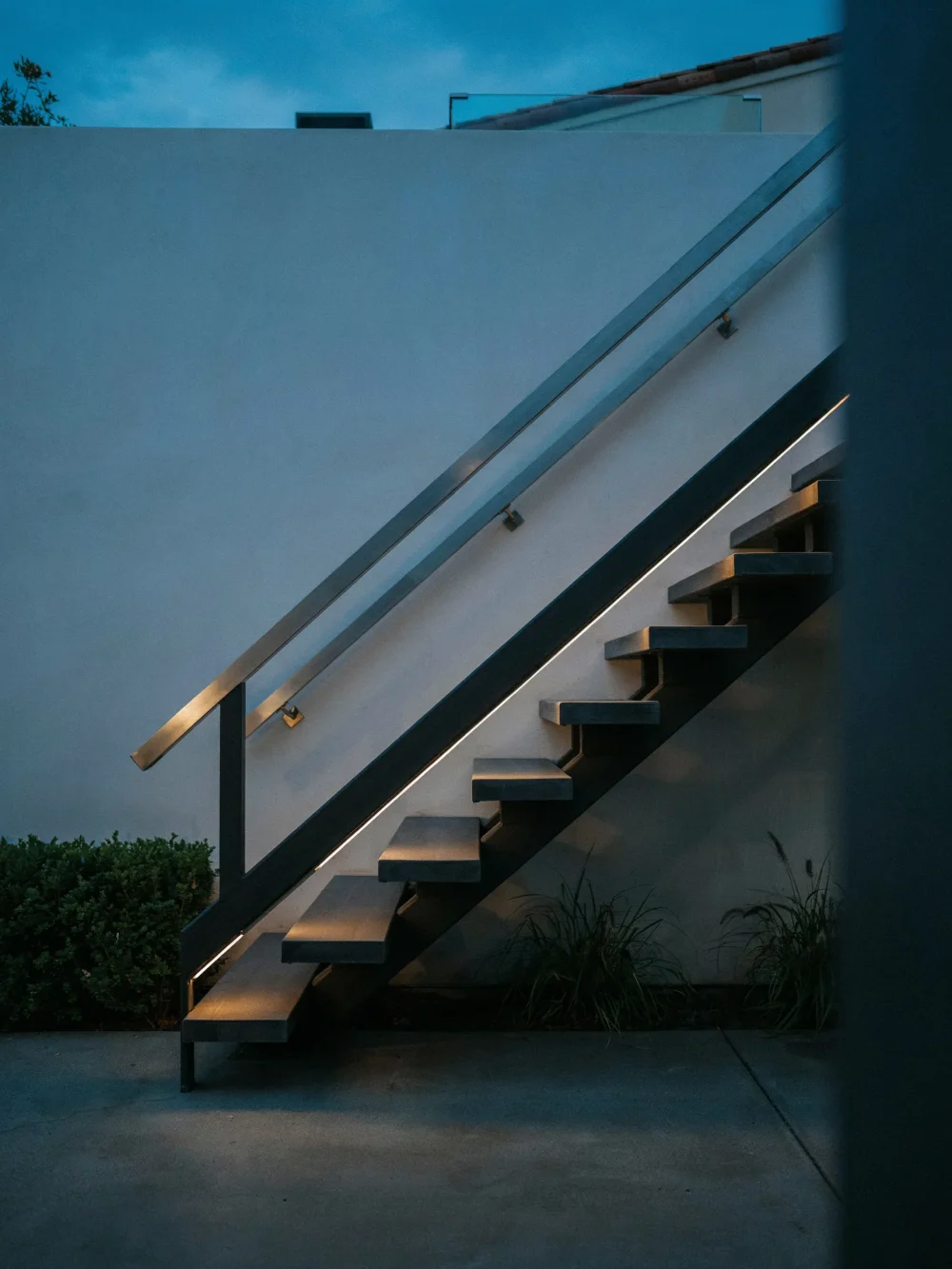
Attaching a slim LED channel to the inner face of each stair stringer — the diagonal side supports — creates a dramatic upward-washing light effect along the staircase profile. This is pure architectural landscape light styling, the kind you see in high-end resort properties. Keep the wiring hidden inside the stringer cavity for a truly clean finish.
8. Frosted Diffuser Strips Under Horizontal Balusters
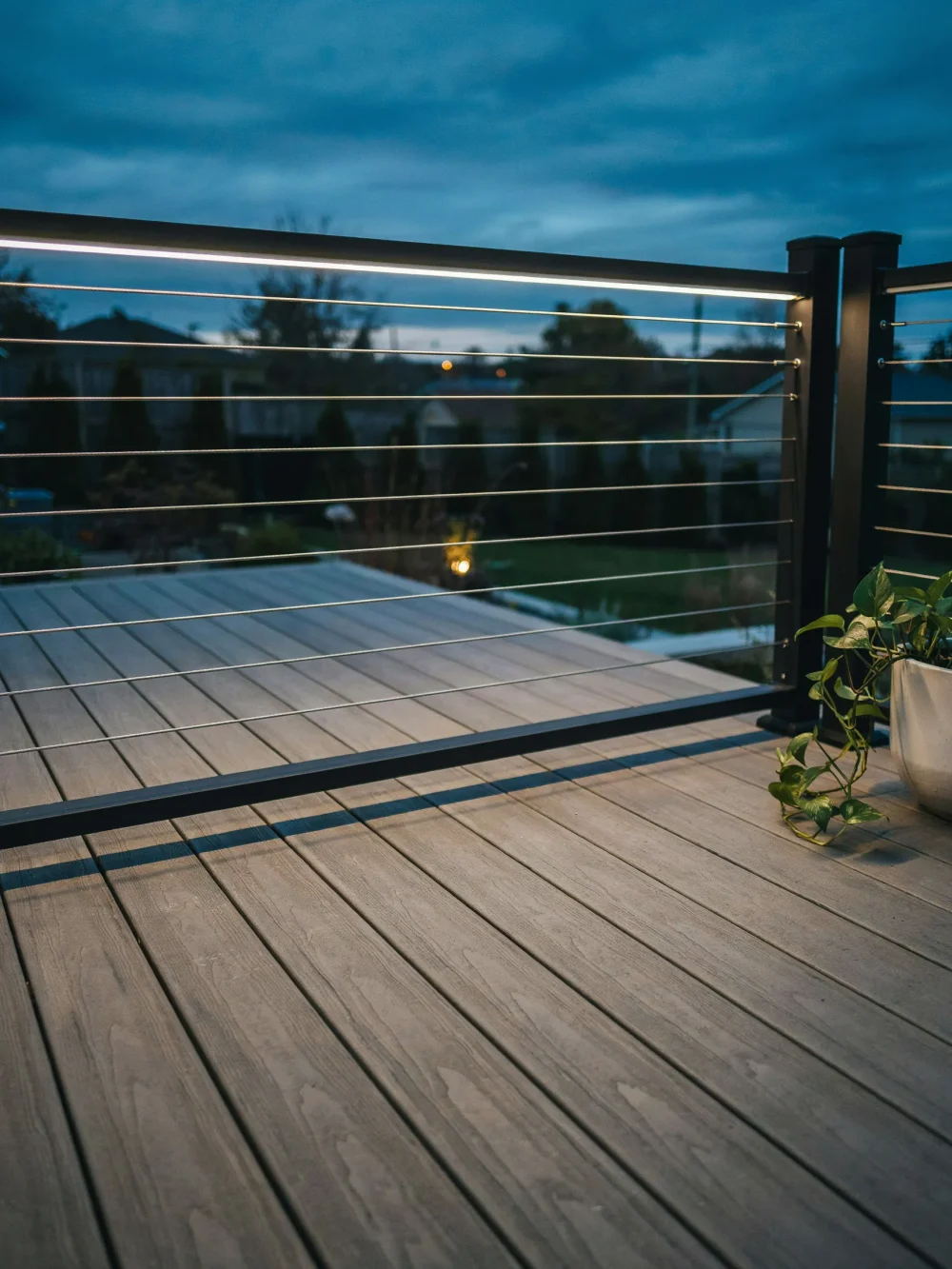
If your railing uses horizontal cable or flat balusters, a frosted LED strip mounted just behind them creates beautiful shadow lines across the deck. This technique turns a functional railing into a piece of light sculpture at night. Use a dimmable driver so you can dial back the intensity for quieter evenings.
Low-Voltage Outdoor Stair Lighting for Safety and Style
Safety lighting doesn’t have to look institutional — these ideas prove that function and beauty aren’t mutually exclusive.
9. Step-Down Lighting on Multilevel Deck Transitions
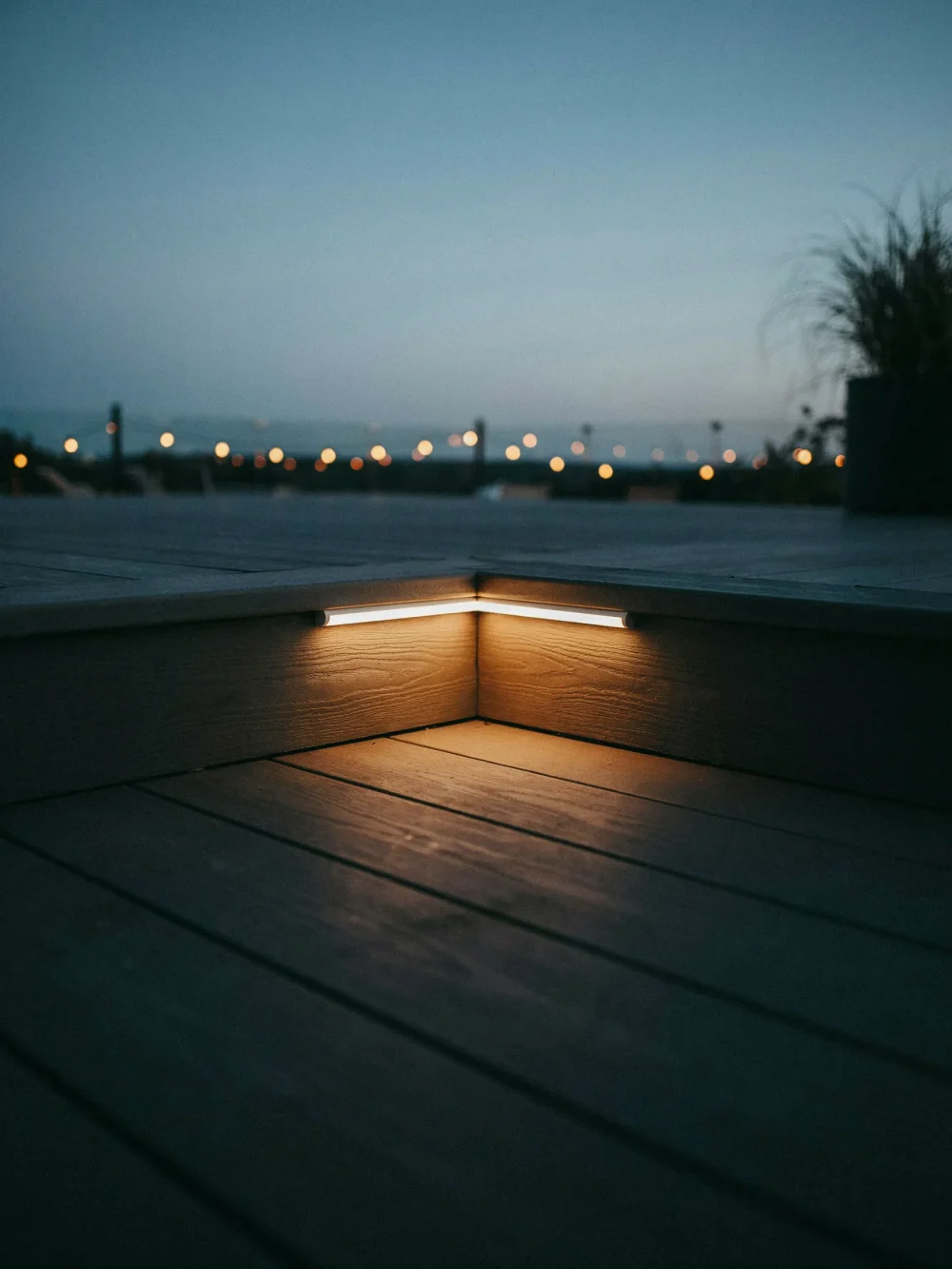
At transitions between deck levels, installing a low-profile LED strip along the step edge with a downward-facing diffuser ensures every level change is clearly visible without harsh spotlighting. This is especially important for entertaining — guests shouldn’t have to think about where the next step is. A consistent 2700K tone across all levels ties the whole multilevel layout together visually.
10. Solar Powered Path Accent Markers Along Approach Stairs
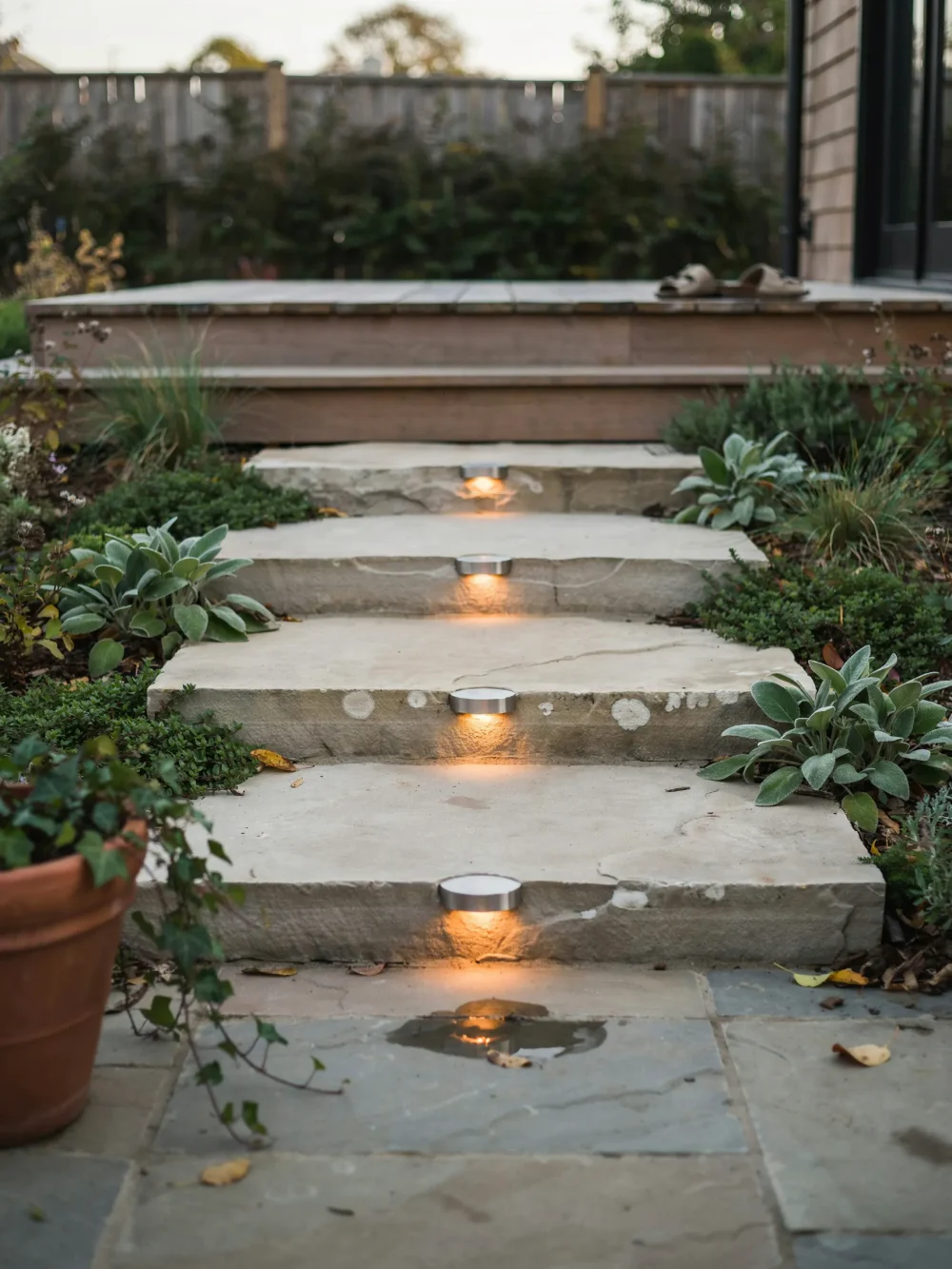
For the first few steps leading up from a patio or yard, solar-powered accent markers work perfectly as a complement to hardwired riser lights higher up. Choose flat-top disk markers in stainless steel rather than the cheap dome styles — they read as intentional design rather than an afterthought. Reserve solar for low-traffic accent positions, not primary safety lighting.
11. Warm White Side-Wash Step Lights in Masonry Risers
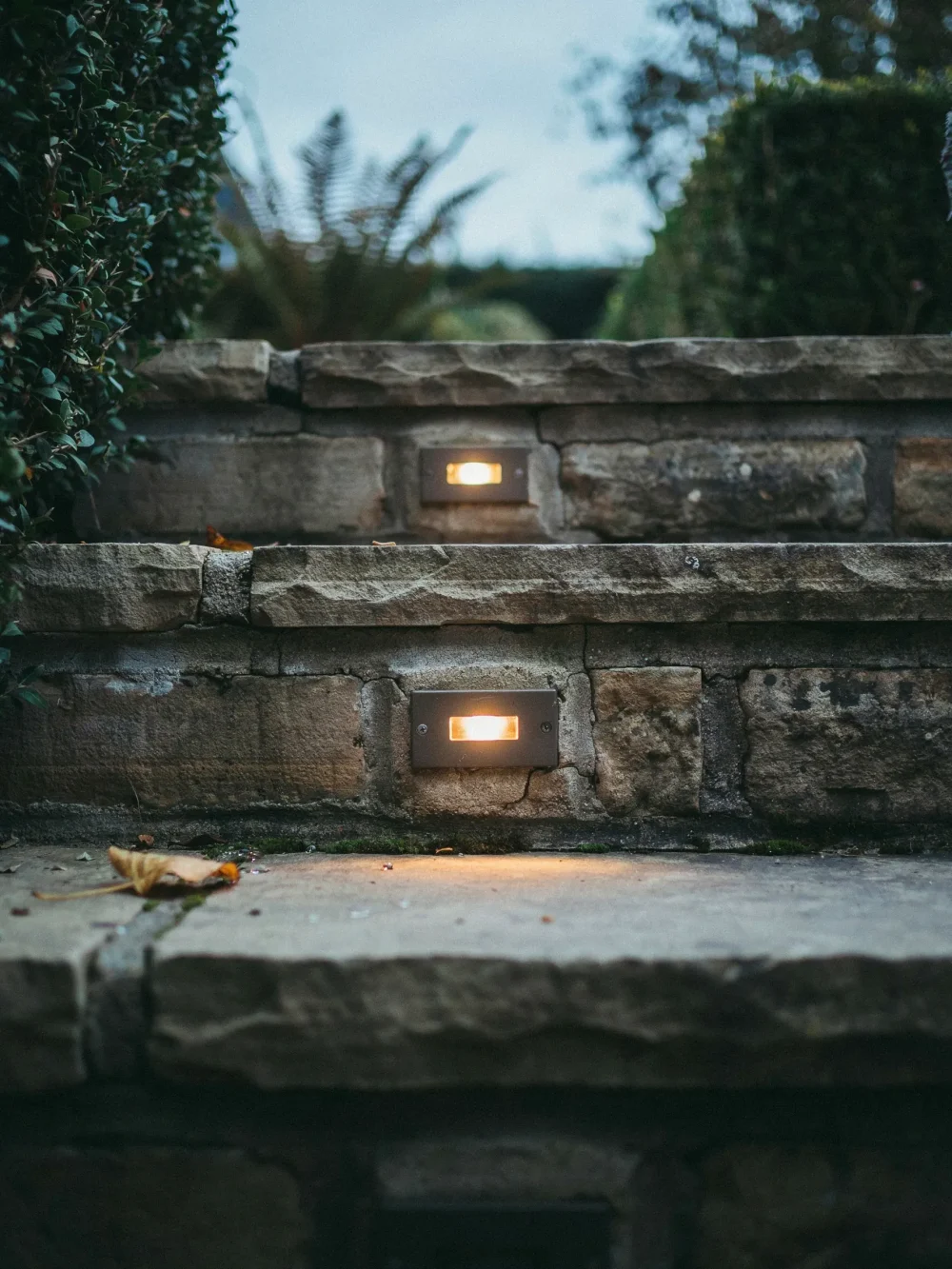
For stone or brick stairs, small rectangular LED bricks mortared into the riser face cast a warm side-wash across the step surface that’s both beautiful and highly functional. A 3000K warm white Kelvin color profile works best against natural stone tones. Always use fixtures rated for direct masonry embedding — standard outdoor LEDs will fail from moisture wicking.
12. Angled Riser Lights That Illuminate Two Steps at Once
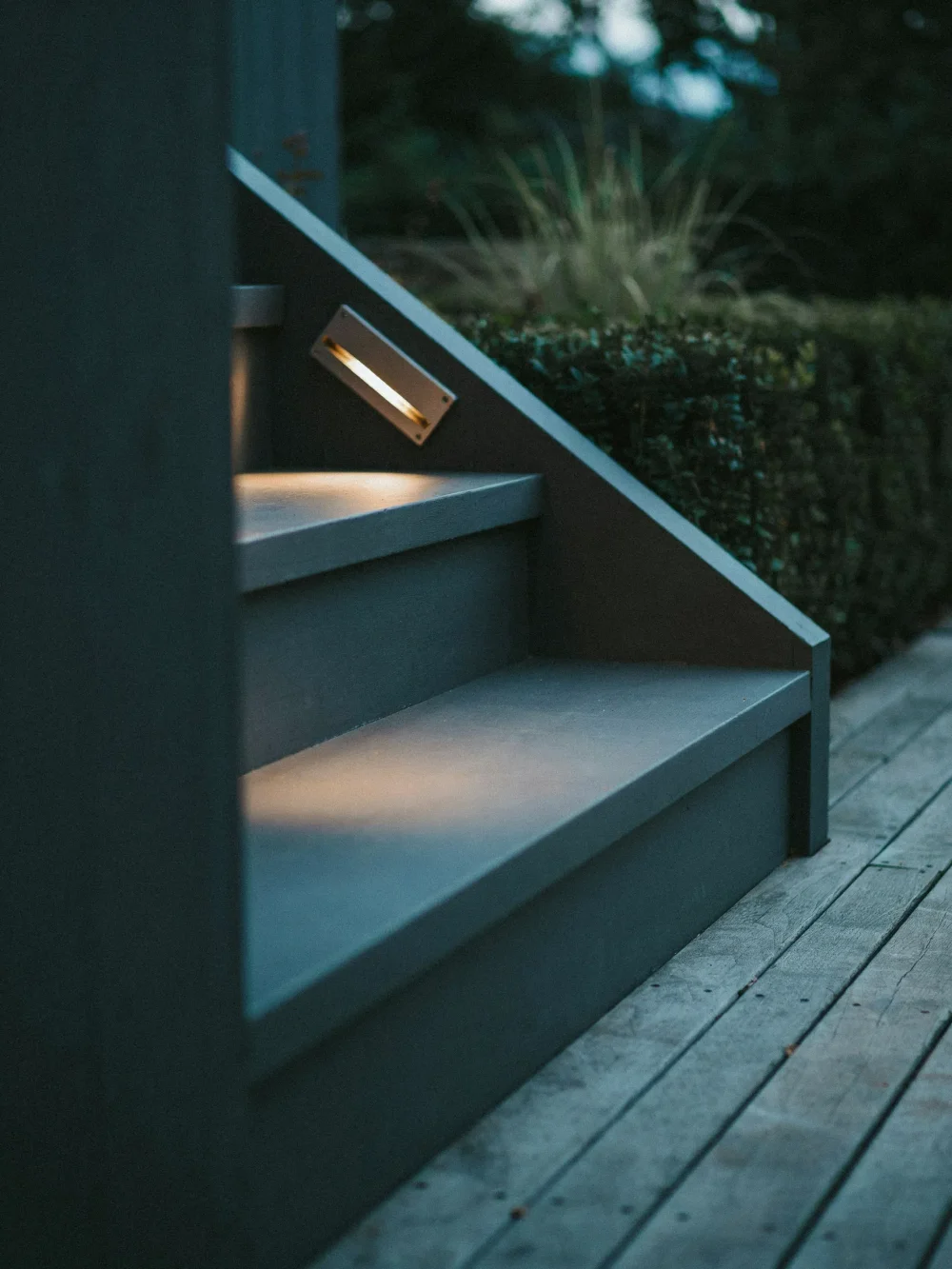
A slightly angled riser-mount fixture, tilted about 15 degrees downward, can illuminate both the step it’s mounted on and the one below it, reducing the number of fixtures you need by nearly half. This is a smart budget move that also creates a more gradual, natural light gradient. Just make sure the angle doesn’t create glare for someone walking up the stairs.
Backyard Patio Glow-Up Designs With Railing Integration
These ideas connect your stair lighting to the broader patio and deck atmosphere for a cohesive outdoor room feel.
13. Perimeter Deck Glow Using Fascia-Mounted LED Channels
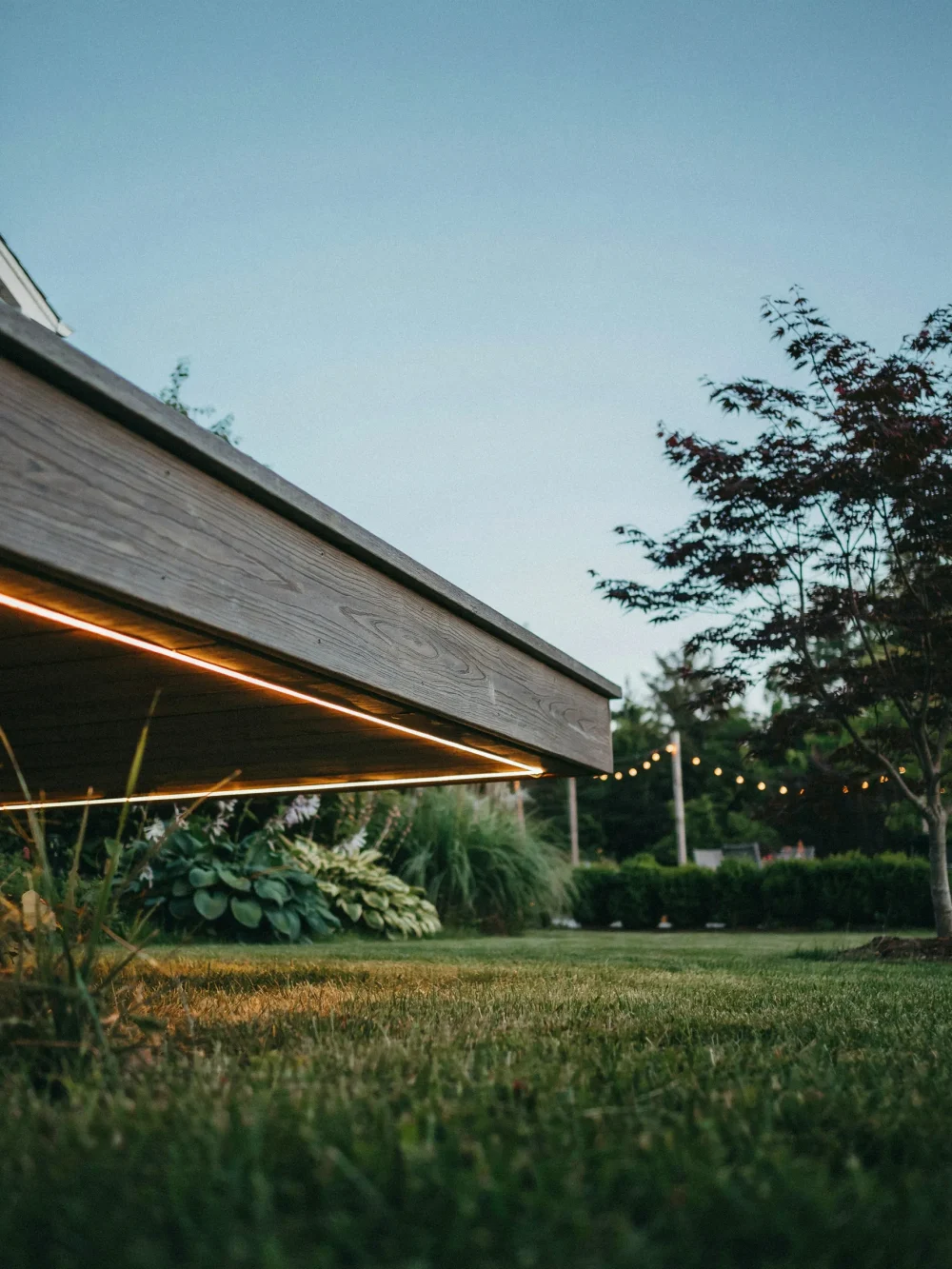
Running LED channel strips along the fascia boards at the outer edge of your deck creates a floating platform effect when viewed from the yard — like the deck is hovering above a ring of light. This pairs beautifully with in-deck LED lighting ideas that illuminate the surface from below. It’s one of the most dramatic effects achievable with low-voltage systems.
14. Railing Post Uplighting for Vertical Drama
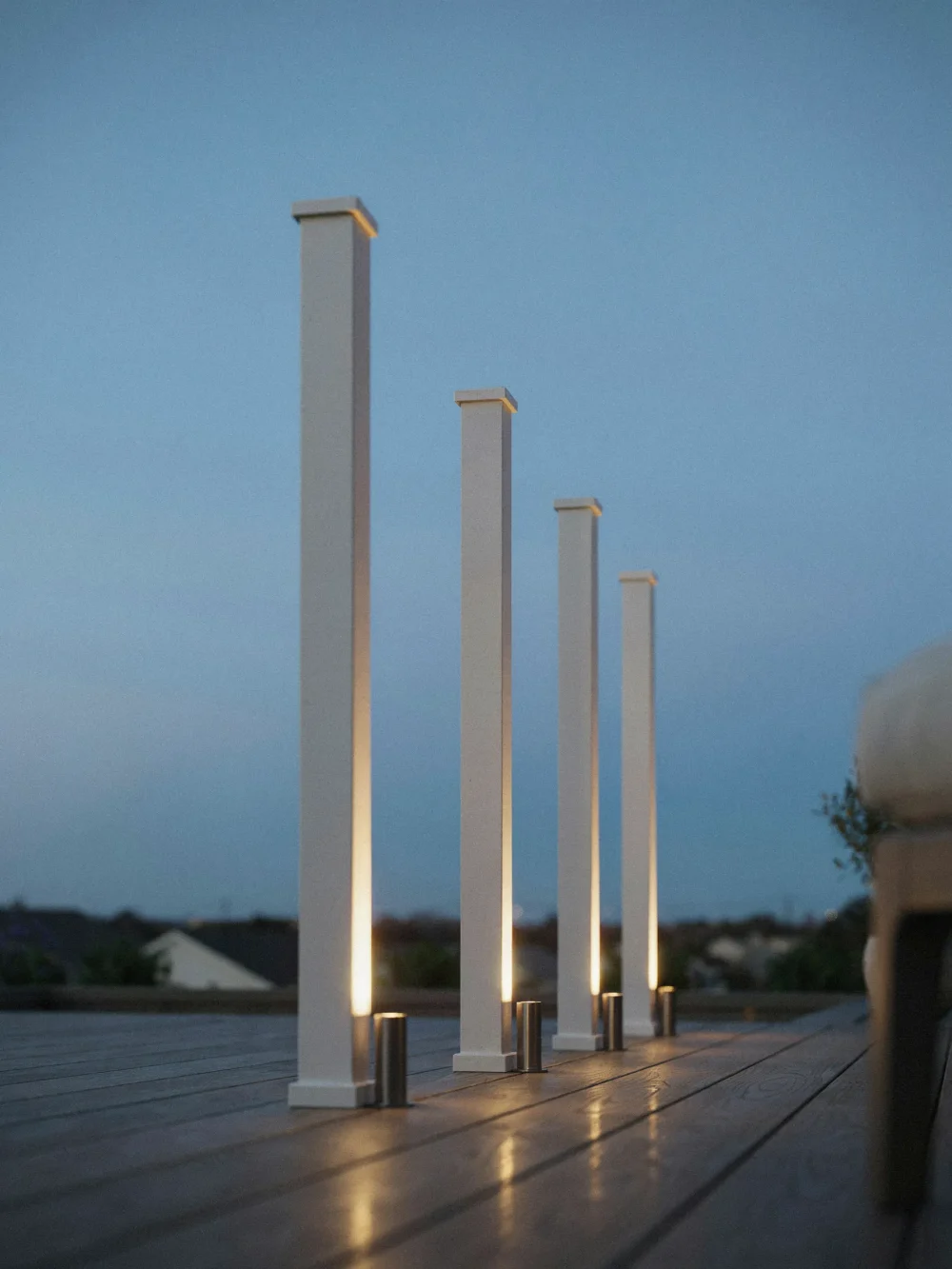
Placing small uplight fixtures at the base of each railing post, aimed vertically upward, creates strong vertical lines of light that make a deck feel taller and more architectural at night. Gunmetal-finish spike uplights against white-painted posts create a high-contrast, modern look. This technique is borrowed directly from commercial landscape design and works brilliantly at residential scale.
15. Cozy Ambient Glow Using Warm Edison-Style Post Cap Lanterns
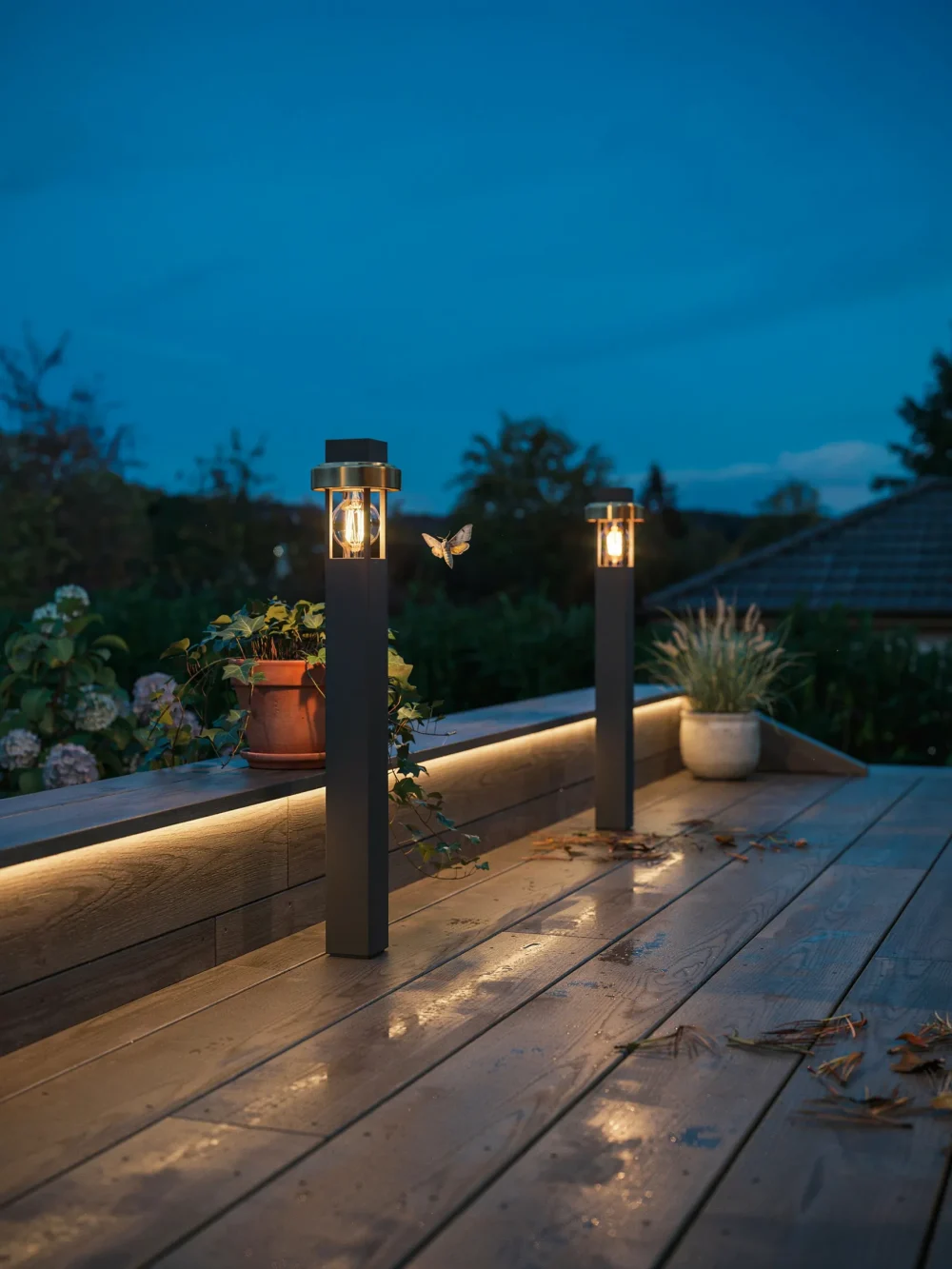
For a warmer, more relaxed atmosphere on composite wood decks, low-voltage post cap lanterns with a warm amber LED filament bulb deliver that cozy evening backyard illumination that makes you want to stay outside until midnight. Pair these with under-rail strips for layered lighting depth. Stick to 2200K–2700K for that genuinely warm, fire-adjacent glow.
16. String Light Integration With Railing Anchor Points
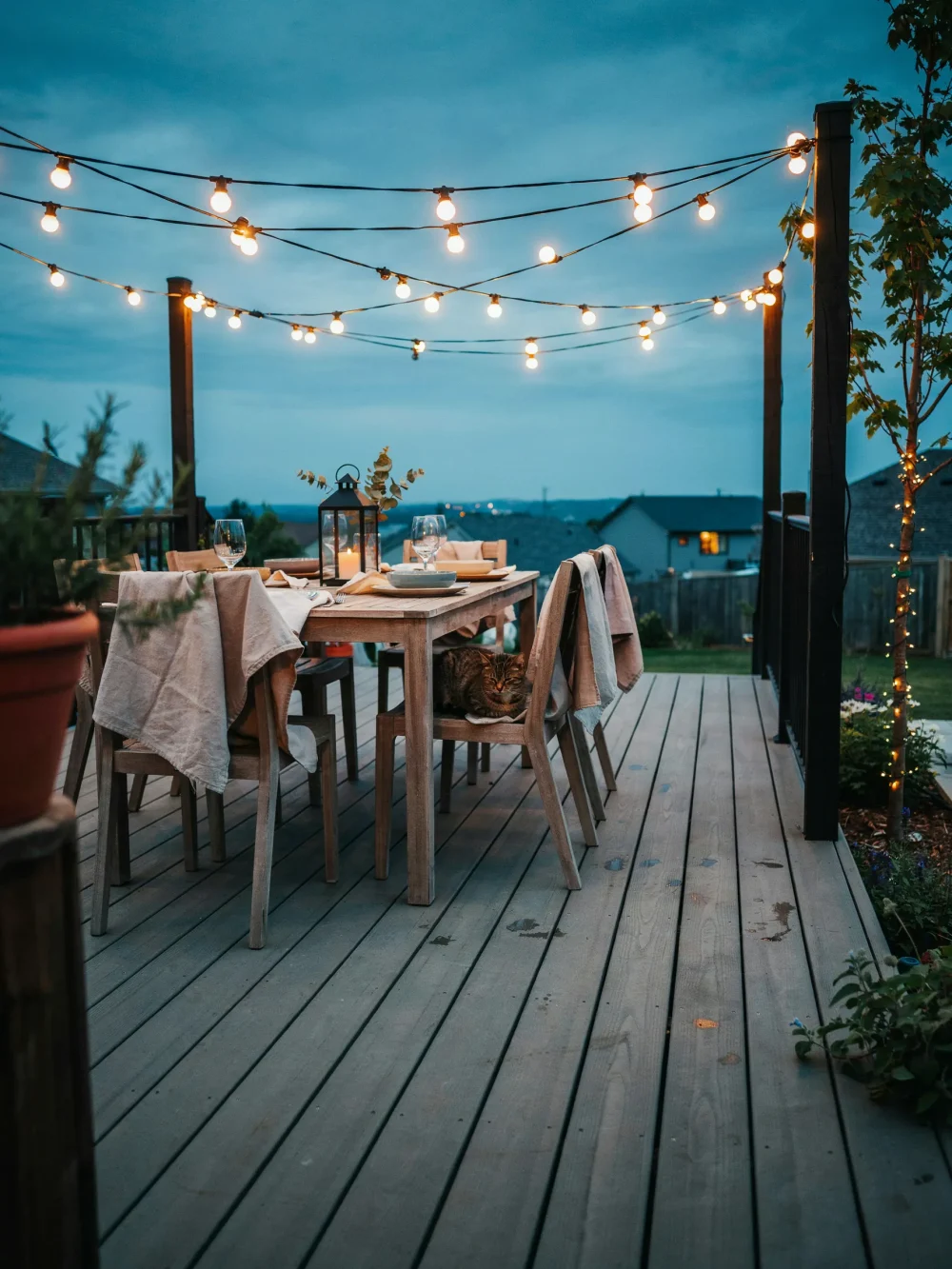
Using railing posts as anchor points for low-voltage outdoor string lights creates a canopy effect above the deck that frames the space beautifully from both inside and outside the home. Choose LED string lights with a 2700K warm white rating — the cool white versions feel clinical and cold. This is one of the most renter-friendly options since it requires no drilling into the structure itself.
17. Downlighting From Overhead Pergola Beams Above Stairs
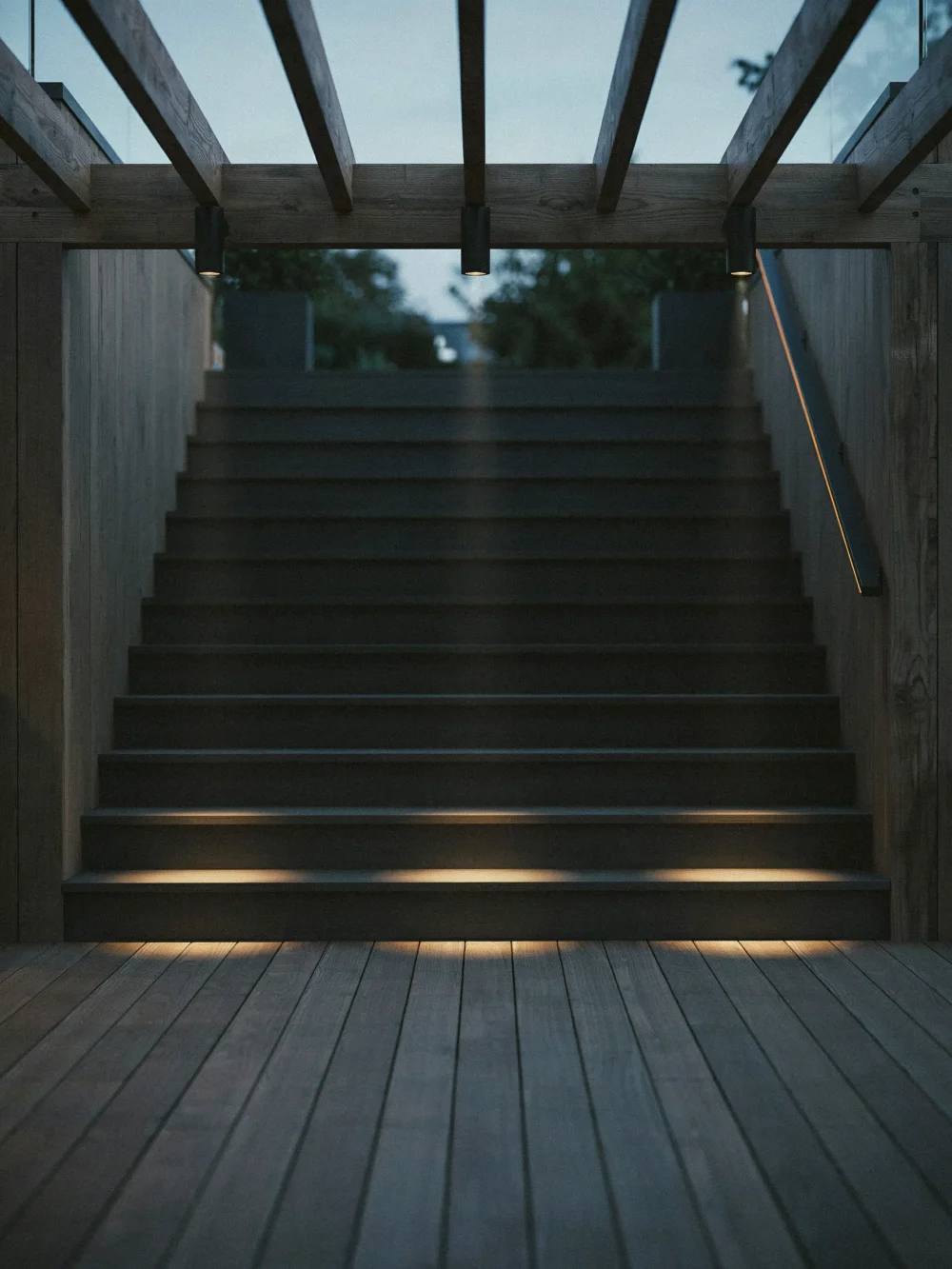
If your deck has a pergola or overhead structure, mounting small directional low-voltage downlights on the beams directly above the stair opening creates a spotlight effect that’s both dramatic and practical. Use adjustable-head fixtures so you can redirect the beam as needed after installation. This approach completely eliminates the need for riser or post lights on the staircase itself.
Smart and Budget-Friendly Modern Deck Railing Light Fixtures
These ideas work whether you’re a homeowner with a full budget or a renter working around a strict no-modification policy.
18. Smart Home Outdoor Lighting App Control via Low-Voltage Hub
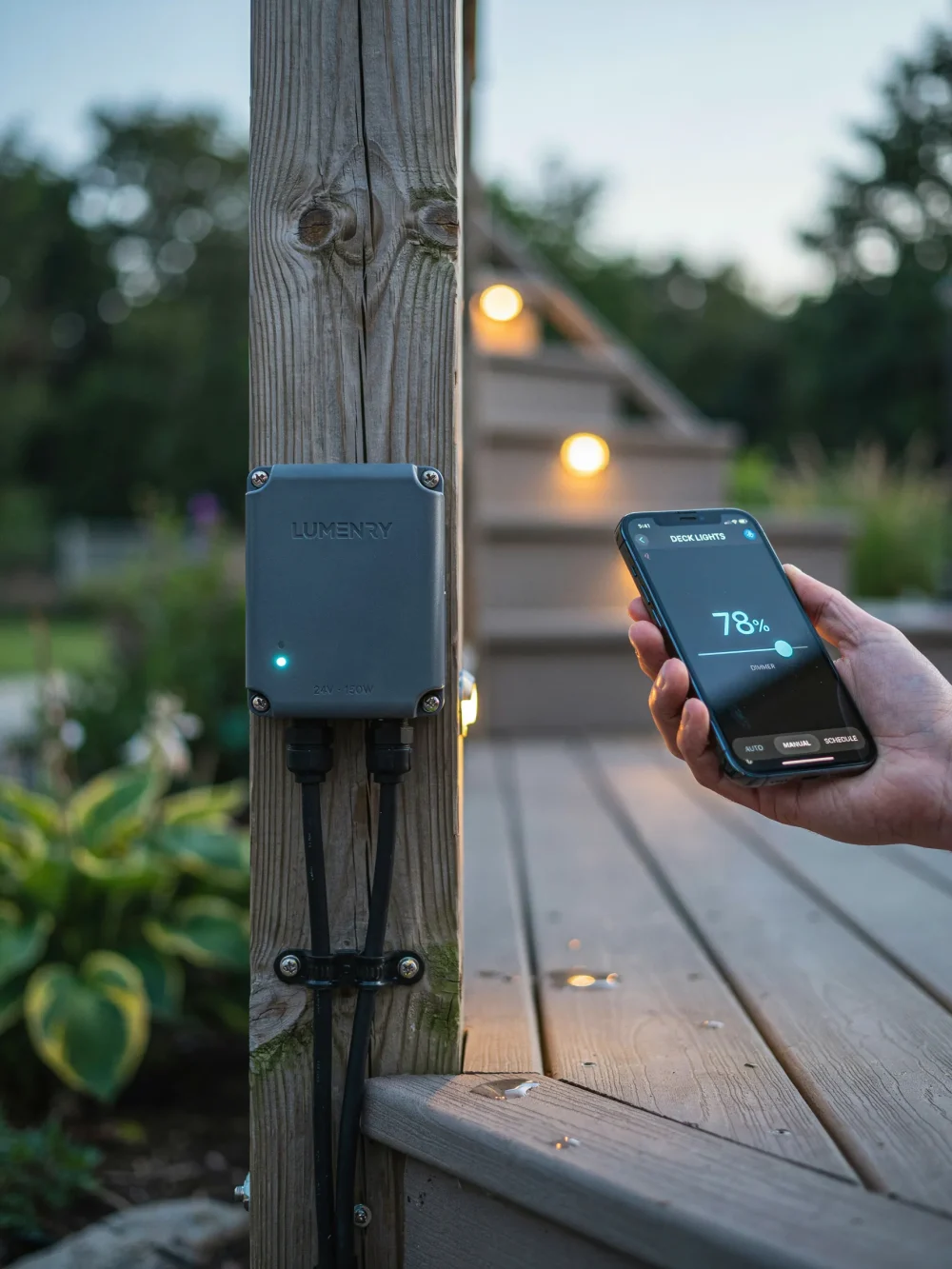
Connecting your low-voltage transformer to a smart home outdoor lighting app like Kasa or Lutron Caséta lets you set schedules, dim levels, and seasonal adjustments from your phone without touching a single fixture. This is especially useful for stair safety lighting — you can set it to full brightness at dusk and dim to 30% after 11 PM. Choose a transformer with a built-in smart module rather than adding a smart plug — it handles the load far more reliably.
19. Clip-On Railing LED Strips for Renters
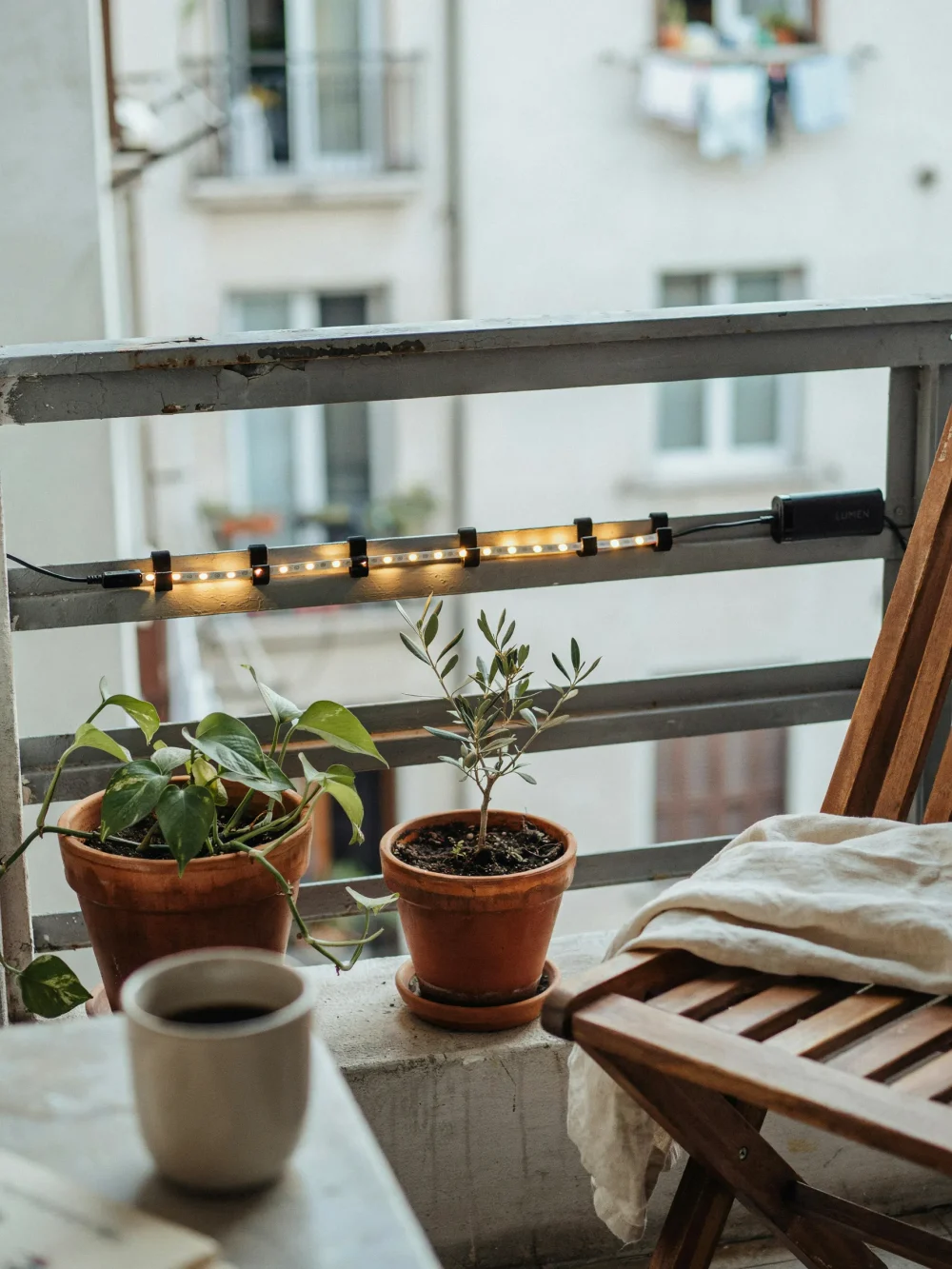
Battery-powered LED strip lights with strong outdoor-rated adhesive clips can be attached to railing undersides without any drilling or wiring — a genuinely viable option for renters or anyone in a rental property. Recharge them via USB every few weeks and you have consistent, attractive lighting with zero permanent installation. Just manage expectations: battery systems won’t match hardwired quality, but they’re infinitely better than nothing.
20. Low-Voltage Transformer Wiring Hidden in Decorative Post Bases
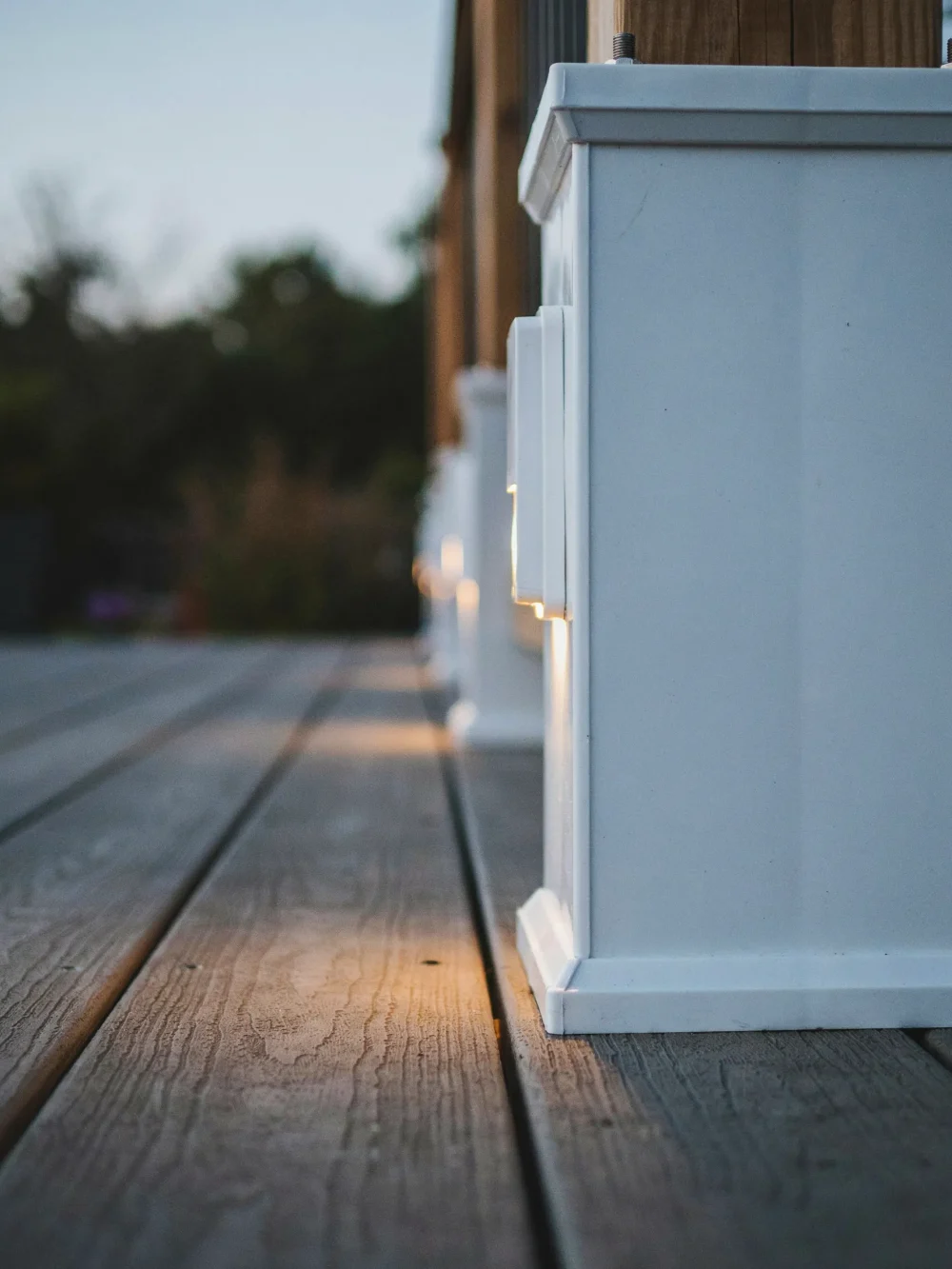
Routing your low-voltage transformer wiring through hollow decorative post base covers keeps the system completely invisible while maintaining full hardwired reliability. PVC post wrap sleeves in white or gray hide wire runs beautifully on existing posts. Label every wire run at the transformer end — future-you will be very grateful during any troubleshooting.
21. Color-Tunable Strips for Seasonal Deck Moods
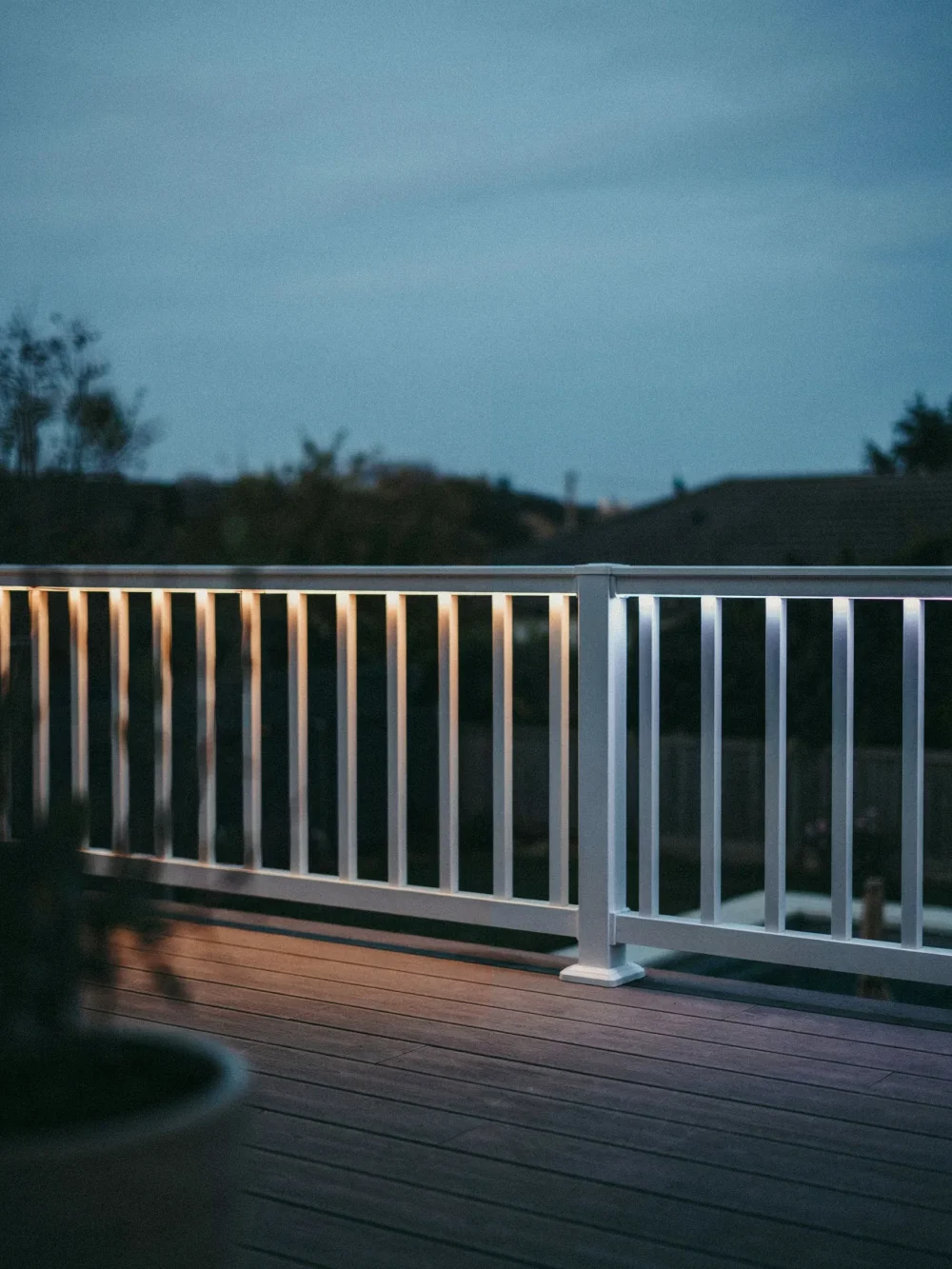
Installing tunable white LED strips — adjustable between 2700K and 5000K — means your deck lighting can shift from cozy warm amber in winter to crisp cool white in summer without changing a single fixture. This is a genuinely underrated feature that most homeowners discover they love after the first seasonal change. Pair this concept with ideas from our bedroom color scheme ideas guide to understand how color temperature affects mood across any space.
22. Integrated Bench Lighting Under Deck Seating
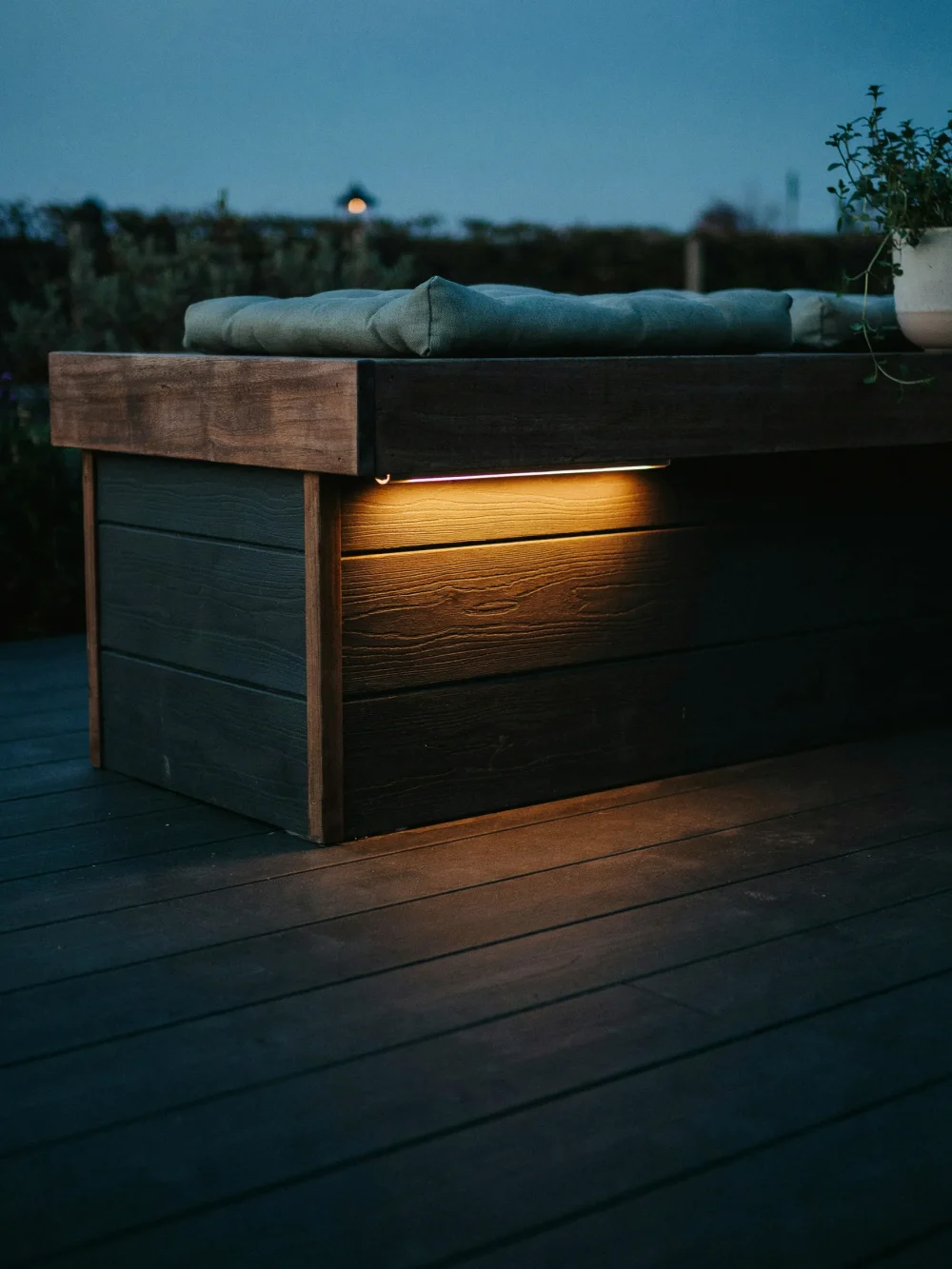
Built-in deck benches with LED strips mounted under the seat overhang create a floating bench effect and add a layer of ambient light at knee height that’s incredibly flattering for evening gatherings. This works especially well on darker composite decking where the contrast between the glow and the surface is dramatic. Use a diffuser channel — bare strips under a bench create hot spots that look unfinished.
Thinking About Outdoor Lighting Design Before You Buy Anything
Before you order a single fixture, it’s worth spending twenty minutes sketching your stair and railing layout on paper. Mark where each step transition happens, where posts are located, and where your nearest outdoor power source sits. Most lighting mistakes happen not from choosing the wrong fixture but from not planning the wire runs first — and then discovering that the most beautiful installation spot is twelve feet from any accessible conduit path.
Also consider your deck’s material. Composite decking, hardwood, concrete, and stone all interact differently with light color temperature. Warm woods look incredible under 2700K but washed-out under 4000K. Concrete and stone can handle cooler temperatures better. If you’re drawing inspiration for an interior-to-exterior design flow, looking at how color temperature works in spaces like a spa bathroom design can actually teach you a lot about layering warm and cool light sources intentionally.
23. Modern Deck Railing Light Fixtures With Integrated Sensors
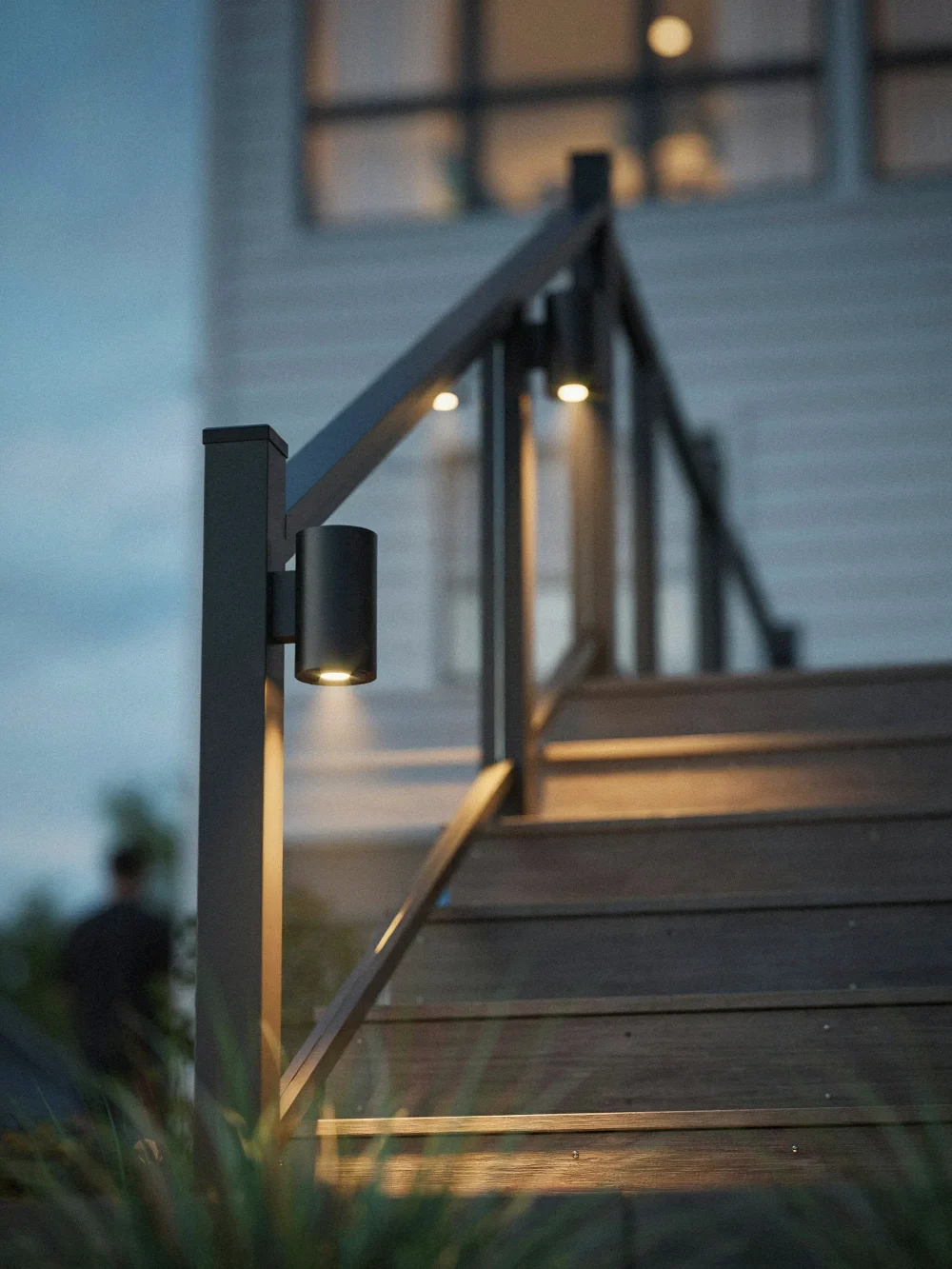
Motion-sensor-integrated railing post lights that activate at full brightness when someone approaches the stairs and dim back to 20% ambient when no motion is detected are both energy-smart and genuinely practical for late-night trips outside. Look for fixtures with adjustable sensitivity ranges so you’re not triggering them every time a cat walks by. Set the dim-down delay to at least 90 seconds — shorter timers feel annoying and abrupt.
24. Architectural Landscape Light Styling With Bollard-Style Post Bases
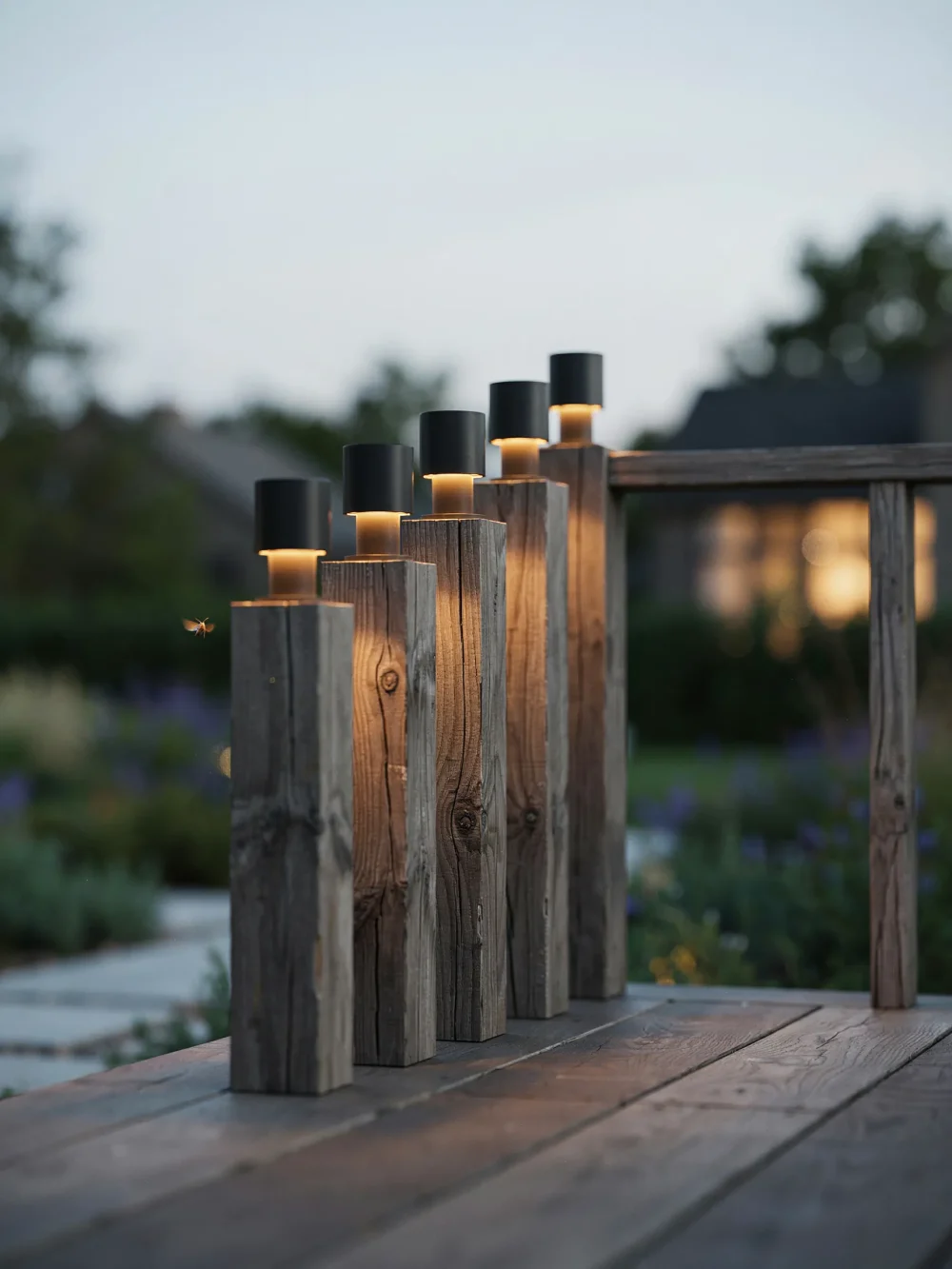
Replacing standard railing post caps with short bollard-style low-voltage fixtures creates a landscape lighting aesthetic that bridges the gap between deck design and garden design beautifully. Matte black cylindrical bollard caps on cedar posts look genuinely architectural and age well with the wood. This style pairs especially well with the kind of textural, layered design thinking found in our guide to textured boho wall styling.
25. Waterproof Recessed LED Lights for High-Traffic Outdoor Deck Surfaces
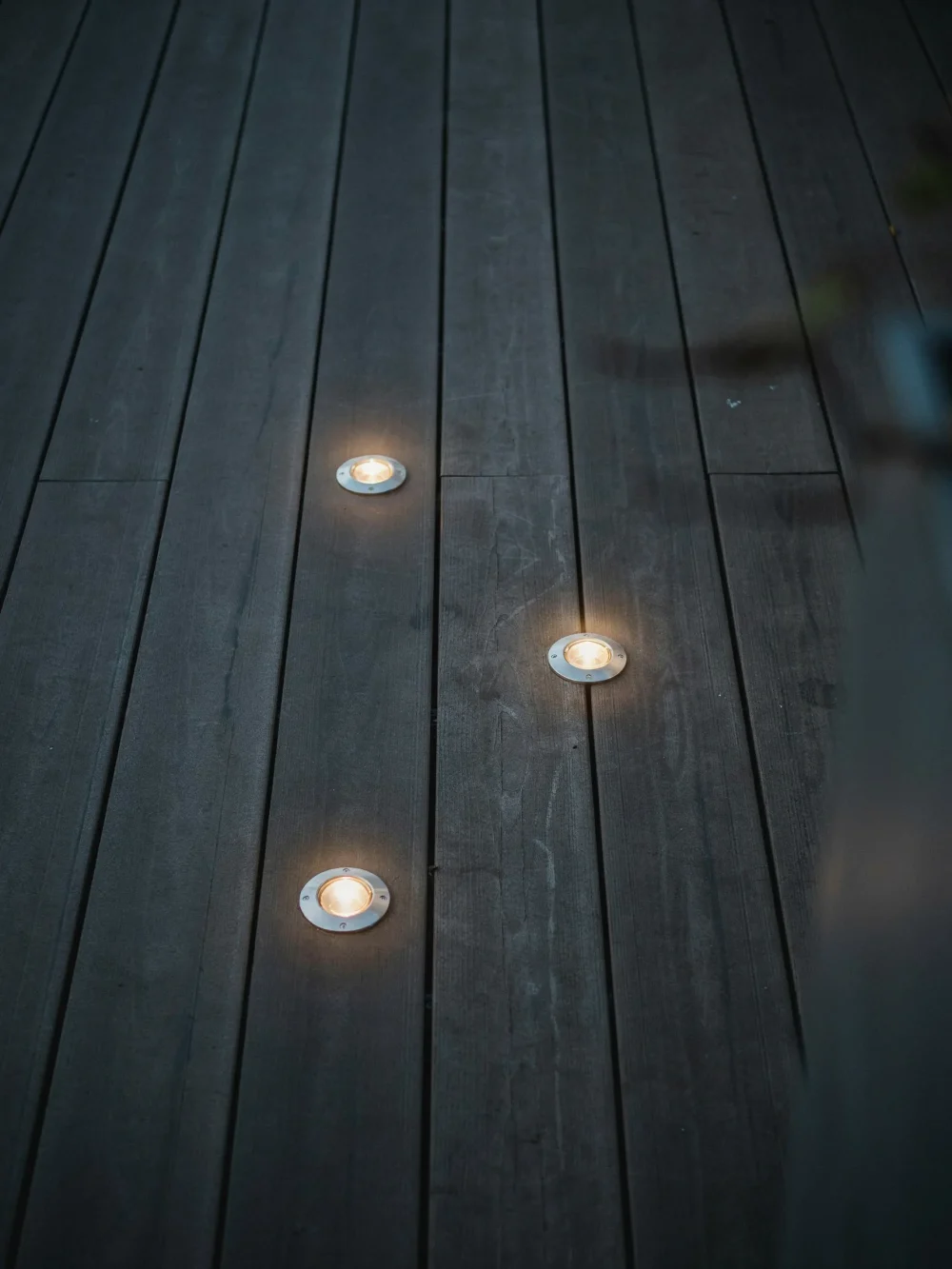
For the highest-traffic areas — landings, top-of-stair platforms, entry points — fully recessed in-deck LED discs rated IP68 handle foot traffic, standing water, and freeze-thaw cycles without degrading. Look for fixtures with tempered glass lenses rather than plastic — they resist scratching from chair legs and foot traffic far better. This is the one place in your entire lighting system where you should not compromise on fixture quality.
Your Practical Guide to Getting This Right From the Start
If you’re staring at your deck right now feeling overwhelmed by options, start with just one zone: your main stair run. Pick either riser lights or under-rail strips — not both — and get that single element right before expanding. One well-executed lighting zone looks more intentional than five half-finished ones. You can always layer in more fixtures once you understand how your transformer handles the load and how the light actually looks at night.
Renters and people in condos aren’t locked out of this. Battery-powered clip-on strips, solar accent markers, and low-voltage string lights anchored to freestanding post bases require zero permanent installation. The look won’t be identical to a hardwired system, but a well-chosen combination of these elements can genuinely elevate a balcony or shared patio space. Think of it the way you’d approach decorating a rental bedroom — check out our navy blue bedroom ideas for how to make a strong design statement without permanent changes.
Budget-wise, a complete low-voltage stair lighting system for a standard single-level deck with 6–8 steps runs between $180 and $400 in materials if you do the installation yourself. The transformer is your biggest single cost — don’t cheap out there. A quality 150-watt low-voltage transformer with a built-in timer costs around $80–$100 and will outlast three rounds of cheap fixtures. Spend on the infrastructure, save on the decorative elements.
The most common beginner mistake is mixing color temperatures across the same deck. Warm riser lights paired with cool white post caps look accidental and slightly chaotic. Pick one Kelvin range — 2700K for cozy and warm, 3000K for clean and modern — and stay consistent across every single fixture. This single discipline makes the difference between a deck that looks designed and one that looks assembled. If you want to understand how color consistency works across an entire home aesthetic, our sage green bathroom cabinet guide is a surprisingly good read on committing to a cohesive palette.
Making it look intentional comes down to one principle: light the transitions, not the surfaces. Stairs are transitions. Railings define edges. When you light those specific elements — the nosings, the post bases, the underside of rails — the whole deck reads as thoughtfully designed. Flooding the deck surface with overhead light just makes it look like a parking lot. For more ideas on how intentional detail work elevates an entire space, our decorative vases for living room guide shows how small, well-placed elements carry a room — the same logic applies outside.
Tonight, go outside after dark and just observe where your current lighting fails — where steps disappear, where railings vanish, where you feel uncertain about your footing. That honest observation is your entire design brief. Start there, fix that one thing first, and the rest will follow naturally.


