20 Genius Vintage Vanity Conversions How to Turn an Old bathroom vanity into a Custom Masterpiece
You walk into a thrift store, and there it is — a beat-up dresser with good bones, the kind of piece that makes your brain start doing math. You know it belongs somewhere better than a garage sale, but you’re not quite sure how to get it there. A vintage vanity conversion is exactly the project that bridges that gap between “this has potential” and “I cannot believe I made that.” I have stood in that same aisle, phone flashlight pointed at dovetail joints, completely convinced I was about to change my bathroom forever.
The Honest Mistake I Made on My First Vintage Vanity Conversion
My first attempt involved a gorgeous 1940s walnut dresser I found at an estate sale for forty dollars. I was so excited about the aesthetics that I skipped the most critical step: sealing the wood properly before any plumbing went near it. I used a single coat of polyurethane and called it done. Within three months, the wood around the sink basin had started to swell and warp from daily water splash, and the whole top had to be replaced.
The biggest lesson: waterproofing is not optional, it is the entire project. You need at minimum two to three coats of a moisture-resistant polyurethane topcoat, and ideally a marine-grade sealant on any surface within six inches of the sink. I also learned that vessel sinks are genuinely more forgiving for beginners because they sit on top of the surface rather than requiring a precise undermount cutout. Seal everything first. Then make it pretty.
Classic Cottagecore and Farmhouse Conversions
These ideas lean into imperfection — chippy paint, aged hardware, and the kind of warmth that makes a bathroom feel like it has always been there.
1. The Chippy White Farmhouse Dresser with a Copper Vessel Sink
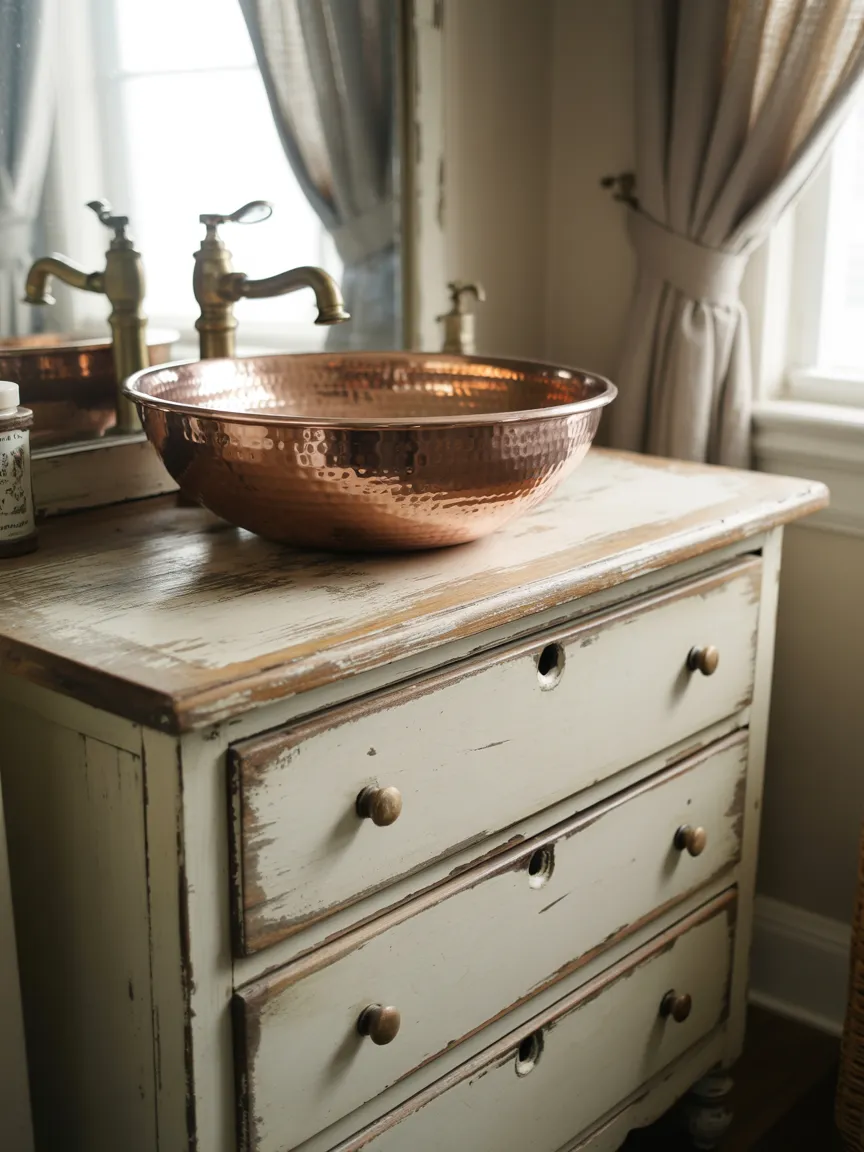
A distressed white painted dresser paired with a hammered copper vessel sink creates an instant farmhouse focal point that feels genuinely old rather than manufactured. Sand the edges deliberately, then layer chalk paint over milk paint for a naturally aged chippy finish that actually holds up. Do not skip a clear wax topcoat over chalk paint in a bathroom — it is the only thing standing between your finish and humidity damage.
2. Shiplap-Sided Nightstand Powder Room Vanity
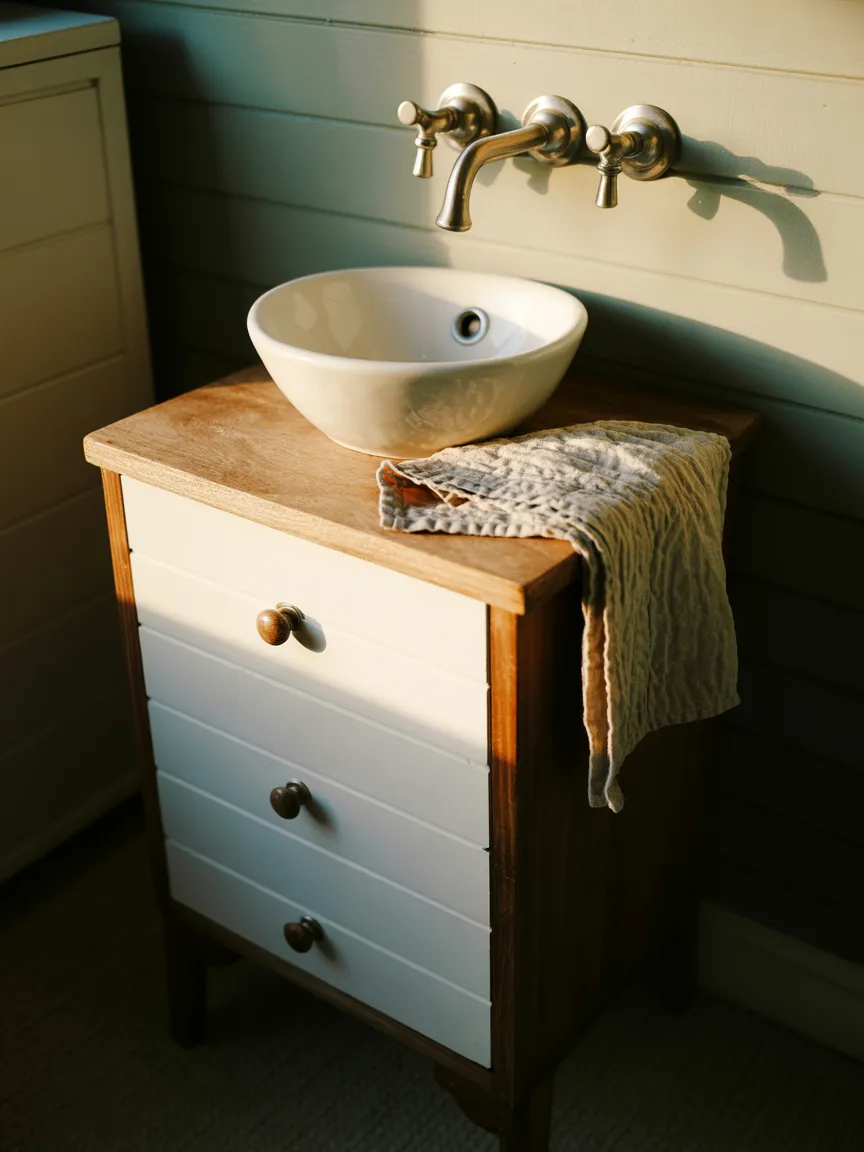
A thrifted nightstand wrapped in thin shiplap strips on its sides becomes a powder room vanity that looks completely custom for under eighty dollars in materials. Use a small round vessel sink and a single-hole wall-mounted faucet to keep the proportions right on a compact piece. This works brilliantly in small space powder room setups — check out these small space layout ideas for scale inspiration you can apply directly to a tight bathroom footprint.
3. Sage Green Painted Antique Dresser with Apron Front Sink
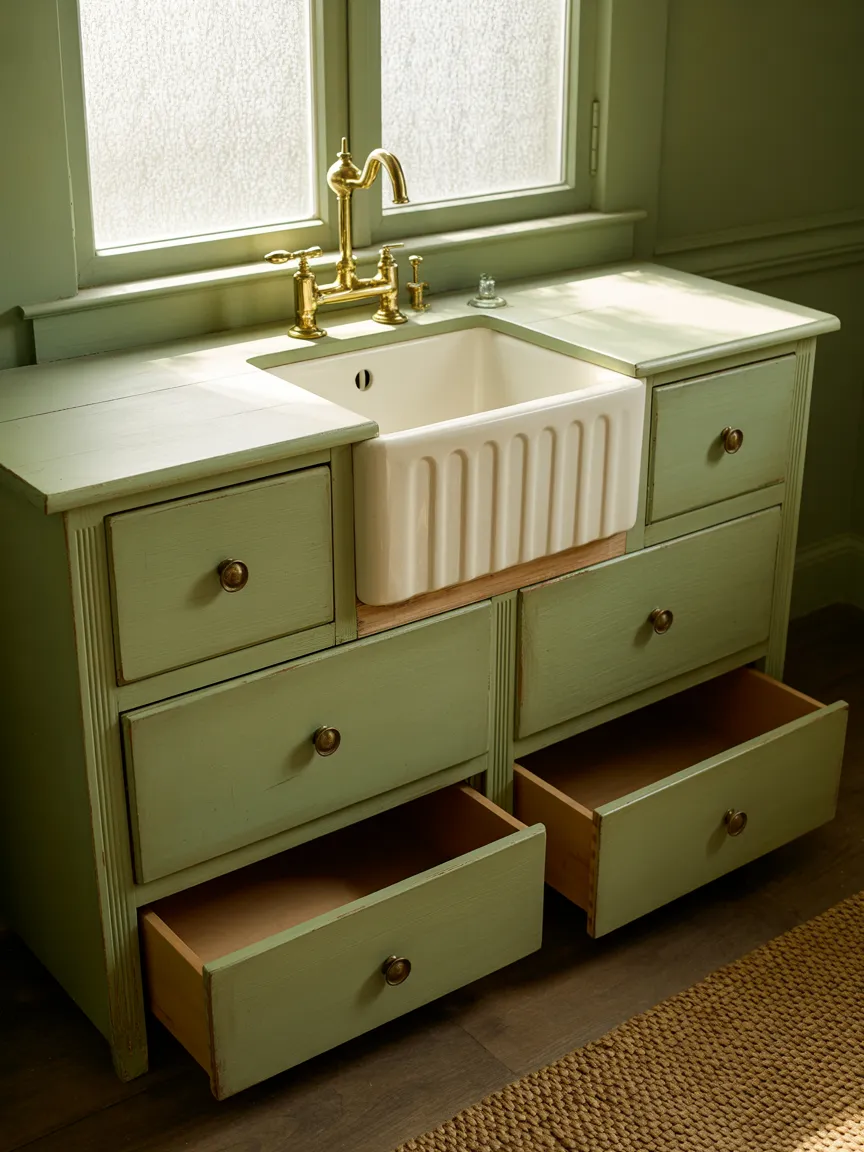
An apron front farmhouse sink dropped into a wide antique dresser with the top two drawers removed creates a look that feels like it was pulled from a French countryside home. Paint the dresser in a muted sage green, add unlacquered brass faucet hardware, and the combination is genuinely stunning. The unlacquered brass will patina over time, which only makes it look more authentic — that is a feature, not a flaw.
4. Distressed Wood Finish with Woven Basket Drawer Inserts
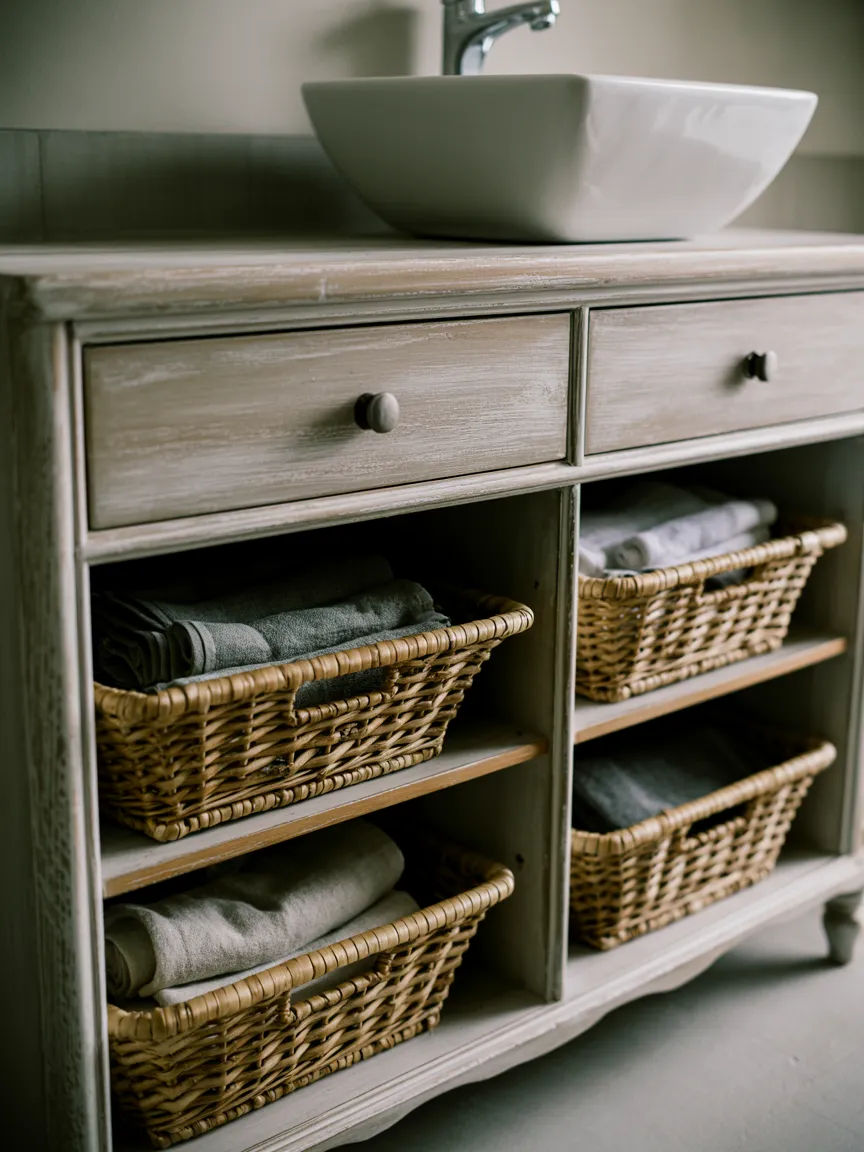
Remove the bottom drawers of a wide dresser to create open shelving, then style woven seagrass baskets inside for storage that doubles as texture. A wire-brushed wood finish on the dresser exterior adds depth without requiring full refinishing. This is one of the easiest antique dresser bathroom vanity DIY approaches for someone who wants impact with minimal carpentry.
Mid-Century Modern and Credenza Conversions
These conversions reward patience and precision — the payoff is a bathroom that genuinely looks like it belongs in an architecture magazine.
5. Teak Credenza Double Vanity with Undermount Sinks
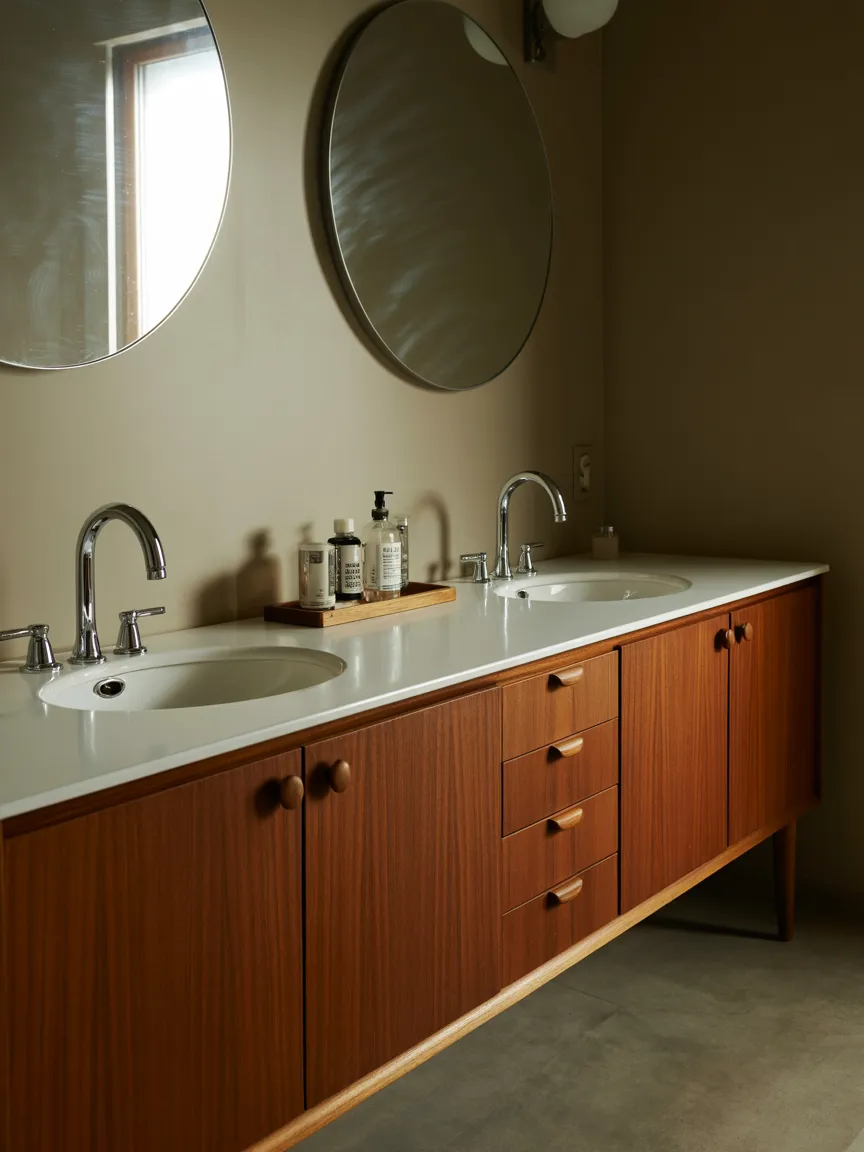
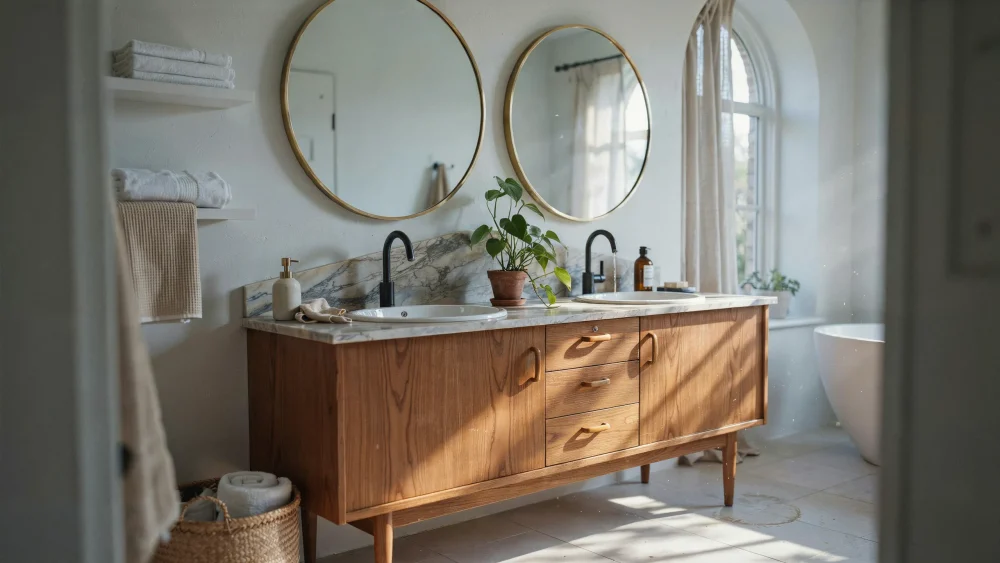
A long mid-century teak credenza converted into a double vanity with two undermount sinks is one of the most dramatic upgrades possible in a master bathroom. You will need a hole saw for the plumbing cutouts and a professional plumber for the drain lines unless you are confident in your rough-in skills. Measure the credenza depth against your standard drain rough-in location before you buy anything — a shallow credenza will not accommodate standard P-trap depth.
6. Vintage Mid-Century Modern Credenza Vanity with Marble Remnant Top
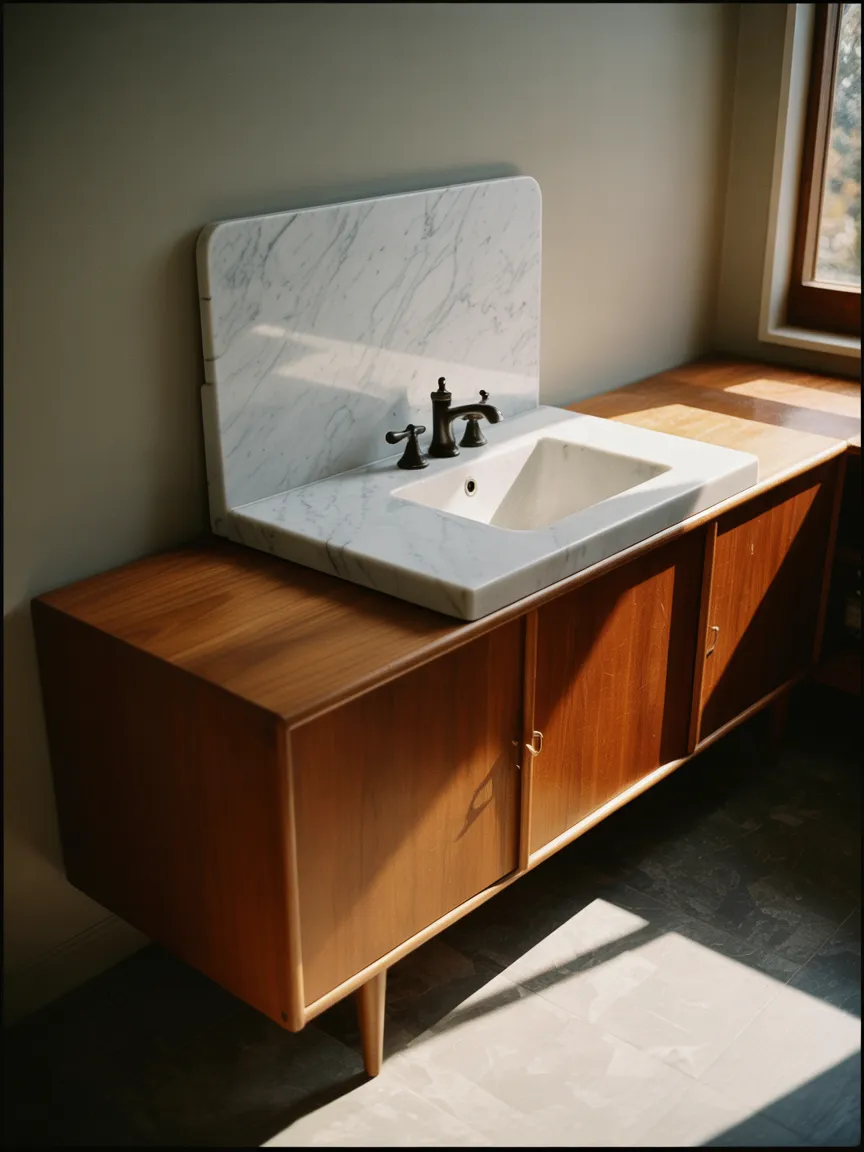
Sourcing a marble remnant from a local stone yard and having it cut to fit a mid-century credenza creates a vanity top that looks like it cost four times what you paid. Remnant pieces are often available for fifty to one hundred fifty dollars depending on your region, and stone yards will frequently cut and polish edges for a small additional fee. This is the single upgrade that makes a vintage mid-century modern credenza vanity look genuinely high-end rather than DIY.
7. Hairpin Leg Lowboy Dresser with a Geometric Vessel Sink
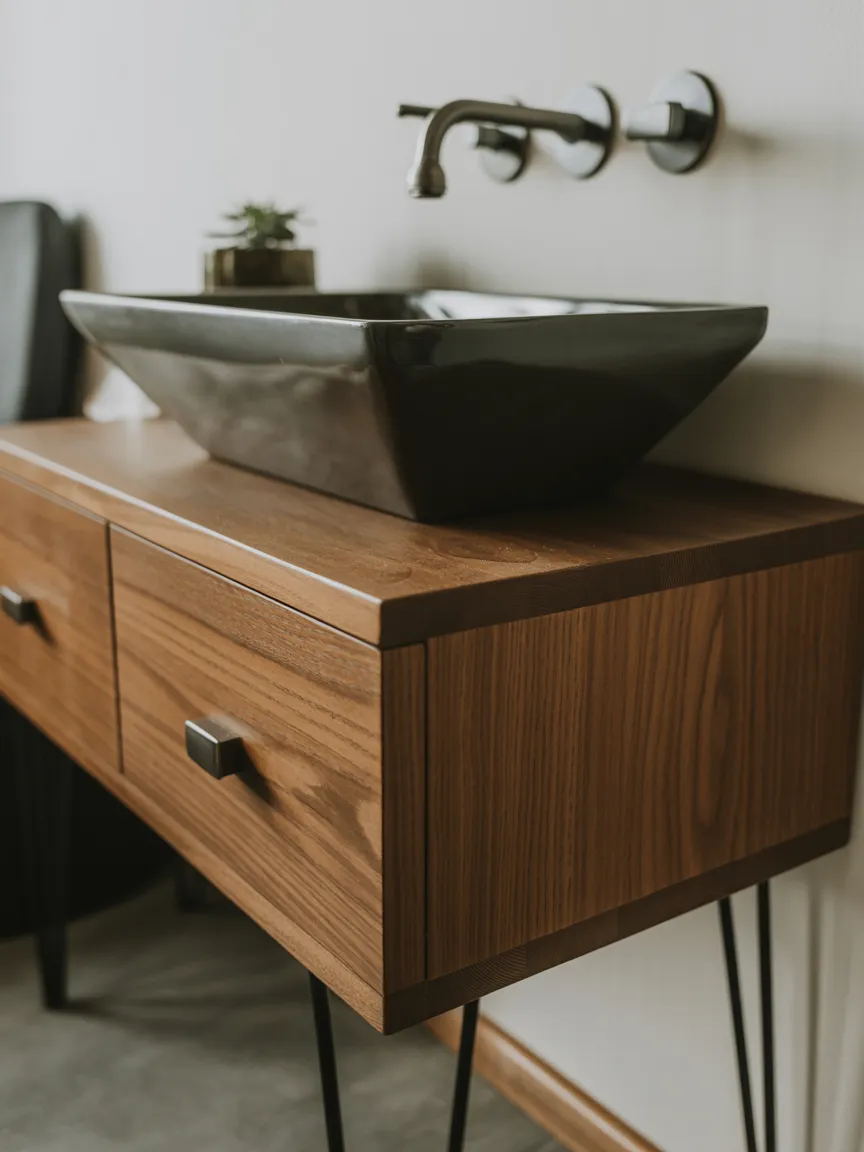
Replace the original legs on a low mid-century dresser with raw steel hairpin legs, then top it with a geometric black matte vessel sink for a look that bridges retro and contemporary. The contrast between warm wood tones and matte black fixtures is visually compelling and photographs beautifully. Sand the hairpin legs lightly and apply a clear coat before installation — raw steel will rust in bathroom humidity within months.
8. Walnut-Stained Console Cabinet with Integrated Towel Rail
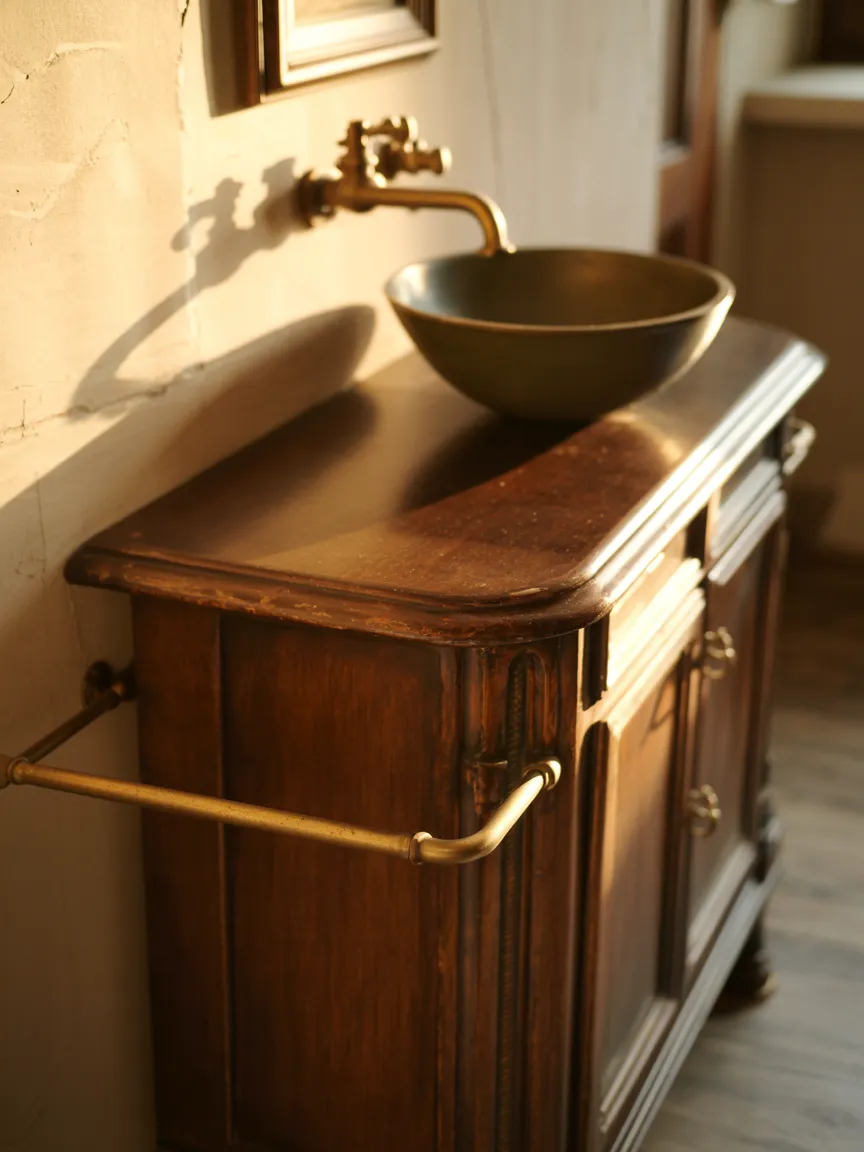
A narrow console-style antique cabinet stained in a deep walnut tone, fitted with a vessel sink and a small integrated towel rail on one side, solves the eternal bathroom problem of nowhere to hang anything. Mount the towel rail using heavy-duty wall anchors rather than attaching it to the cabinet itself so the weight stays on the wall. This retro dresser to sink conversion style works especially well in narrow bathrooms where a standard vanity would feel oppressive.
Boho, Global, and Eclectic Conversions
These ideas embrace pattern, color, and cultural texture in ways that make a bathroom feel genuinely personal rather than catalog-sourced.
9. Hand-Painted Moroccan Pattern Dresser Vanity
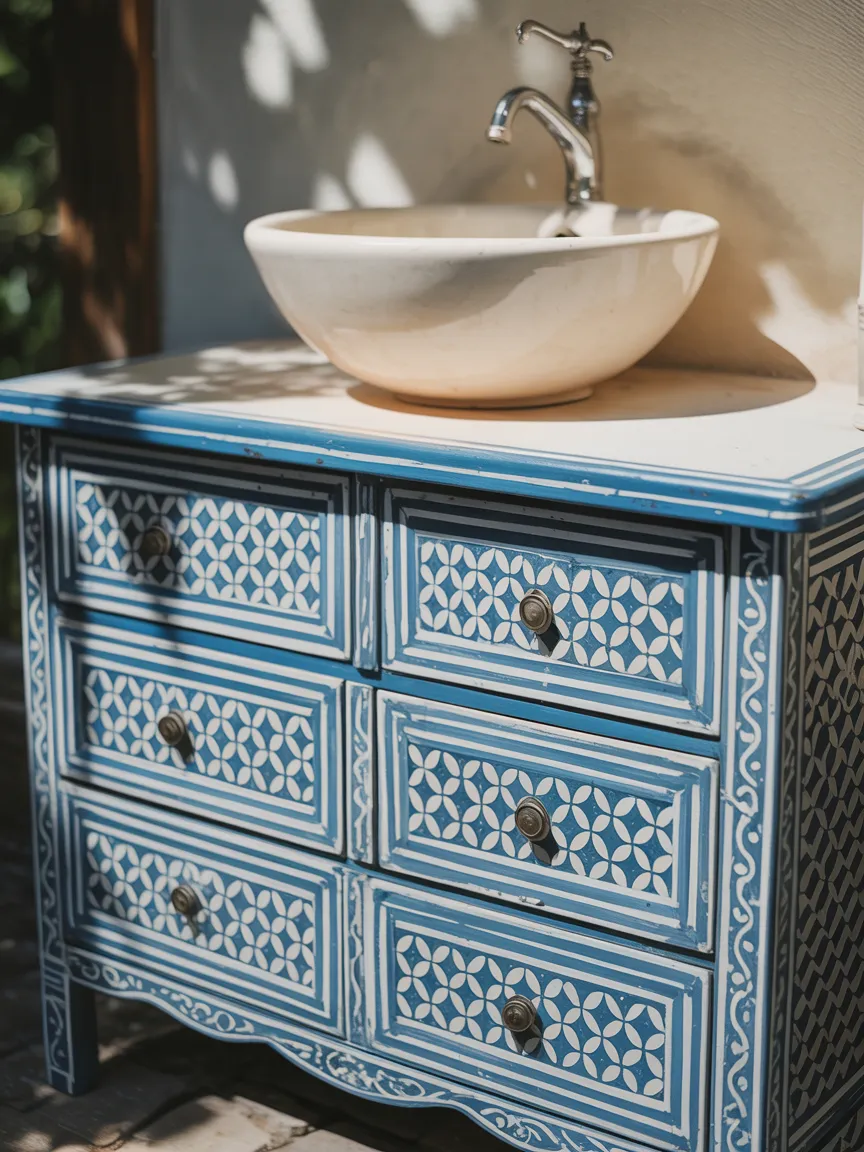
A plain antique dresser becomes something extraordinary when the drawer fronts are hand-painted in a Moroccan tile pattern using acrylic craft paint sealed with a satin polyurethane topcoat. Pair it with a simple white vessel sink so the painted surface stays the visual star. Use painter’s tape and a fine detail brush — freehand Moroccan patterns are unforgiving and the tape lines are what make it look intentional rather than chaotic.
10. Rattan-Front Cabinet Vanity with a Terracotta Vessel Sink
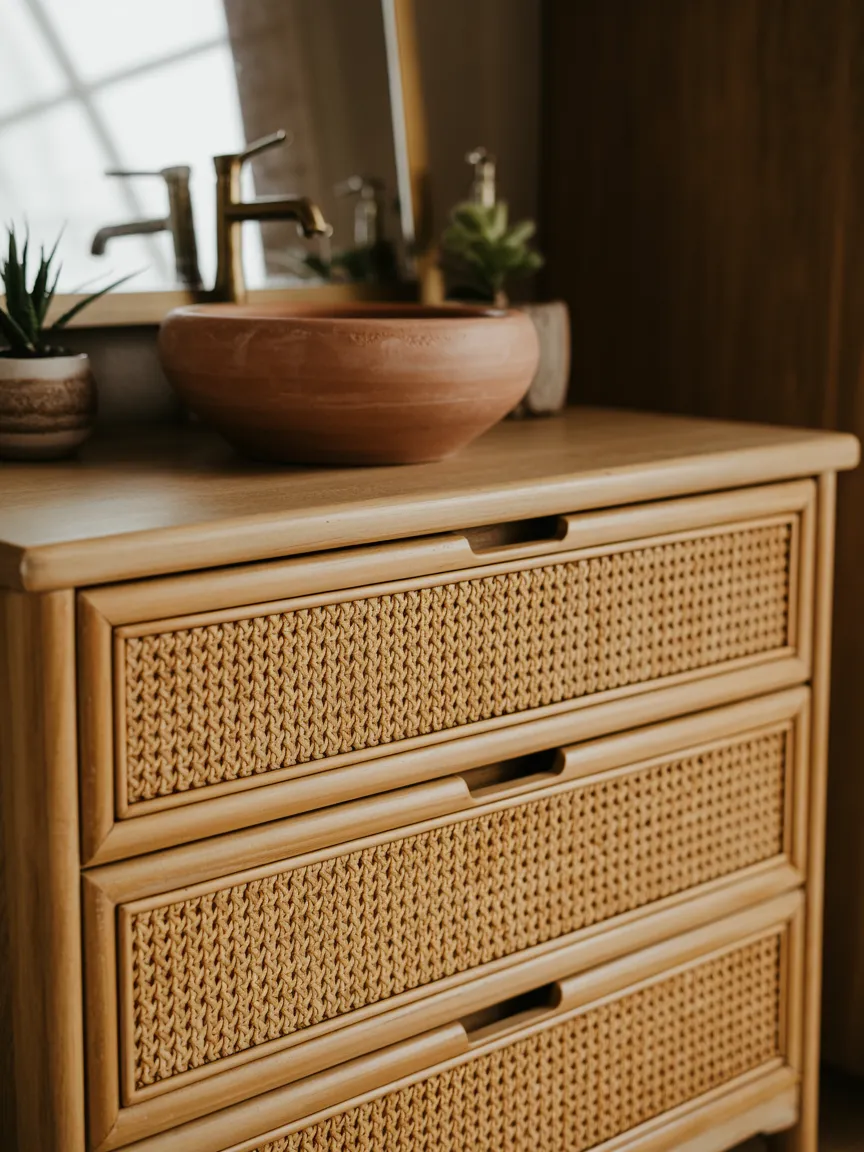
Replace flat drawer fronts on a dresser with rattan cane webbing panels for a boho-global texture that is genuinely on trend without feeling forced. A terracotta or clay vessel sink from a ceramics supplier completes the earthy, artisan aesthetic. Seal the rattan panels with a clear spray sealant — moisture will cause them to sag and yellow within a season if left untreated.
11. Jewel-Toned Painted Dresser with Antique Brass Drop Pulls
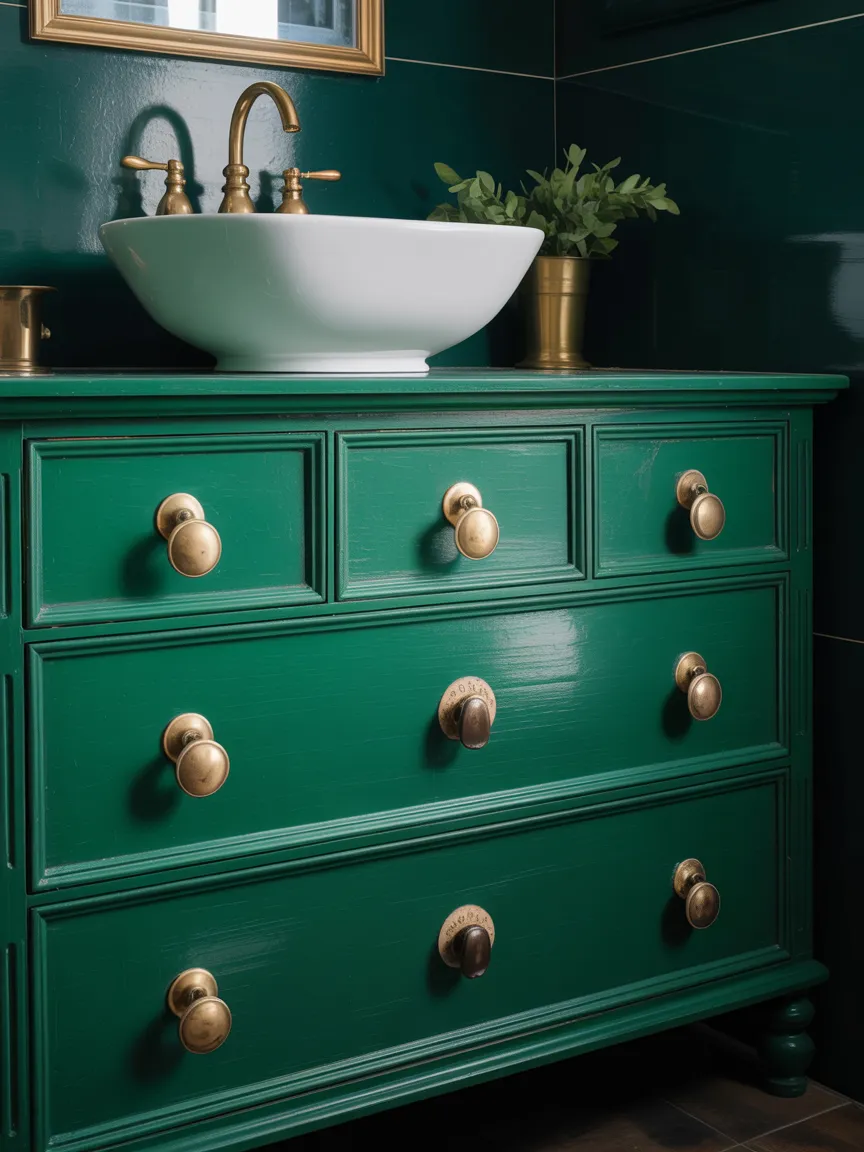
A deep emerald, sapphire, or oxblood red painted dresser fitted with antique brass drop pulls creates a vanity that feels genuinely luxurious in a way that expensive store-bought vanities rarely achieve. The antique brass drop pulls are available on Etsy or at architectural salvage shops for a few dollars each and make an enormous visual difference. Paint the interior of the drawers a contrasting neutral — it is a small detail that signals intentionality every time someone opens a drawer.
12. Decoupage Botanical Dresser Vanity
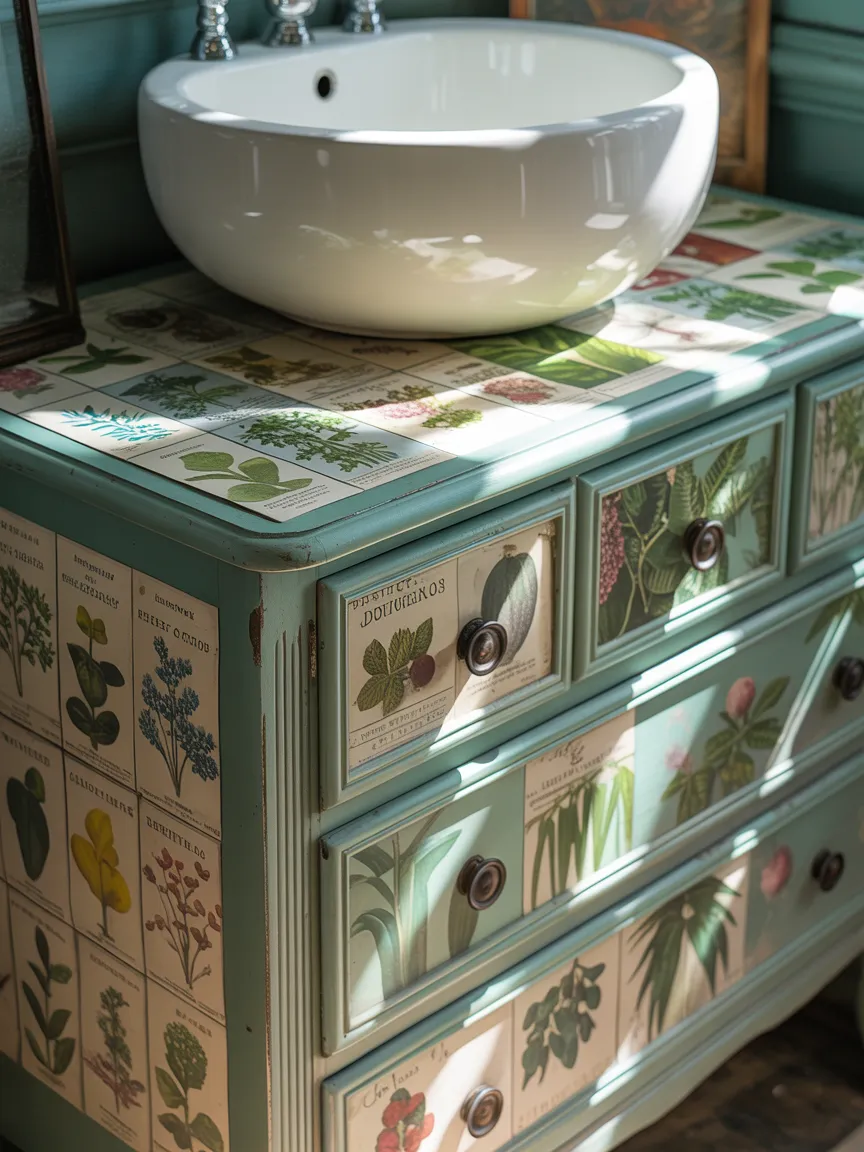
Cover dresser drawer fronts and sides with botanical print decoupage — vintage seed catalog pages, pressed flower prints, or antique botanical illustrations — sealed under multiple coats of waterproof Mod Podge and a final polyurethane layer. This technique works on almost any wood surface regardless of its original finish condition. Apply at least four topcoat layers over the decoupage in a bathroom — two will not be enough against daily humidity.
Before moving forward with any conversion project, it is worth pausing to think about the plumbing reality hiding inside your chosen piece. Most people focus entirely on the exterior finish and then hit a wall — sometimes literally — when they realize the drawer configuration does not leave room for a P-trap. The standard depth for a bathroom vanity is around twenty-one inches, and many antique dressers fall short of that. Measure your rough-in distance from the wall to your drain center, then hold that measurement against your dresser depth before you commit to anything.
The drawer modification question also comes up constantly, and the honest answer is: yes, you will likely lose some drawer space, but not all of it. The bottom two drawers in most conversions become either a false front hiding plumbing or a modified half-drawer. The upper drawers almost always remain fully functional, which is where most people keep their daily bathroom essentials anyway. If storage is a genuine concern for your space, look at apartment-friendly storage solutions that can supplement what the vanity itself provides.
Rustic, Industrial, and Reclaimed Wood Conversions
Raw materials and honest construction are the heart of these conversions — the beauty comes from showing the work rather than hiding it.
13. Reclaimed Barn Wood Dresser Vanity with a Cast Iron Vessel Sink
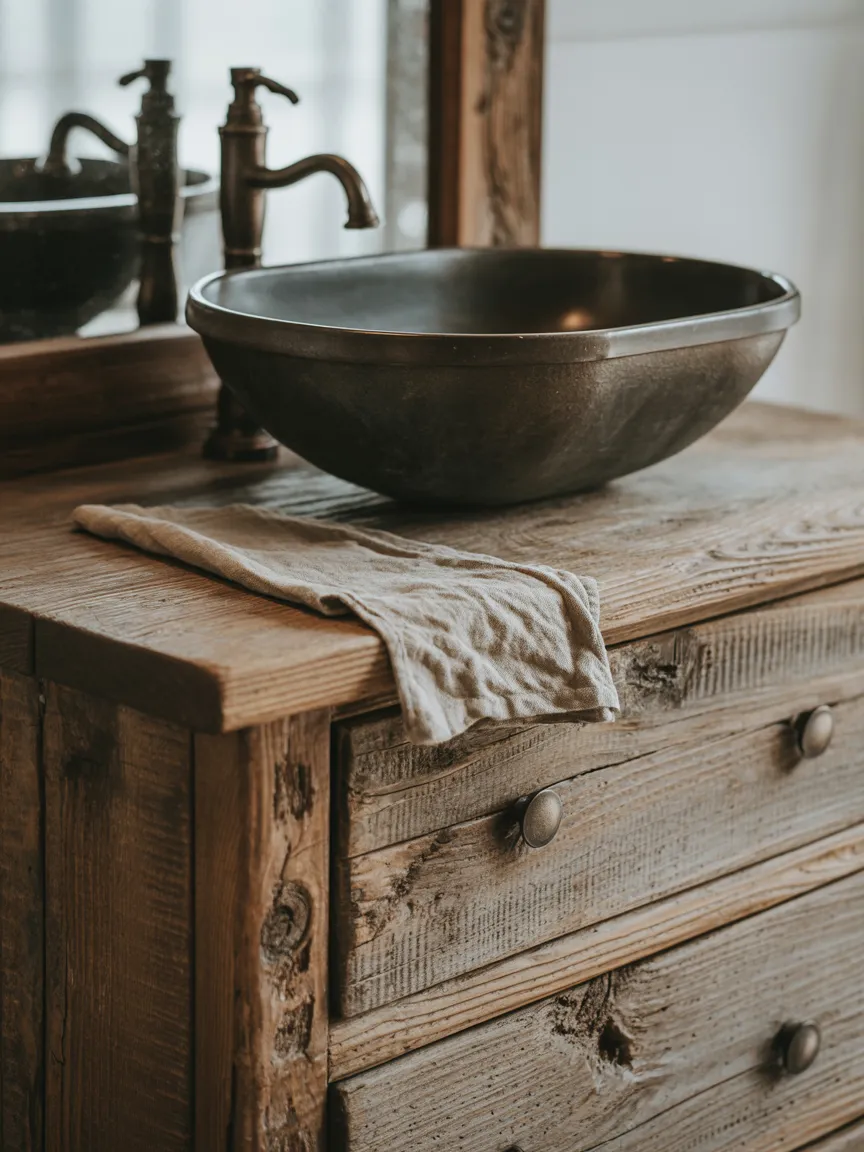
Building a vanity frame from reclaimed barn wood planks and fitting it with a cast iron vessel sink creates a rustic vintage vanity aesthetic that is genuinely hard to replicate with new materials. Source barn wood from salvage yards or demolition companies — it is often available cheaply or free if you are willing to pull it yourself. Kiln-dry reclaimed barn wood before using it in a bathroom or it will warp as it adjusts to indoor humidity levels.
14. Industrial Pipe-Legged Vintage Cabinet Vanity
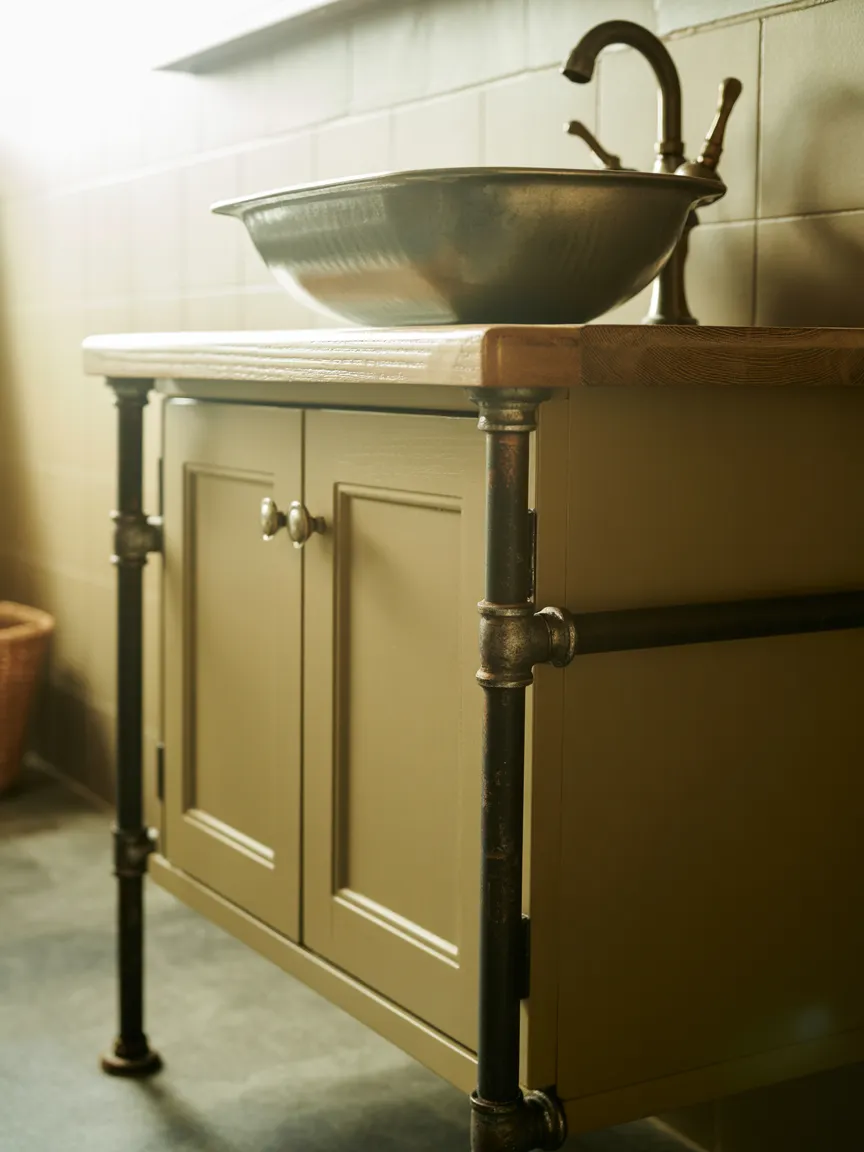
Replace the legs on a vintage cabinet with black iron pipe fittings from a hardware store, creating an industrial-rustic hybrid that looks custom but costs almost nothing extra. The pipe legs also raise the cabinet height, which is genuinely useful if the original piece sat too low for comfortable daily use. Use floor flanges rated for actual load-bearing use — decorative pipe fittings are not the same thing and will fail under the weight of a stone sink top.
15. Rough-Sawn Cedar Chest Vanity with a Concrete Vessel Sink
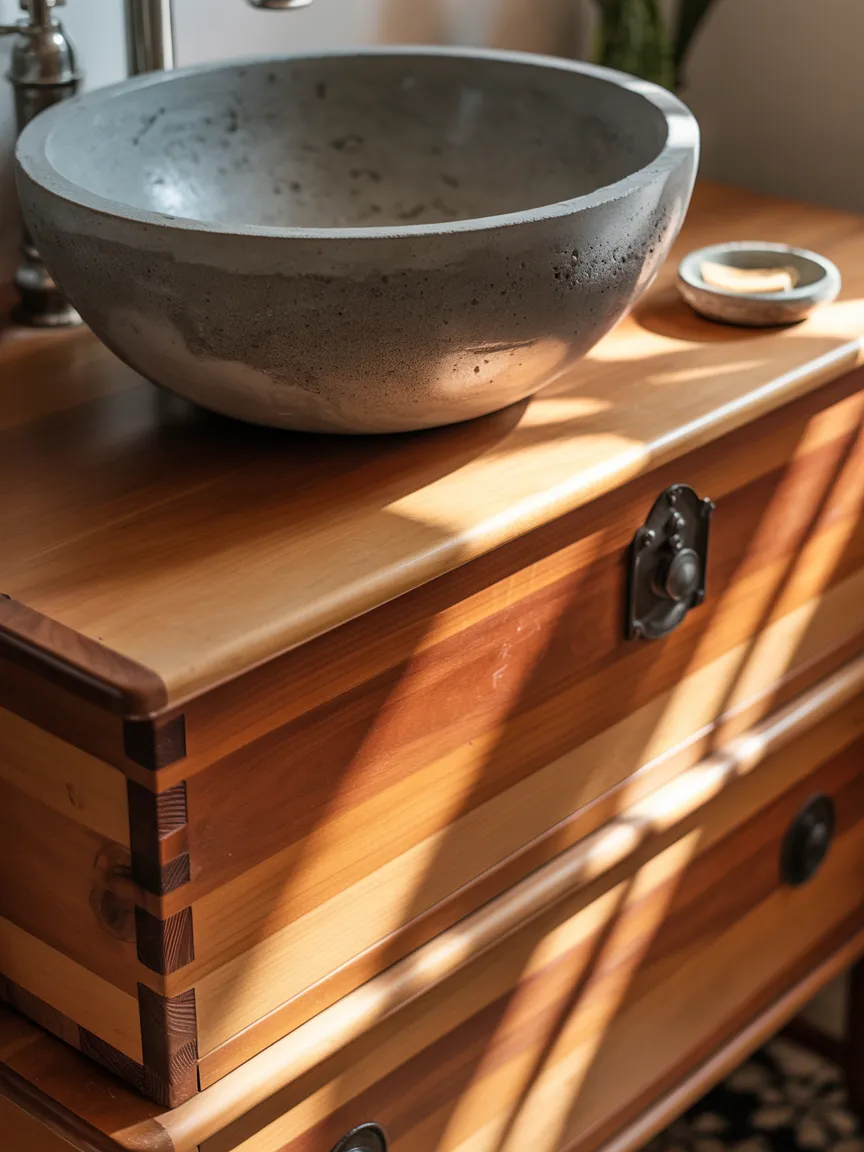
A wide cedar chest converted into a bathroom vanity with a DIY concrete vessel sink poured in a silicone mold creates a completely one-of-a-kind piece that genuinely cannot be bought anywhere. Seal the cedar with a penetrating oil finish rather than a film-forming sealant so the wood can breathe while still resisting moisture. Concrete sinks must be sealed with a food-safe penetrating sealer on the interior — unsealed concrete will stain permanently within weeks.
16. Whitewashed Plank-Top Dresser with a Matte Black Faucet
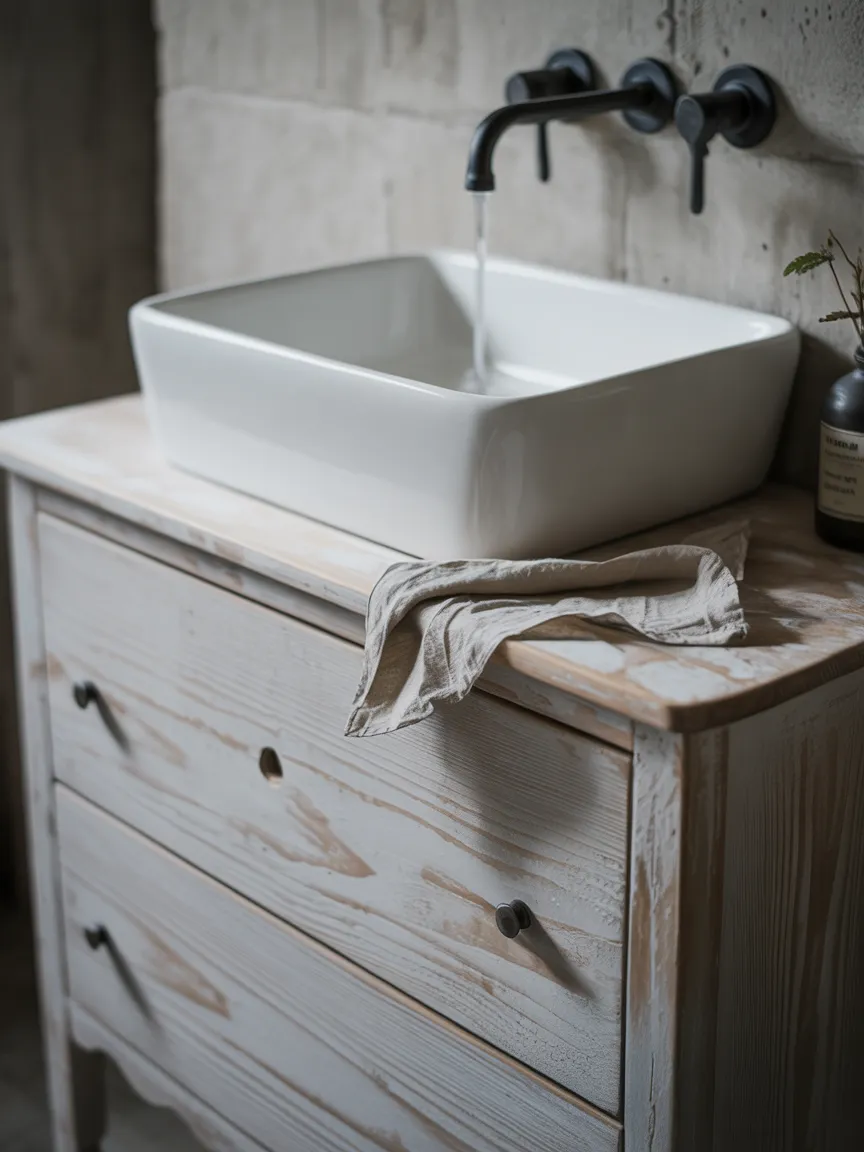
A whitewashed finish on a solid wood dresser paired with a matte black wall-mounted faucet and a simple white rectangular vessel sink creates a Scandinavian-rustic hybrid that feels both modern and aged. The whitewash technique requires diluted white paint applied and partially wiped off while wet — it is forgiving and beautiful on open-grain woods like oak or ash. Wall-mounted faucets require in-wall supply lines, so confirm your wall construction before committing to this faucet style. For more bathroom styling ideas that complement this aesthetic, browse these bathroom curtain ideas that pair beautifully with a rustic vanity.
Small Space and Powder Room Conversions
Scale matters enormously here — the right small piece in a powder room is more impressive than a large piece shoehorned into a space that cannot hold it.
17. Thrifted Nightstand Single-Sink Powder Room Vanity
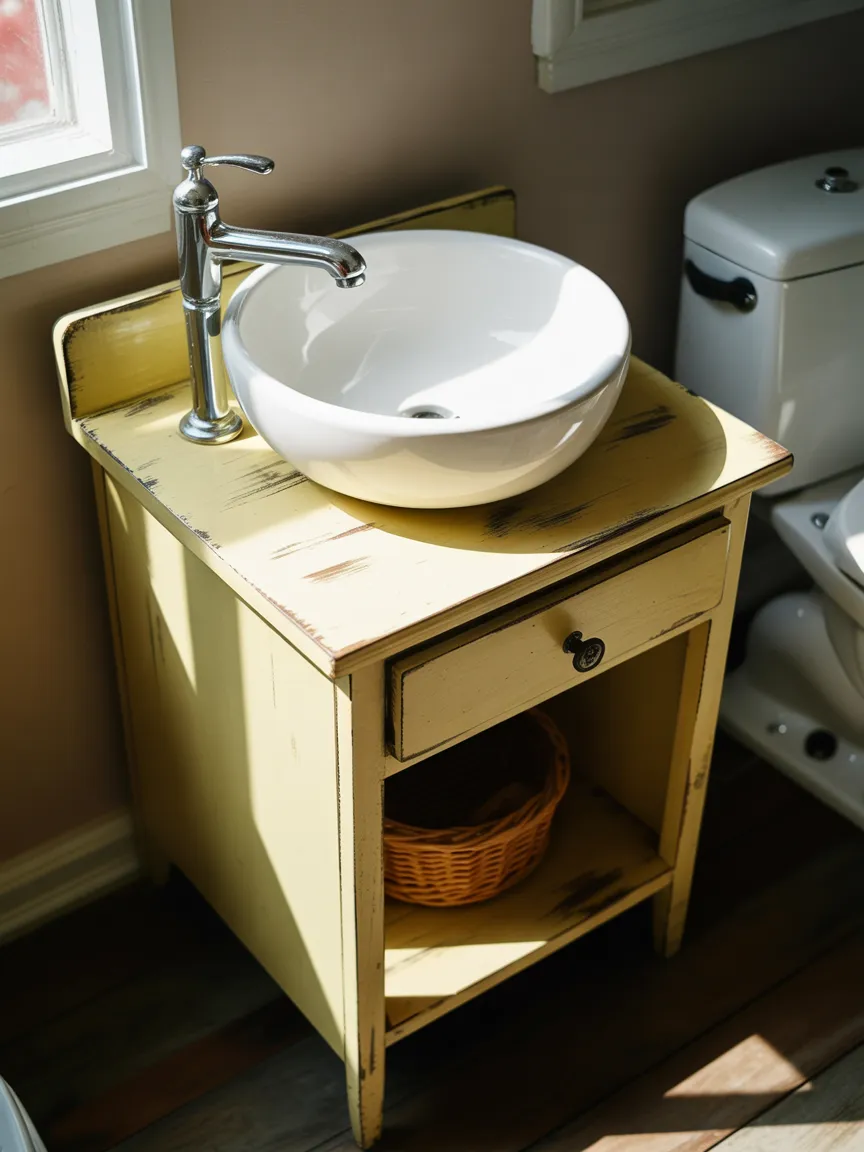
A single nightstand with one drawer and an open shelf below converts into a perfect powder room vanity — compact, charming, and completely custom for under one hundred dollars in total materials. Use a small round vessel sink and a single-hole faucet, and the proportions will feel intentional rather than improvised. This is the ideal entry-level vintage vanity conversion for anyone who has never done plumbing work before — the scale keeps every step manageable.
18. Antique Writing Desk Vanity with a Drop-In Sink
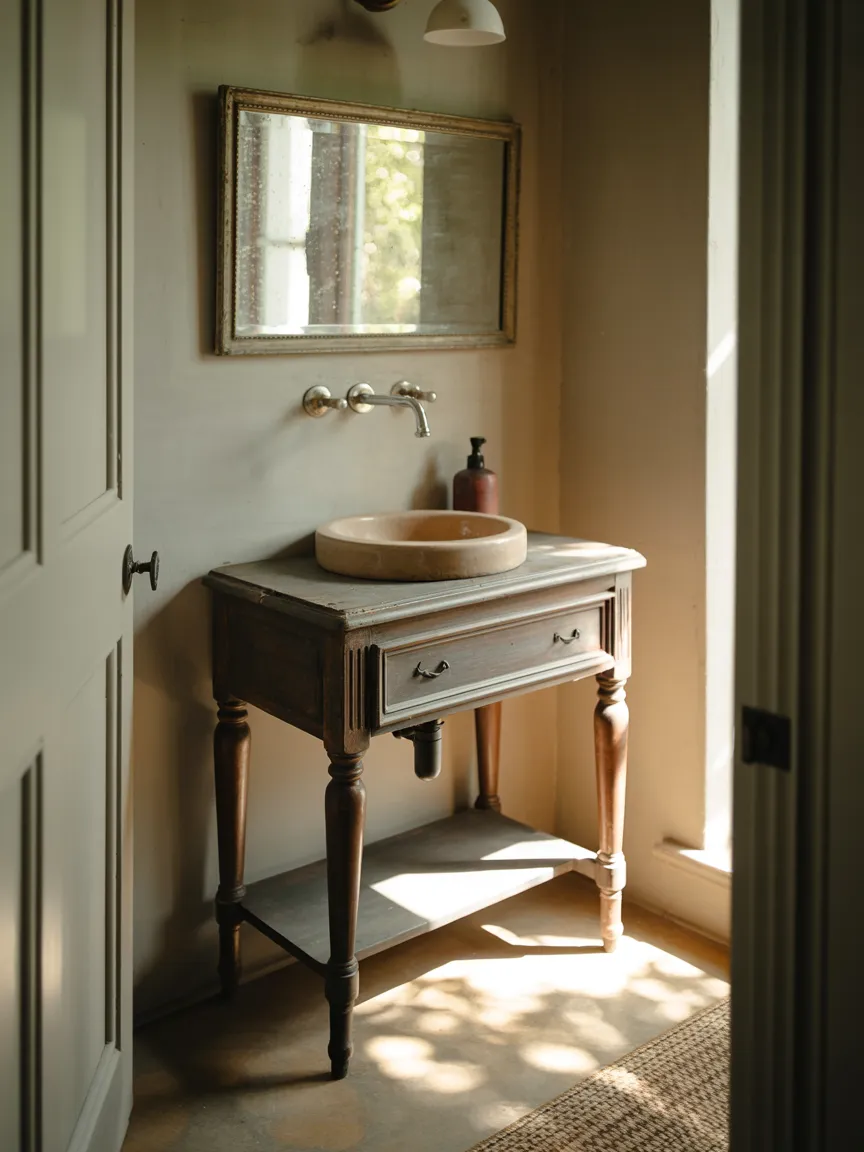
A narrow antique writing desk with a flat top surface converts beautifully into a powder room vanity when fitted with a small drop-in sink and a wall-mounted faucet. The desk legs create an open, airy look that makes small bathrooms feel larger rather than more crowded. Reinforce the desk top with a sheet of cement board beneath a tile or stone surface if the original wood top is thin — drop-in sinks put significant stress on the cutout edges.
19. Vintage Suitcase Stacked Vanity for a Quirky Powder Room

Stack two vintage hard-shell suitcases on a simple wood base, cut a hole in the top suitcase lid, and fit a small vessel sink for a powder room vanity that is genuinely unlike anything available in any store. This works best as a decorative statement in a low-traffic powder room rather than a primary bathroom. Line the interior of both suitcases with waterproof contact paper and seal all seams with silicone caulk — vintage suitcases are not inherently waterproof.
20. Corner Antique Cabinet Vanity for an Awkward Bathroom Layout
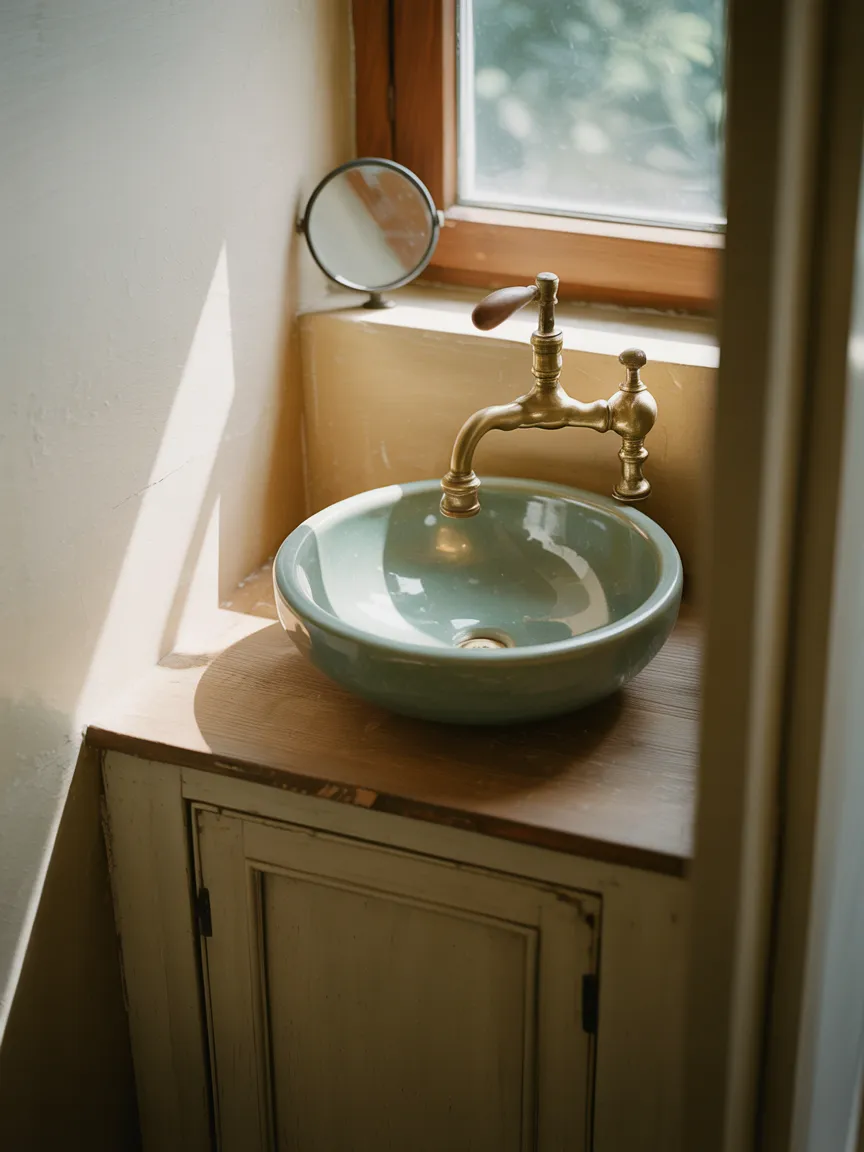
A vintage corner cabinet fitted with a corner vessel sink solves the perennial problem of an awkward bathroom layout where no standard vanity placement works. Corner vessel sinks are available in ceramic, stone, and glass and are specifically sized for this application. This is one of the most underused solutions in bathroom design — a corner vanity can reclaim floor space that feels genuinely wasted in most bathroom layouts. If you are sourcing unique pieces for this kind of project, the selection at Austin furniture stores and home decor stores in Phoenix often includes exactly the kind of architectural salvage pieces that make these conversions possible. You might also find inspiration in these 15 unique bathroom sink ideas when choosing the right sink for your converted piece.
Your Practical Guide to Starting a Vintage Vanity Conversion Without Losing Your Mind
If you feel overwhelmed, start with the sink selection rather than the furniture piece. Knowing whether you want a vessel sink or an undermount sink determines almost everything else — the depth of the cutout, the faucet placement, and how much of the dresser top you need to preserve. Vessel sinks are genuinely more beginner-friendly because they sit on the surface and require only a small hole for the drain rather than a precise undermount cutout with finished edges. Pick your sink first, then find furniture that fits around it.
Renters can absolutely do a version of this without any permanent drilling. A freestanding vintage dresser fitted with a vessel sink and connected to a portable countertop water system — the kind used in off-grid setups — works in a powder room or guest bathroom where full plumbing is not required. It is a genuine workaround that more people should know about, and it means you can take the entire vanity with you when you move. The freestanding tub ideas on this site use a similar logic of creating a bathroom focal point without permanent installation.
Budget-wise, the most expensive part of any vintage vanity conversion is almost always the plumbing labor rather than the materials. If you can handle the furniture refinishing yourself and hire a plumber only for the final hookup — supply lines, drain connection, and shutoff valves — you can complete most of these projects for three hundred to six hundred dollars total, including the thrifted furniture piece. Compare that to a mid-range store-bought vanity at eight hundred to fifteen hundred dollars and the math becomes very clear very fast.
The mistake beginners make most consistently is not accounting for the height of the finished piece. Standard bathroom vanity height is thirty-two to thirty-six inches. Most antique dressers sit at thirty to thirty-two inches, and adding a vessel sink raises the effective use height by four to six inches. Do the math before you commit: dresser height plus vessel sink height should land somewhere between thirty-four and thirty-eight inches for comfortable daily use. Anything lower will have you hunching over the sink every morning, and that gets old fast.
Making it look intentional rather than random comes down to one principle: commit to a finish language and repeat it. If you choose antique brass hardware, use antique brass on the faucet, the mirror frame, and any towel hooks. If you choose matte black, make everything matte black. The pieces do not need to match — they need to speak the same material language. That is the difference between a bathroom that looks curated and one that looks like a collection of good individual decisions that never quite came together. Pick up one small piece today — a set of antique brass drop pulls from a salvage shop or a single marble remnant sample from a stone yard — and let that one decision anchor everything else. The rest of the project will organize itself around it.