24 Integrated Stone Sinks That Bring a High-End Seamless Luxury Vibe to Your Bathroom
You stand at your bathroom vanity every single morning, and if the first thing you see is a clunky seam between a dropped-in sink and a countertop that never quite matched, that small visual irritation adds up fast. I know because I lived with exactly that situation for three years before I finally did something about it. Integrated stone sinks changed how I thought about the whole room — not just the vanity surface, but the entire mood of the space. There is something deeply satisfying about a sink that flows from the counter as one continuous piece of stone, no grout lines, no caulk edges yellowing over time, no visual interruption. It reads as intentional, elevated, and quietly expensive even when you find smart ways to keep costs in check. If you have been circling this idea and wondering whether it is actually worth it, stay with me — because I have done the research, made the mistakes, and found 24 designs that genuinely deliver.
The Honest Mistake I Made Before I Understood Integrated Stone Sinks
I ordered a gorgeous honed Calacatta marble integrated sink slab without asking a single question about the drain configuration. It arrived, my fabricator installed it, and within two weeks I had a slow-draining basin because I had not specified a slotted linear drain — I had assumed a standard pop-up drain would work fine with the shallow basin depth I had chosen. The basin was only four inches deep at center, which looked beautiful and minimal, but a traditional drain mechanism needed clearance that simply was not there. I had to have the whole drain assembly swapped out, which meant a plumber visit, extra cost, and a very avoidable headache.
The single biggest lesson: always confirm drain type and basin depth compatibility before fabrication begins, not after. Integrated stone sinks are not forgiving of afterthought plumbing decisions because the stone cannot be easily modified once it is cut and finished. Ask your fabricator specifically whether the basin depth works with a slot drain or a center pop-up, and get that answer in writing before you sign off on anything. This one conversation will save you significant money and frustration.
Marble and Limestone Integrated Sinks With a Sculptural Edge
These designs treat the sink as a piece of art first and a functional basin second — and somehow they manage to be both.
1. The White Carrara Monolith Block Vanity
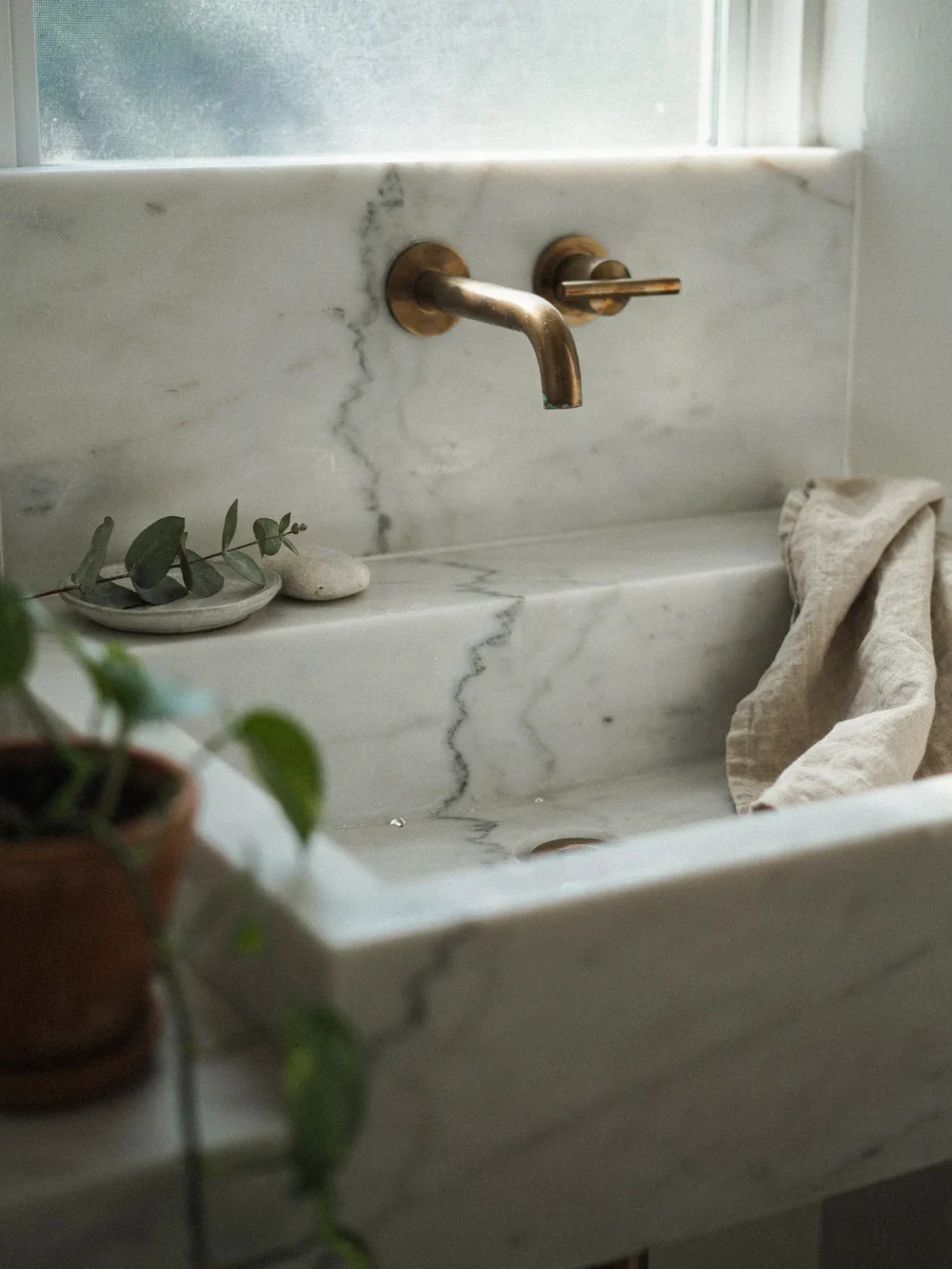
A single block of white Carrara marble carved so the counter and basin are one continuous surface creates an almost gallery-like presence in a master bath. The veining runs uninterrupted from the backsplash edge down into the bowl, which is the visual detail that makes this design feel genuinely luxurious rather than just expensive. Pair it with unlacquered brass wall-mounted faucets to keep the focus on the stone itself.
2. Honed Calacatta Gold With Mitered Edge Detail
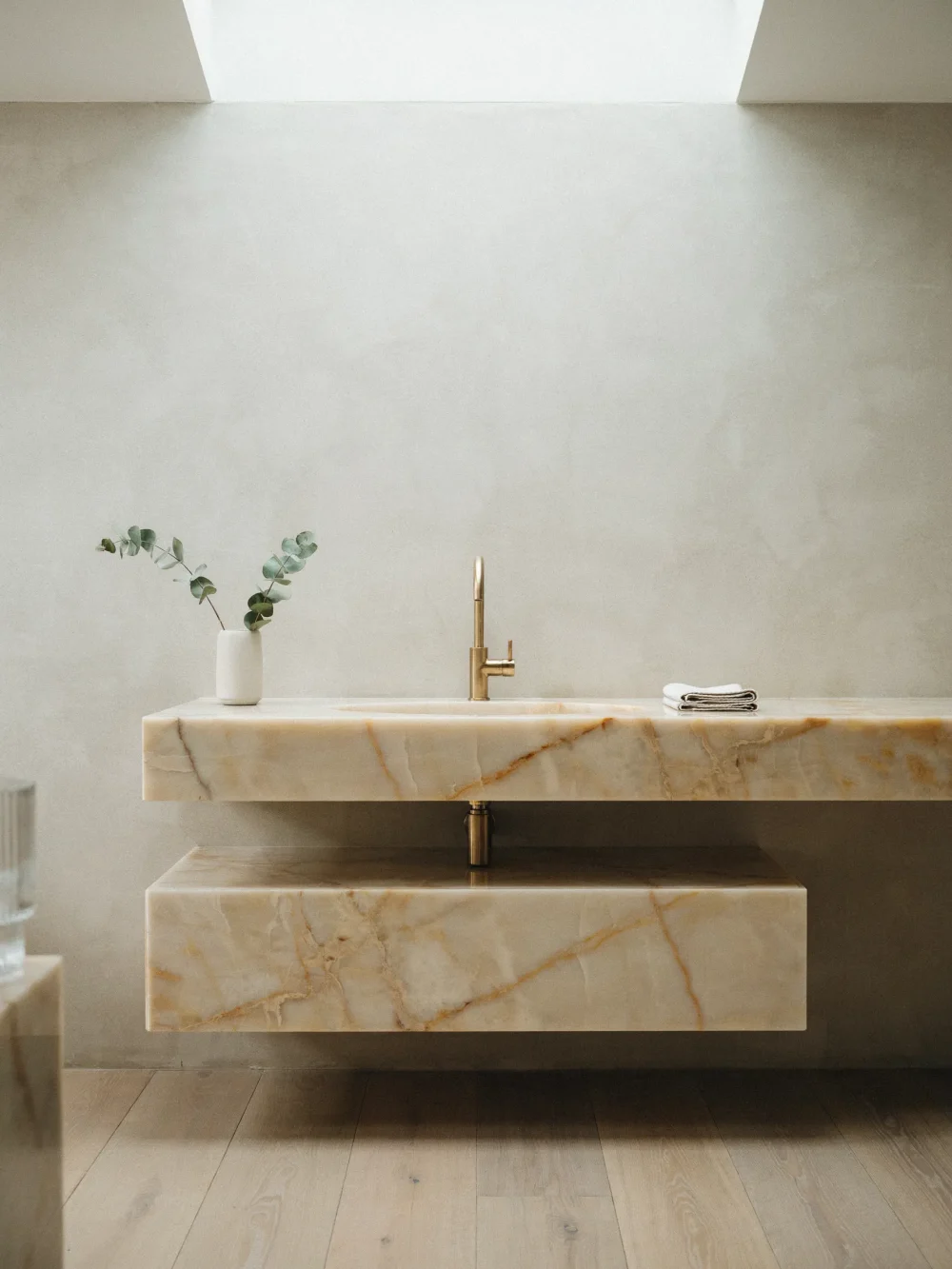
Calacatta Gold with its warm amber veining feels richer than standard white marble, and when the counter edge is mitered at 45 degrees to show the full stone thickness, the effect is quietly dramatic. A 6-centimeter thick mitered edge on a floating vanity makes the slab look like a solid block even when it is not, which is a smart fabrication trick that saves weight without sacrificing visual impact. Do not skip the mitered edge if budget allows — it is the detail that separates a good integrated sink from a great one.
3. Travertine Integrated Sink With Unfilled Surface Texture
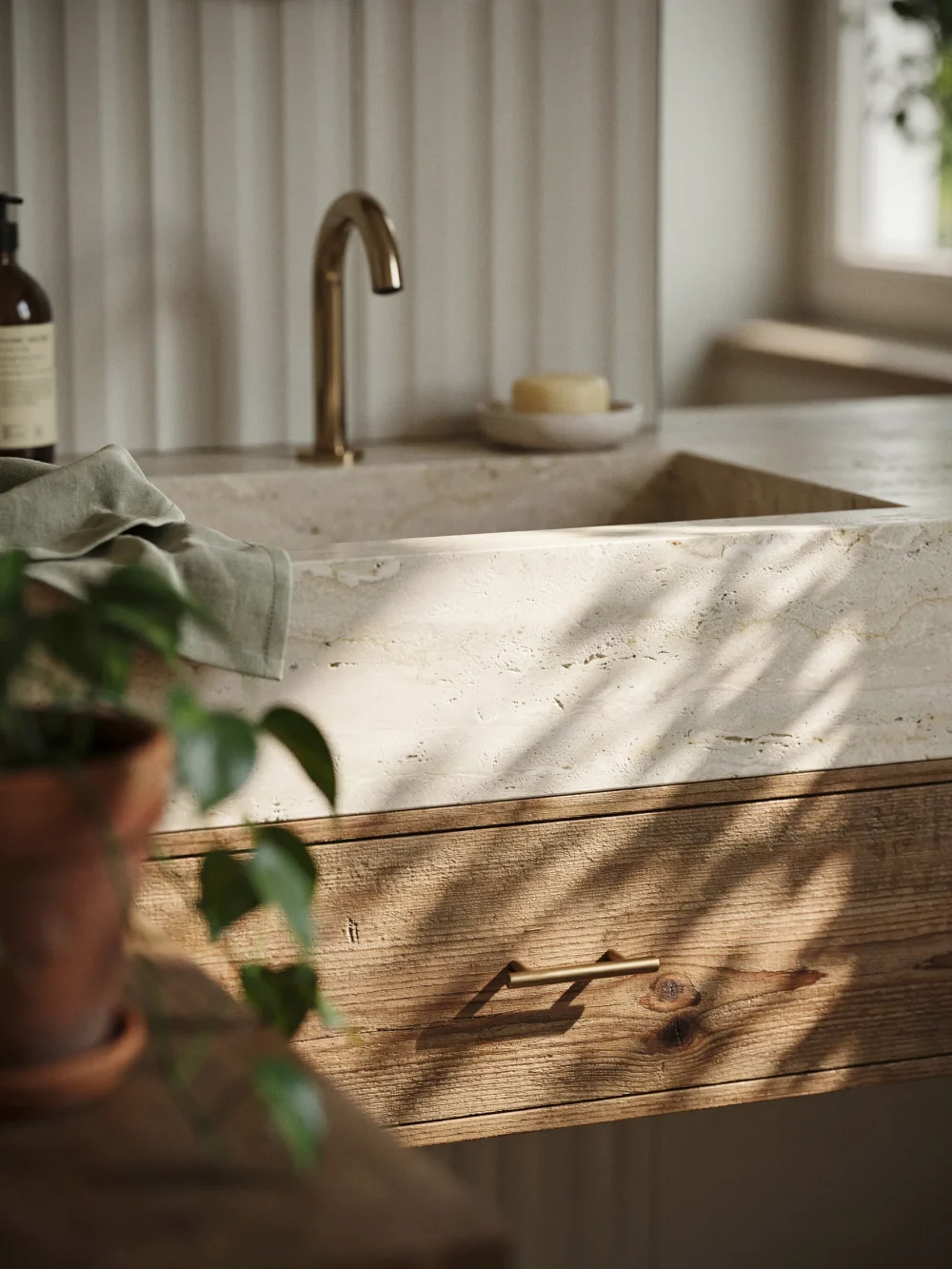
Travertine’s natural pits and channels give an integrated sink a raw, almost ancient quality that polished marble simply cannot replicate, and leaving the surface unfilled (rather than grouted smooth) leans into that organic character beautifully. The warm ivory and walnut tones of classic Roman travertine work especially well against dark walnut floating vanity cabinets. Seal unfilled travertine more frequently than polished stone — every six months rather than annually — because the open pores absorb water and soap residue faster.
4. Nero Marquina Black Marble Basin With Contrast Veining
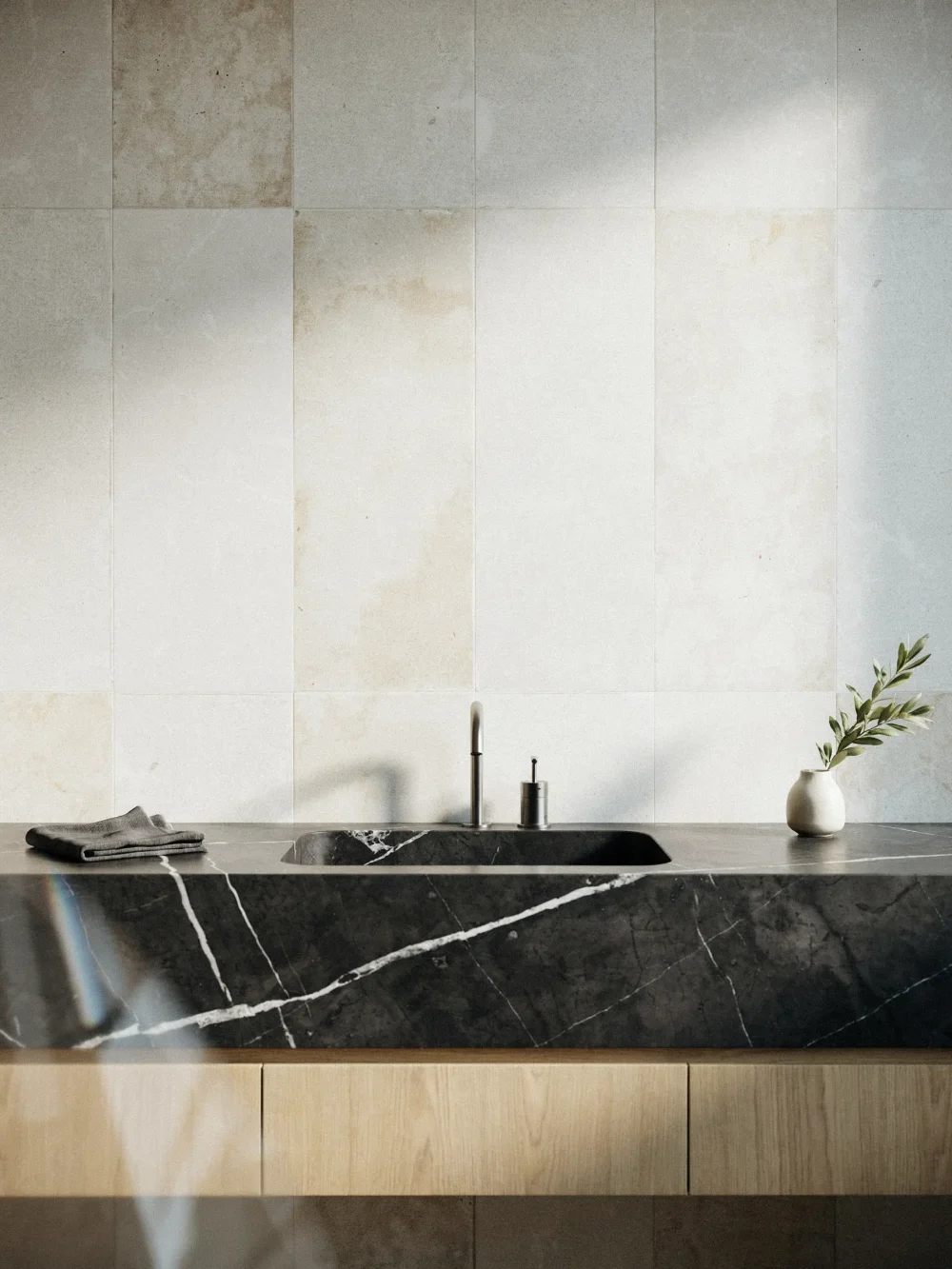
Deep black marble with bright white veining turns a bathroom vanity into something that feels like a five-star hotel suite, and an integrated basin in this material is genuinely striking. The contrast is high enough that water spots and soap residue show more easily, so a matte honed finish rather than a polished one is the smarter practical choice here. Matte black marble hides daily use far better than polished, and it still looks incredibly refined.
Quartz and Engineered Stone Integrated Sinks for Everyday Practicality
Engineered stone gives you the seamless look with significantly more durability and less maintenance anxiety — and these designs prove it does not have to look like a compromise.
5. Pure White Quartz Seamless Counter-to-Basin Flow
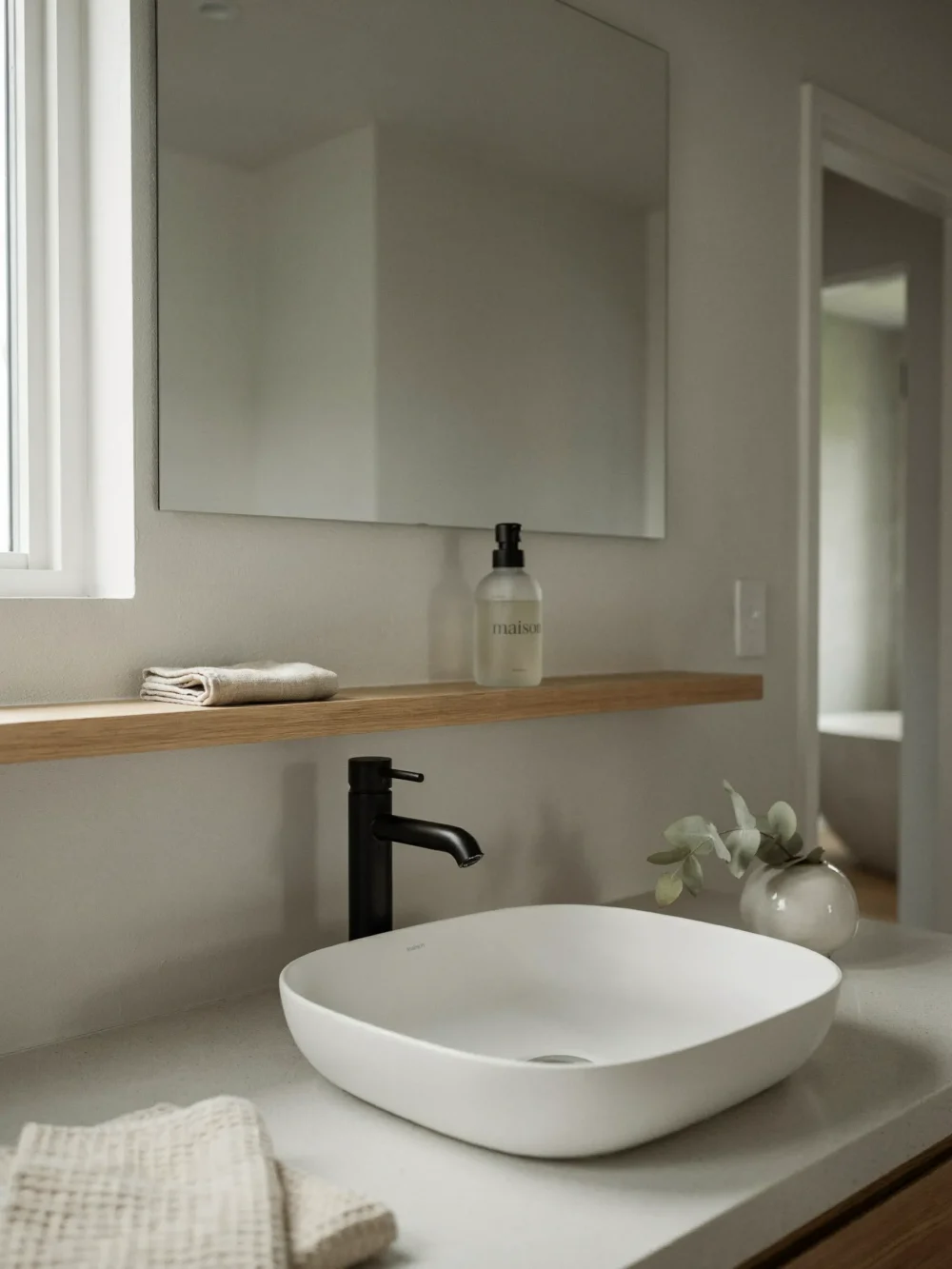
A pure white quartz integrated sink with zero visible seams between counter and basin creates the kind of clean, minimal aesthetic that photographs beautifully and also holds up to daily use without staining the way natural marble can. Brands like Silestone and Caesarstone both offer solid white options with enough subtle texture to avoid looking plasticky. This is genuinely the most practical entry point into integrated stone sink design for a busy household.
6. Soft Grey Quartz With Hidden Slotted Drain
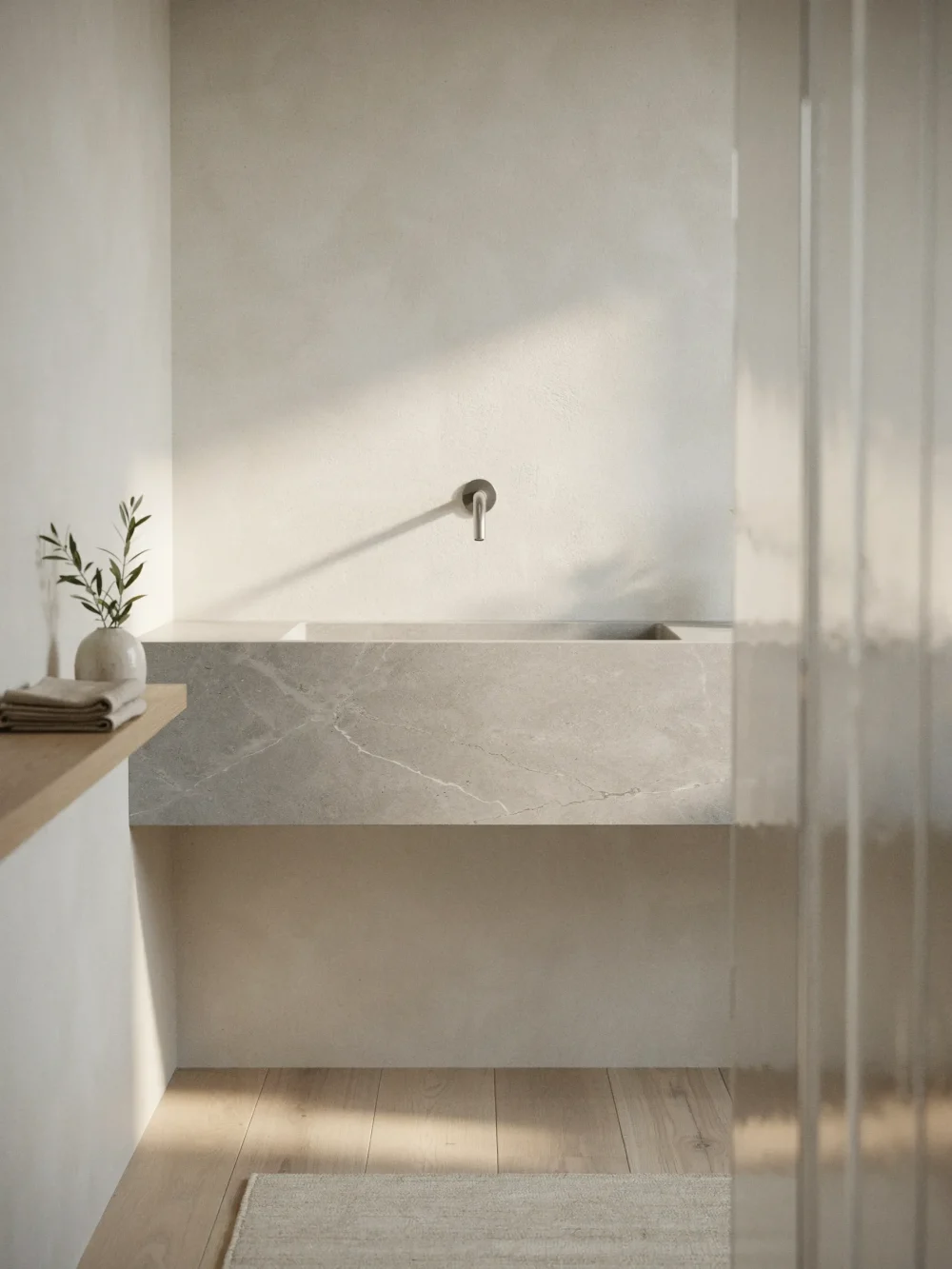
A soft grey quartz basin with a hidden linear slot drain along the rear wall of the sink bowl is one of those combinations that looks like it was designed by an architect even when it was not. The slot drain disappears visually, keeping the stone surface completely uninterrupted, which is the whole point of an integrated design. Hidden slotted drains are worth every extra dollar — they are the detail that makes integrated sinks look truly custom.
7. Warm Greige Composite Stone With Matte Finish
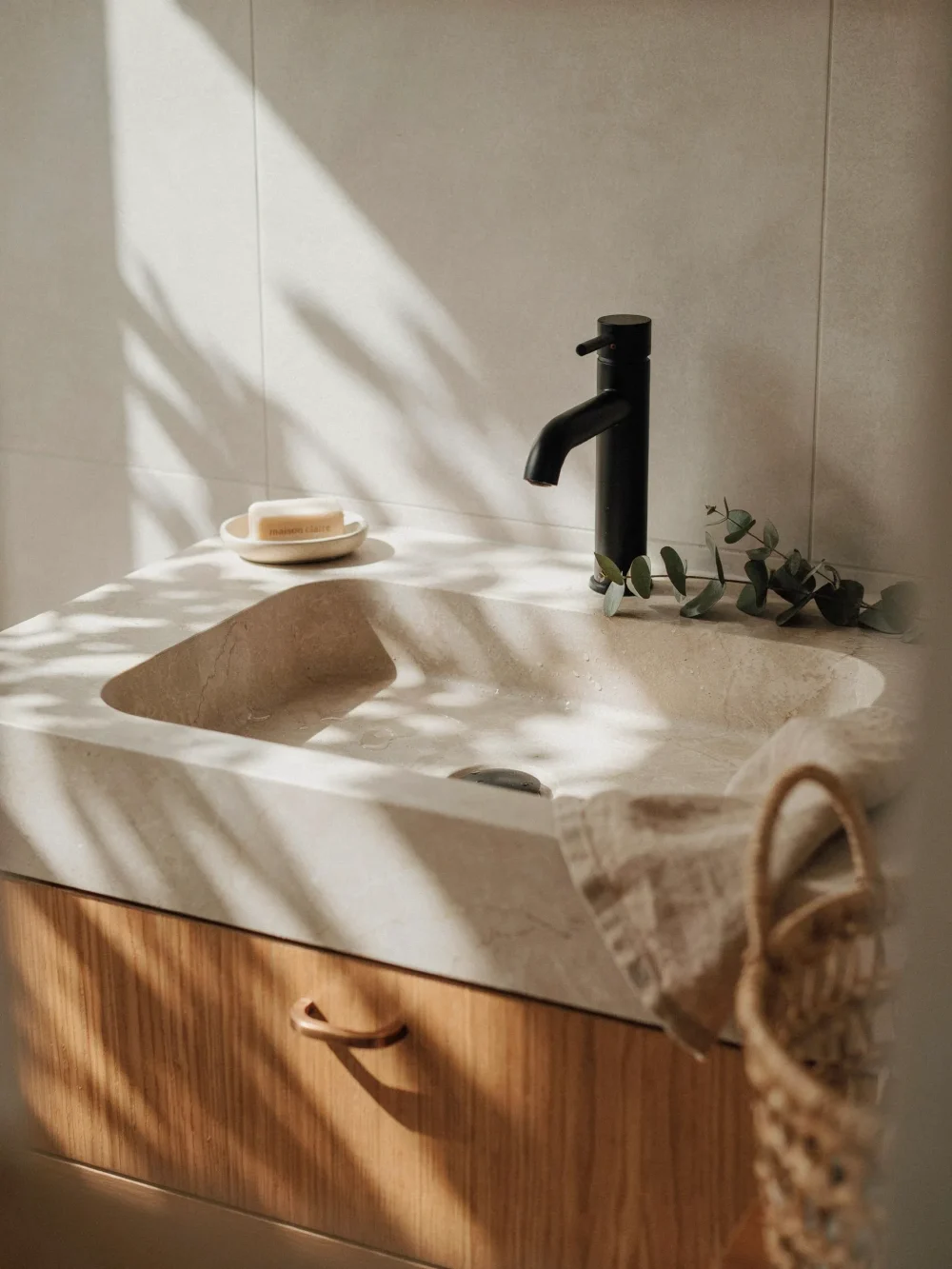
Composite stone in a warm greige tone — somewhere between grey and beige — has a softness that works beautifully in master baths that lean toward warm neutrals rather than stark white. The matte finish on composite stone feels velvety to the touch and resists fingerprints and water spots far better than polished surfaces. If you have warm wood tones in your vanity cabinet, greige composite stone will tie the whole room together more naturally than cool grey or bright white.
8. Minimalist Quartz Bathroom Sink With Integrated Soap Shelf
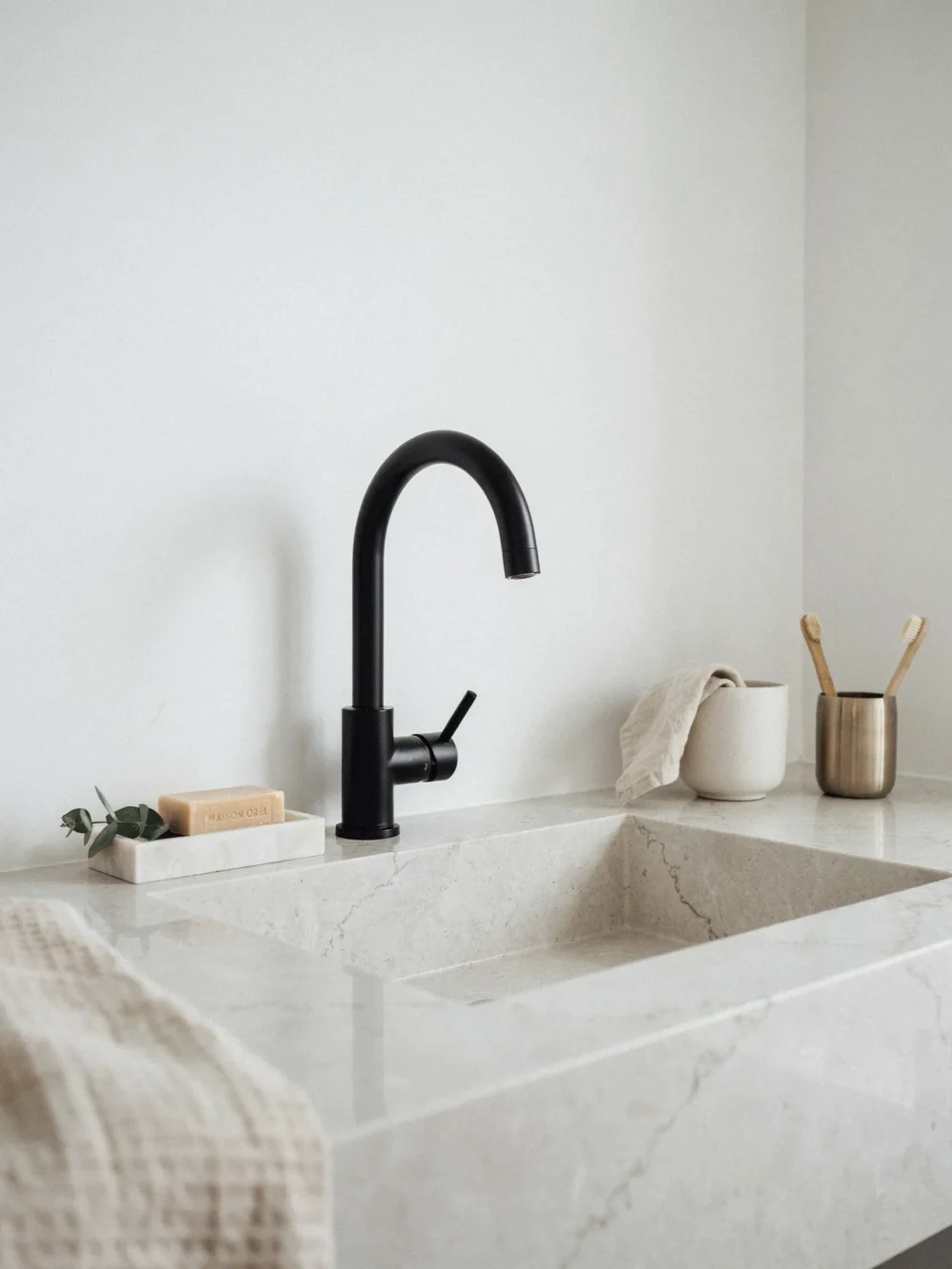
Carving a small integrated soap shelf directly into the quartz counter beside the basin — same material, same continuous surface — eliminates the need for any accessories sitting on the vanity top and creates an incredibly clean look. The shelf is typically around 8 inches wide and recessed about half an inch, which is just enough to hold a soap dish or small vessel without cluttering the surface. This is one of those small custom details that costs very little extra at fabrication time but makes the finished room look significantly more considered.
Floating Stone Vanities That Make a Small Master Bath Feel Bigger
Wall-mounted integrated stone vanities do something visually generous to a smaller bathroom — they lift the visual floor line and make the room breathe.
9. Narrow Floating Marble Slab for Compact Spaces
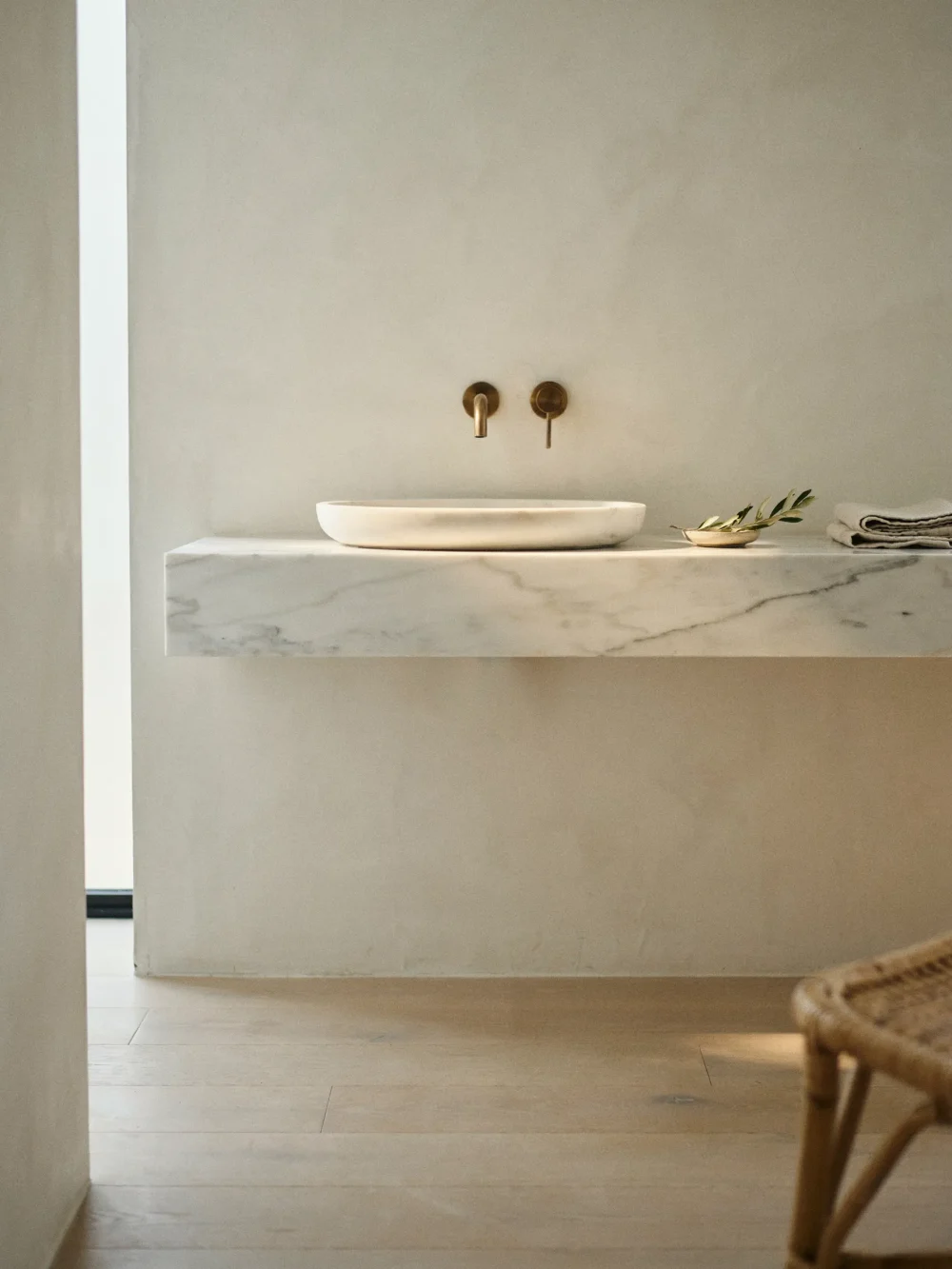
A floating marble integrated sink slab as narrow as 18 inches can work beautifully in a smaller master bath when the basin is a shallow oval carved directly into the stone, keeping the footprint tight without sacrificing the luxury feel. Mounting it at a slightly higher-than-standard height — around 36 inches rather than the typical 32 — also makes a small space feel taller. Do not let square footage talk you out of natural stone — narrow slabs exist specifically for tighter spaces.
10. Floating Concrete and Stone Integrated Vanity
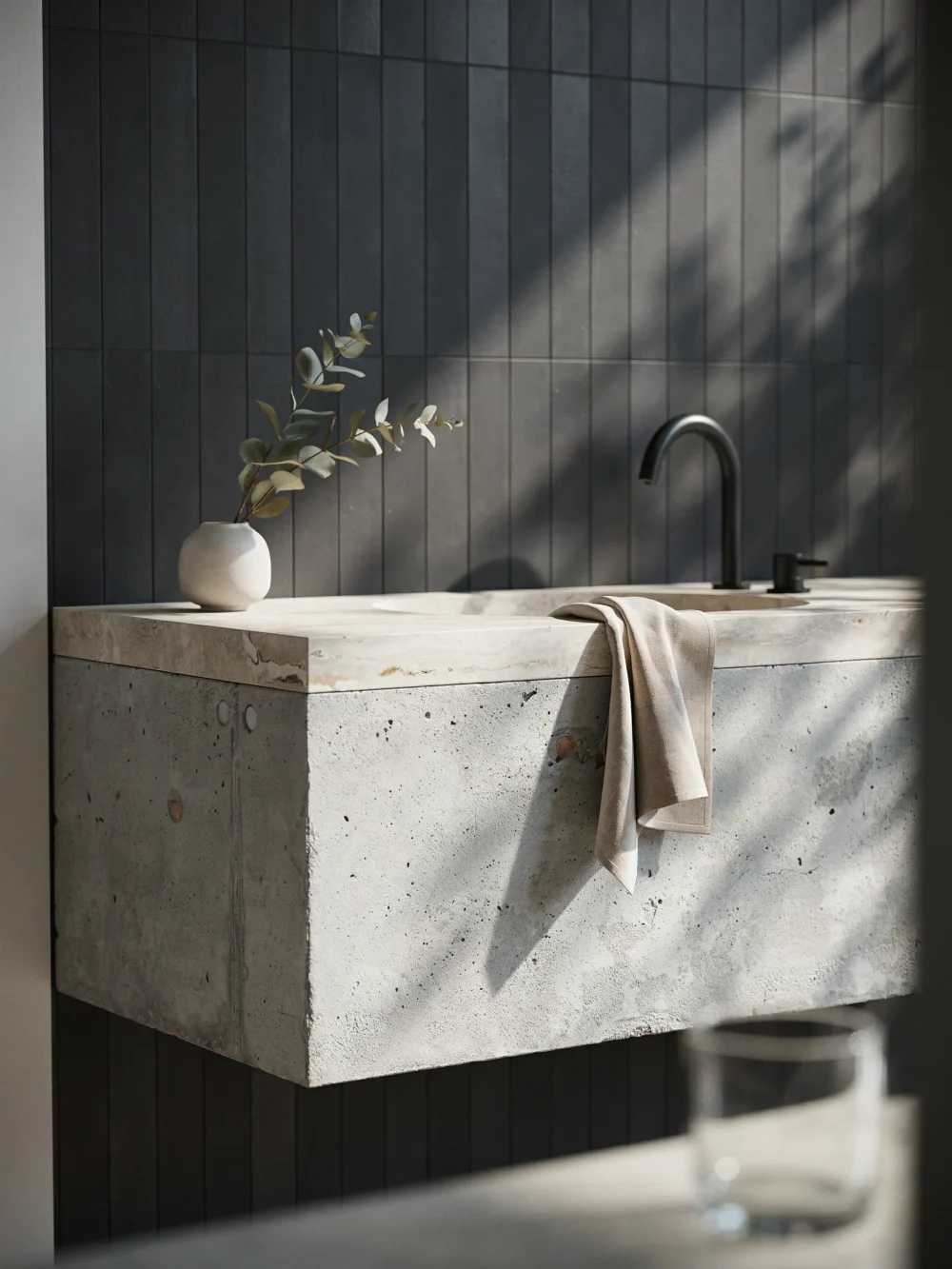
Pairing a poured concrete basin with a thin stone surround creates a hybrid integrated vanity that feels industrial and refined at the same time — the concrete absorbs the utilitarian edge while the stone frame elevates it. This combination works especially well in bathrooms with exposed wall texture or dark grout tile. Concrete basins must be sealed with a penetrating sealer before use and resealed annually without exception.
11. Cantilevered Quartz Vanity With Under-Counter LED Strip
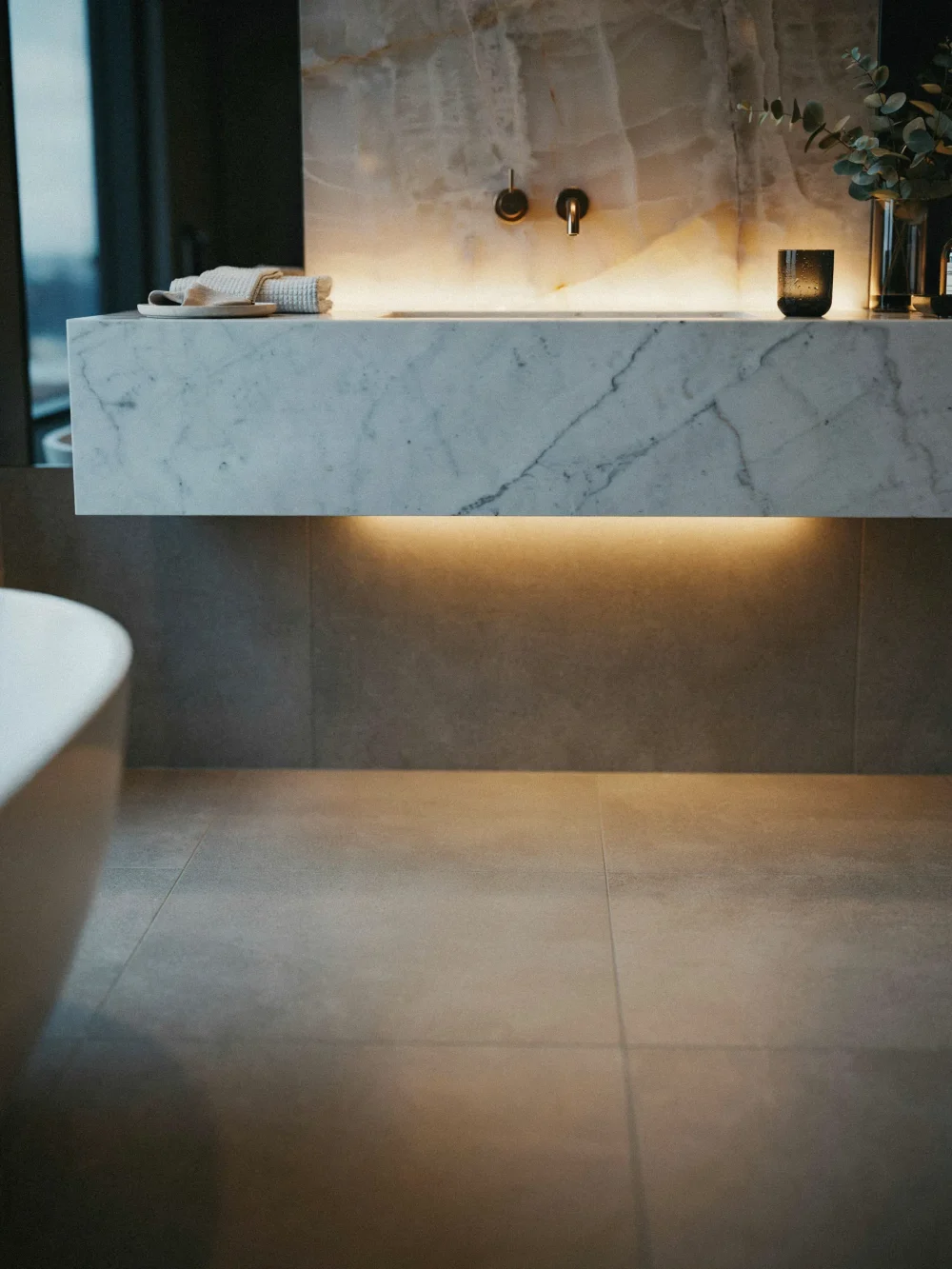
A cantilevered quartz integrated vanity with a thin LED strip tucked under the slab creates a floating glow effect that makes the whole vanity appear to hover — it is a detail you see in luxury hotel bathrooms that is surprisingly achievable in a residential remodel. The LED strip should be warm white (2700K) rather than cool white to keep the stone from looking clinical. The under-counter LED is the single most impactful lighting upgrade you can add to a floating integrated stone vanity.
12. Wall-Mounted Travertine Slab With Waterfall Edge
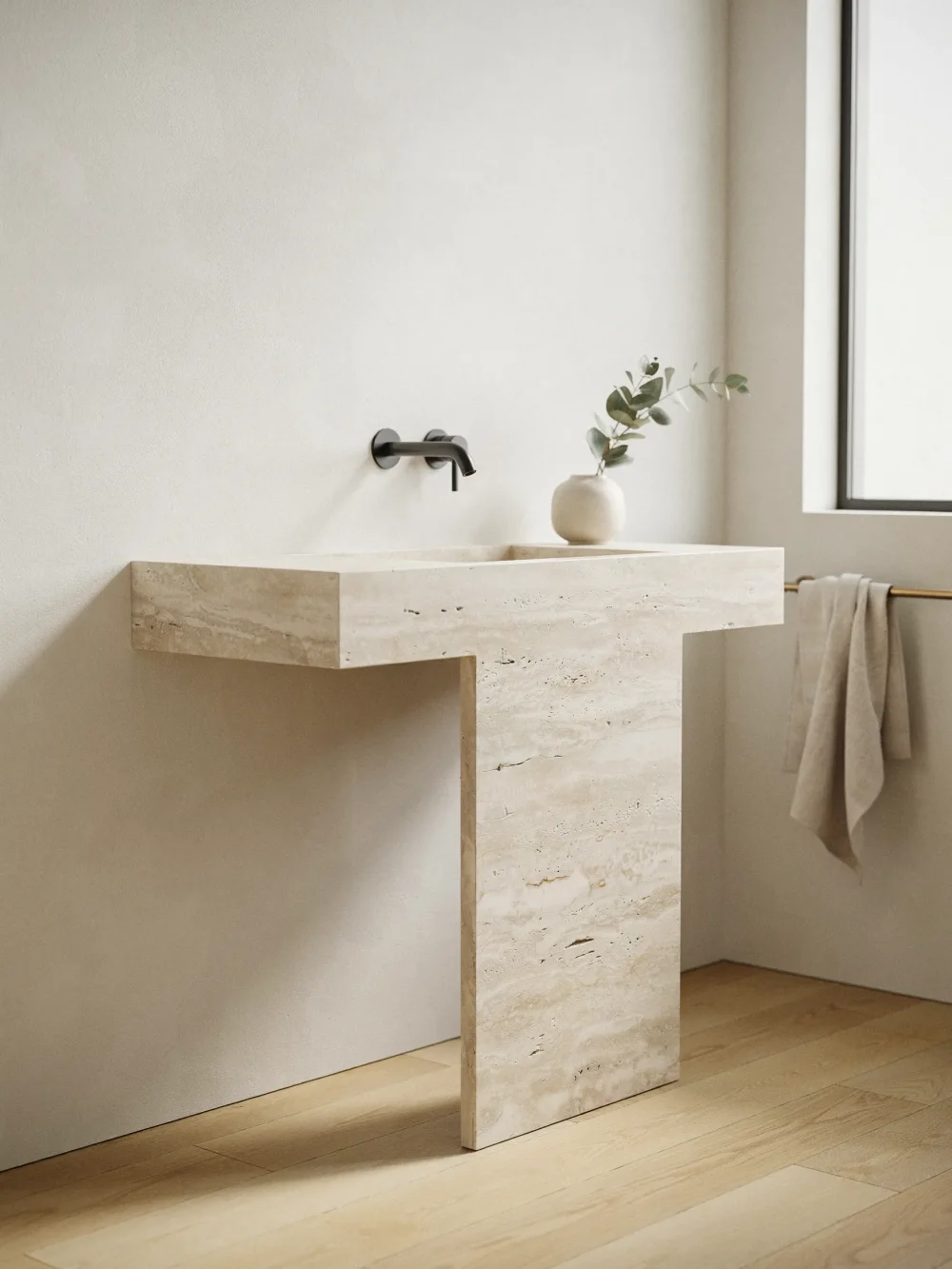
A travertine integrated sink slab where the front edge drops down as a full-height waterfall panel — covering the wall-mounted cabinet face entirely — creates a monolithic look that reads as genuinely architectural. The waterfall edge also protects the cabinet from water drips and removes the visual break between counter and storage below. This design requires precise wall reinforcement planning before installation — do not skip the structural consultation.
What You Should Know Before You Order Your Integrated Stone Sink
Before you fall completely in love with a specific stone and start pulling samples, there are a few practical realities worth understanding. Integrated stone sinks are heavier than standard vanity setups — a full marble slab with integrated basin can weigh between 150 and 400 pounds depending on thickness and size, which means your wall framing and vanity cabinet structure need to be assessed before fabrication begins. If you are planning a full master bathroom remodel, this is also the right moment to look at how your broader design choices connect, and resources like these unique bathroom sink ideas can help you see what else is possible before you commit to a direction.
Budget is the other honest conversation to have early. Custom integrated stone sinks typically start around $1,500 for engineered quartz and can climb past $8,000 for hand-carved natural marble with specialty drain work. That range is wide, but the good news is that the design principles — seamless flow, minimal hardware, clean lines — translate across price points. If you are working with a tighter budget, engineered composite stone gives you 90% of the visual impact at roughly half the cost of natural marble, and fabricators who specialize in bathroom showrooms can show you side-by-side comparisons that make the decision much clearer in person than it ever looks online.
Contemporary and Sculptural Stone Basin Designs Worth Considering
These are the designs that stop people in their tracks when they walk into a bathroom for the first time.
13. Oval Carved Marble Basin in a Rectangular Slab
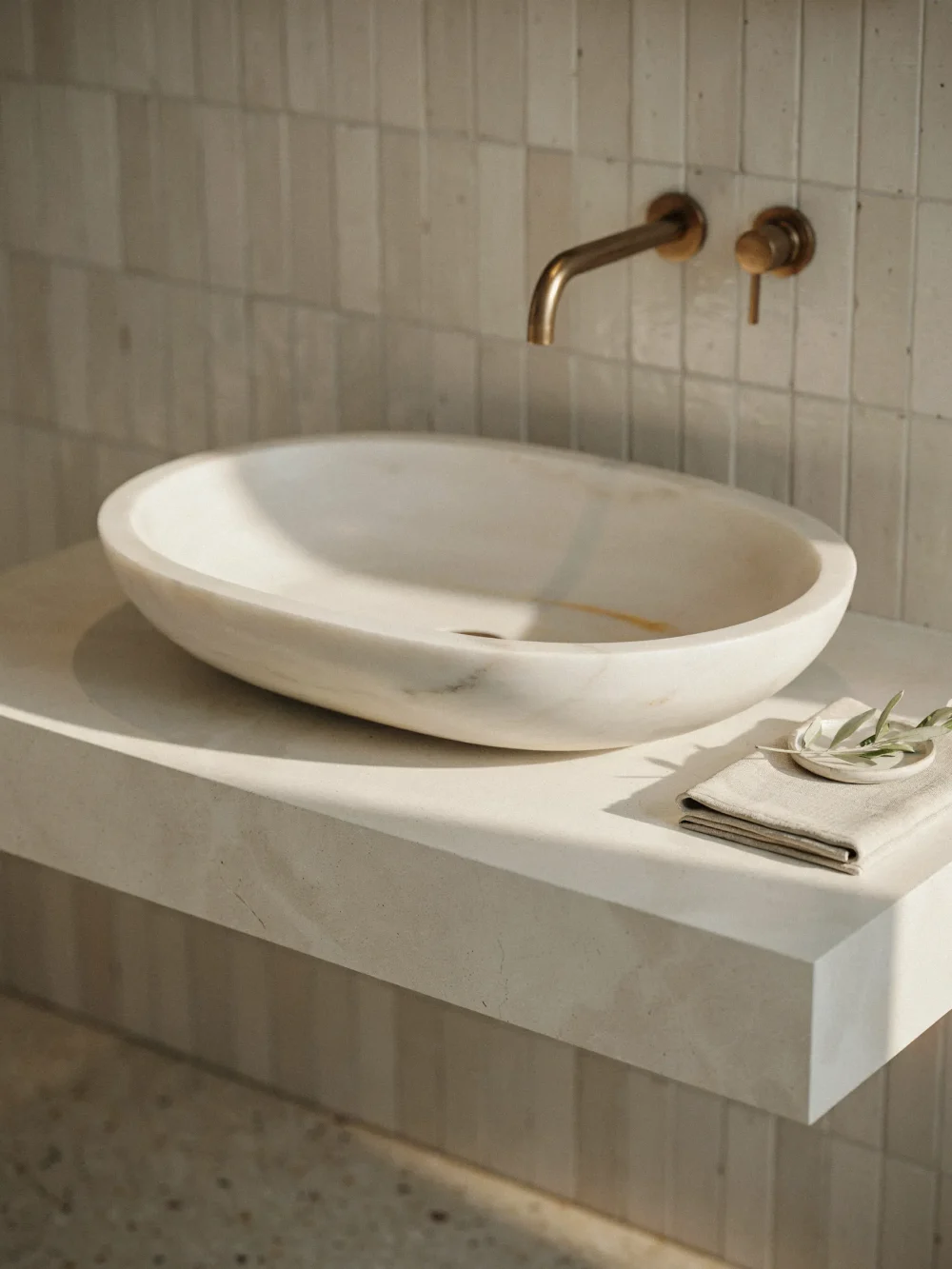
Carving an oval basin into a rectangular marble slab creates a beautiful tension between the organic curve of the bowl and the strict geometry of the counter — it is a small design decision that adds enormous visual sophistication. The oval shape also drains more efficiently than a square basin because water naturally flows toward the center without pooling in corners. An oval basin in a rectangular slab is the most universally flattering integrated sink shape for master bathrooms.
14. Double Integrated Basin in a Single Bookmatched Marble Slab
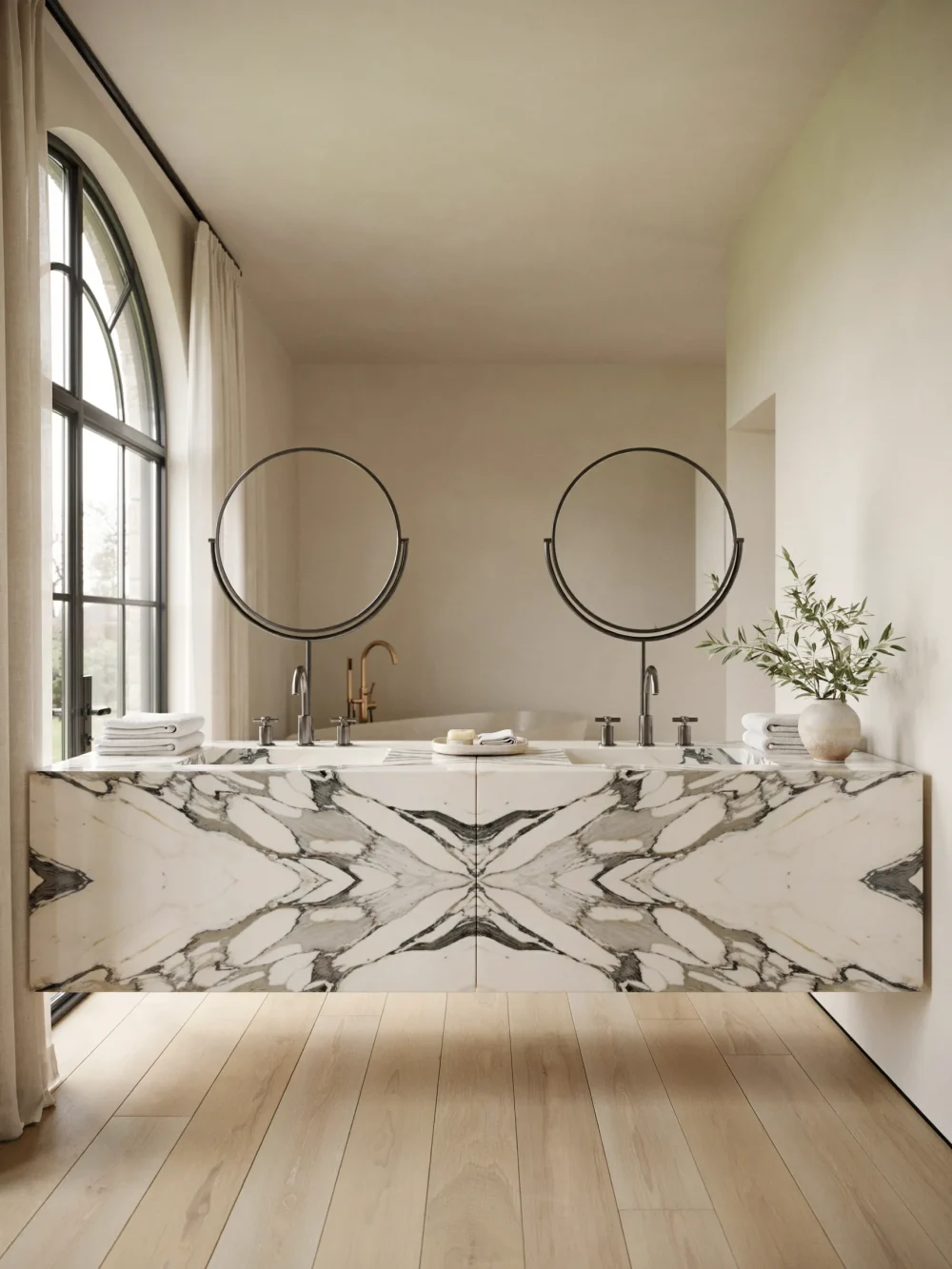
Two basins carved into a single bookmatched marble slab — where two mirror-image slabs are opened like a book so the veining is symmetrical — creates a vanity that looks like it belongs in an architectural magazine. The bookmatching means the veining flows from one basin across to the other in a perfect mirror image, which is visually extraordinary. Bookmatched double-basin slabs require extremely precise fabrication and a fabricator with genuine bookmatching experience — ask to see their previous work before committing.
15. Onyx Integrated Sink With Backlit Stone Panel
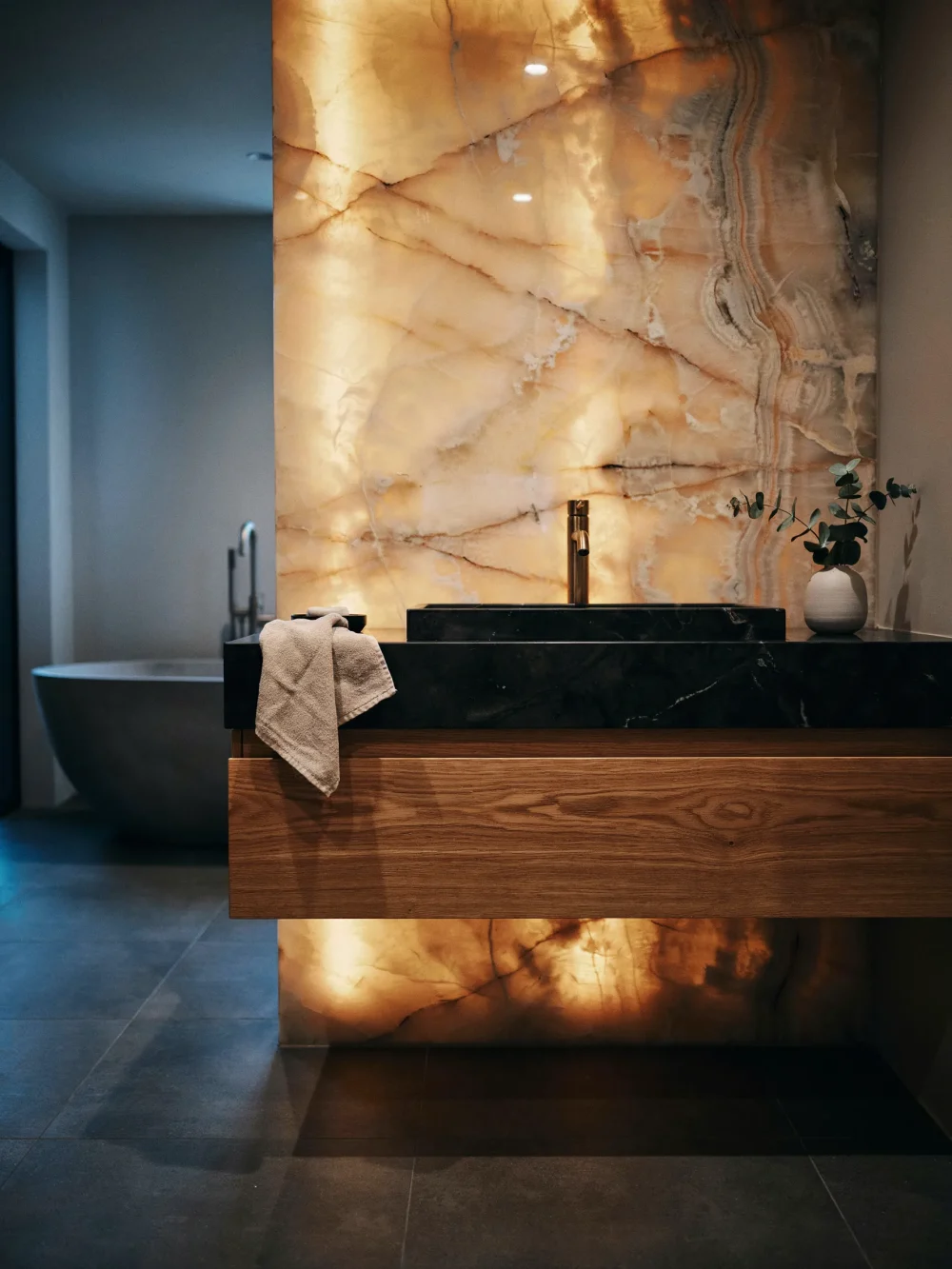
Onyx is translucent enough to be backlit, and an integrated onyx sink with LED panels behind a matching stone backsplash creates a warm amber glow that is unlike anything else in residential bathroom design. Green onyx and honey onyx are the most commonly available backlit options, and both are genuinely stunning in a dimly lit master bath. Onyx is softer than marble and scratches more easily — use it in a low-traffic master bath rather than a shared family bathroom.
16. Slate Grey Integrated Basin With Rough-Hewn Edges
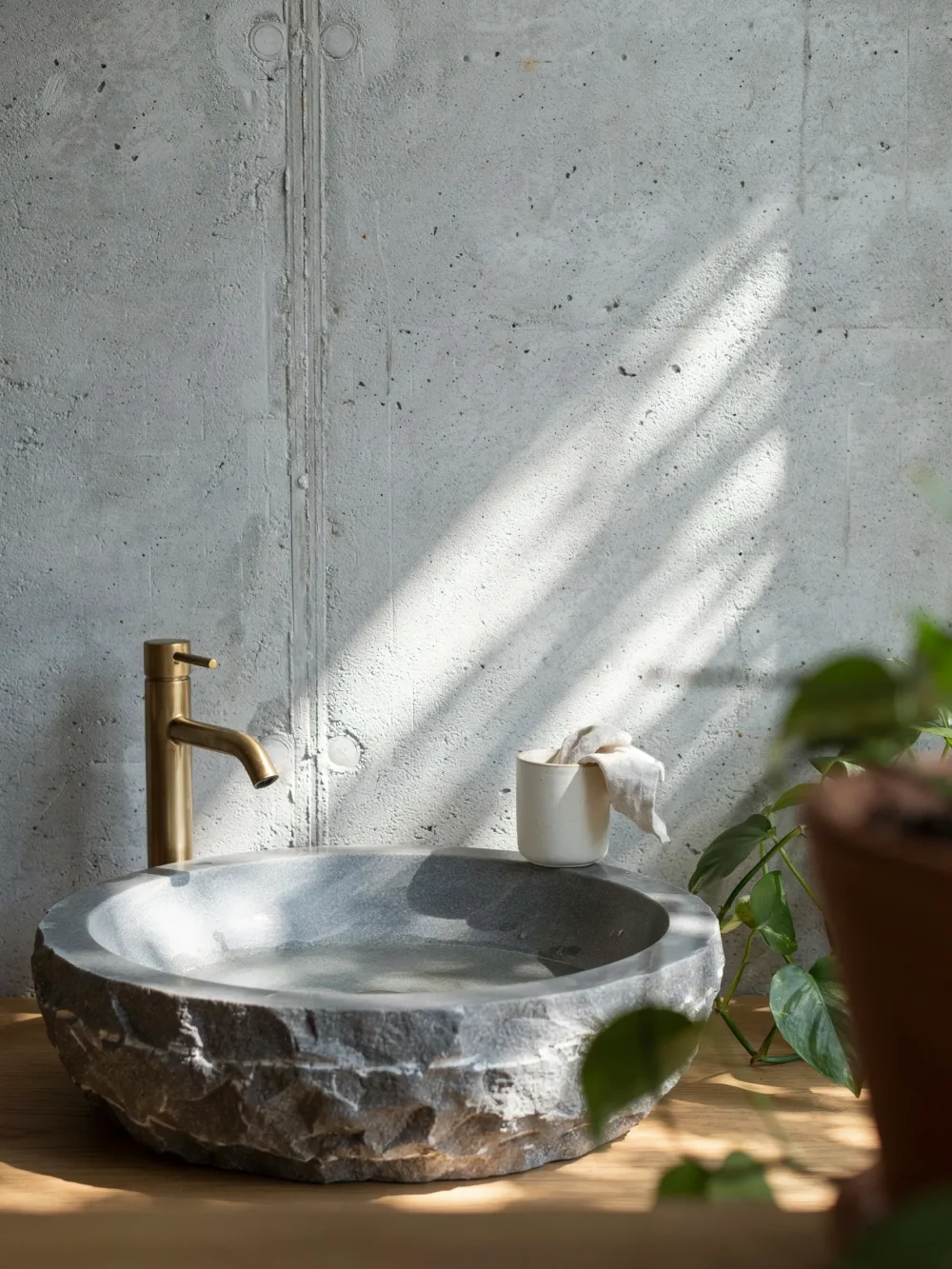
A slate grey stone integrated sink where the outer edges of the slab are left deliberately rough and unfinished while the basin interior is honed smooth creates a contrast between raw and refined that feels very current in contemporary design. This works especially well in bathrooms with exposed concrete walls or dark matte tile. The rough edge treatment costs less in fabrication than a polished mitered edge, making this one of the more budget-friendly ways to get a high-design look.
17. Serpentine Green Marble Integrated Vanity
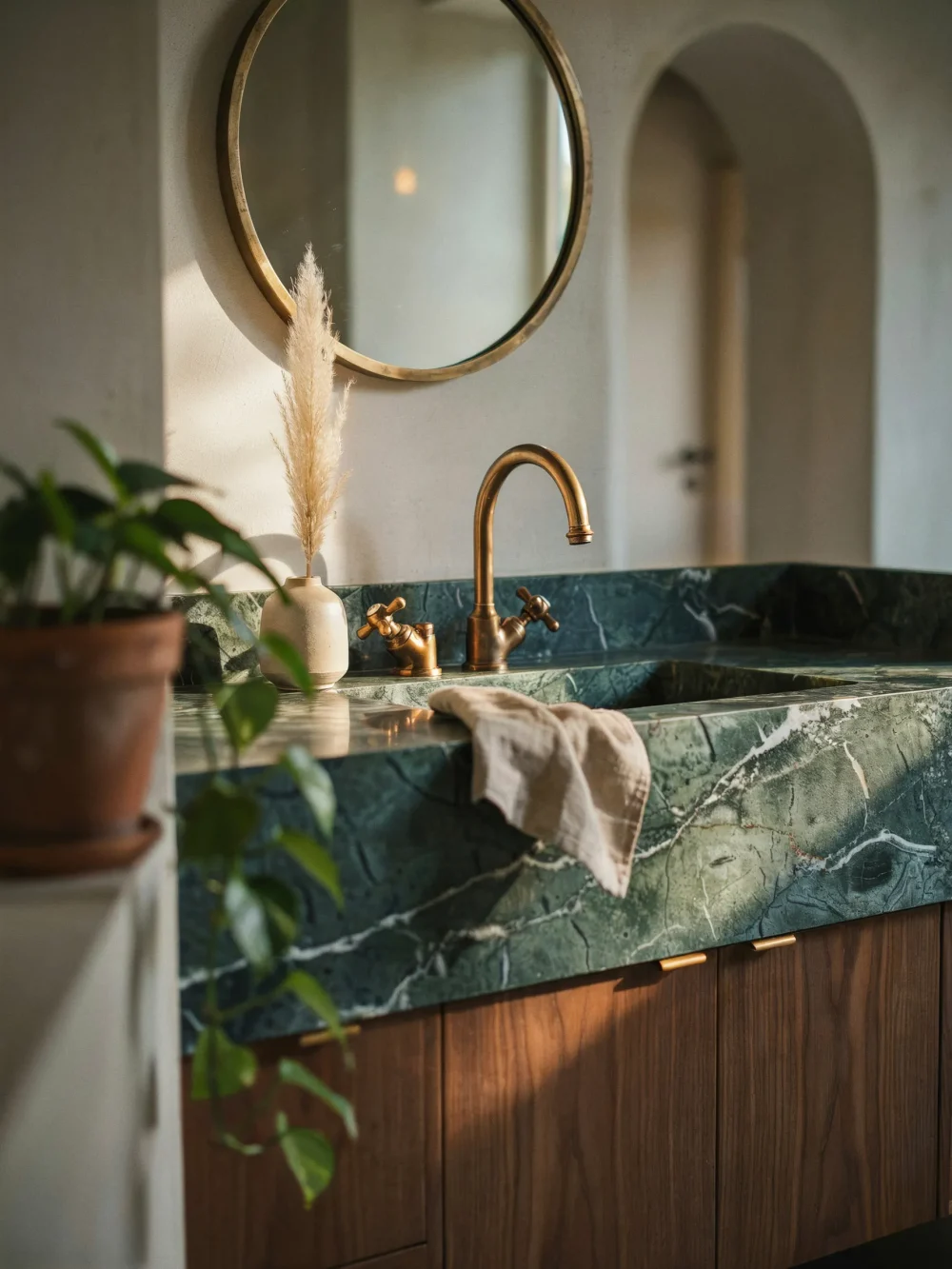
Deep forest green serpentine marble has a richness and depth that feels almost jewel-like, and an integrated sink in this material makes a bold, confident statement that still reads as luxurious rather than trendy. It pairs beautifully with aged brass fixtures and dark walnut or ebonized oak cabinetry. Green marble is having a genuine design moment right now, but its appeal is classic enough that it will not feel dated in five years.
Minimalist and Modern Integrated Stone Sink Designs
Clean lines, restrained palettes, and stone that does the talking — these designs are for bathrooms where less is genuinely more.
18. Ultra-Thin Porcelain Stone-Look Integrated Sink
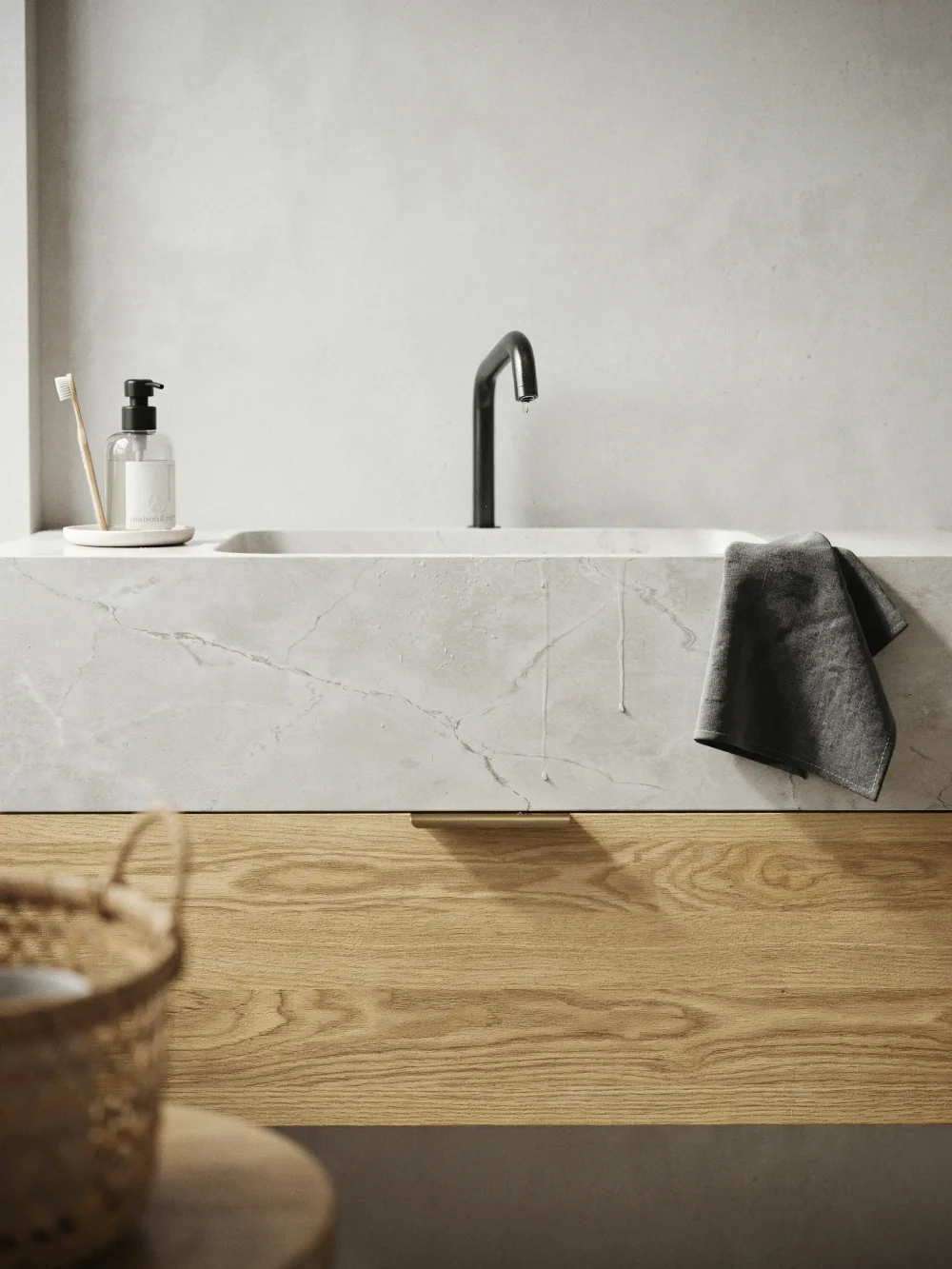
Large-format ultra-thin porcelain panels that mimic natural stone can be fabricated into integrated sinks at a fraction of the weight and cost of real stone, making them a smart choice for upper-floor bathrooms where structural load is a concern. The best versions are virtually indistinguishable from natural stone at normal viewing distance. Always ask for a physical sample before ordering porcelain stone-look panels — the quality difference between manufacturers is significant.
19. Limestone Integrated Sink With Brushed Nickel Fixtures
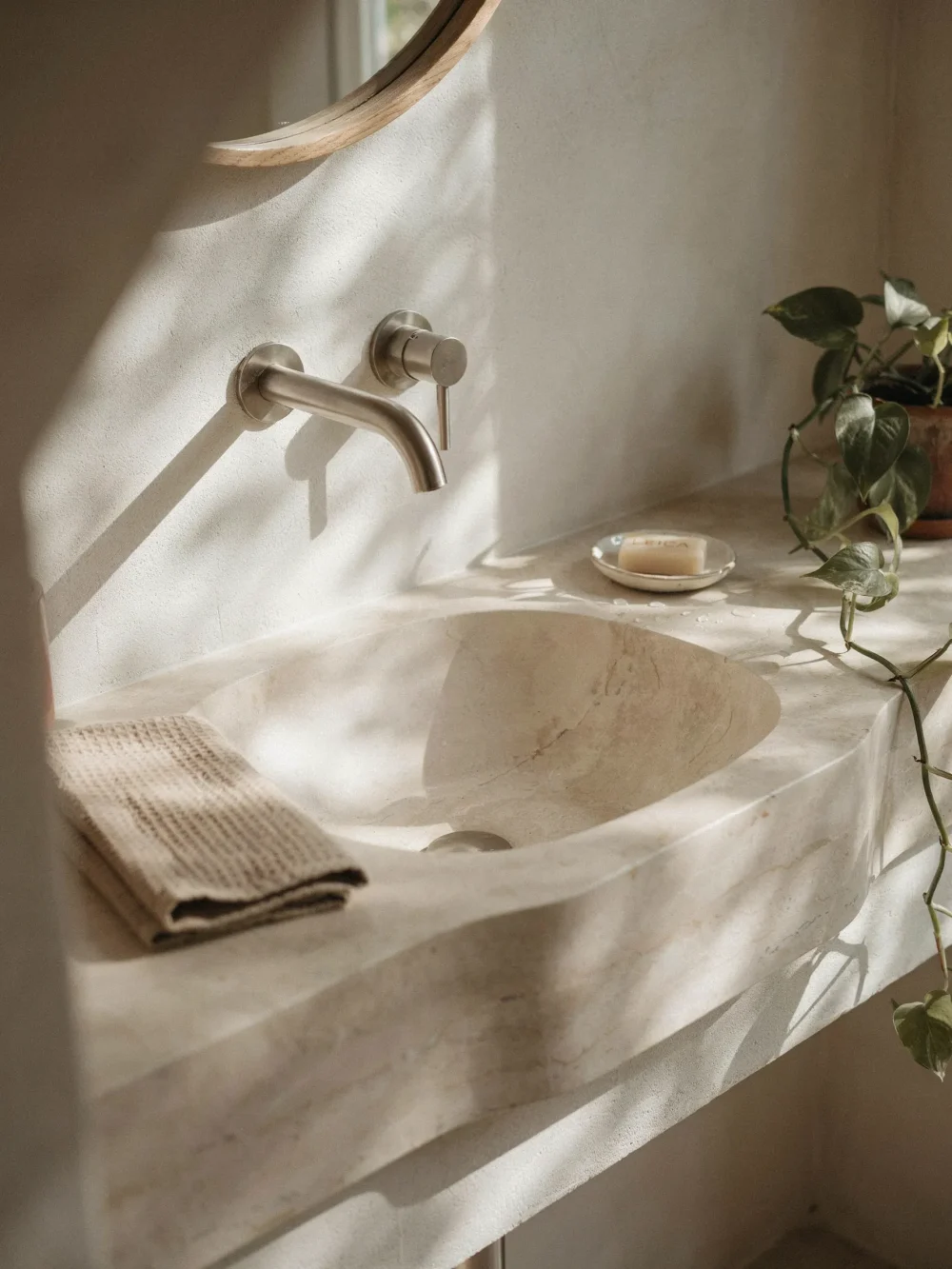
Soft beige limestone with a honed finish paired with brushed nickel wall-mounted faucets creates one of the most quietly elegant bathroom aesthetics possible — nothing shouts, everything coheres. Limestone is more porous than marble and needs sealing twice a year, but the warmth it brings to a space is worth the maintenance commitment. Brushed nickel is the most forgiving fixture finish to pair with natural limestone because it does not compete with the stone’s subtle tonal variation.
20. Monochrome White Integrated Sink With Recessed Wall Niche
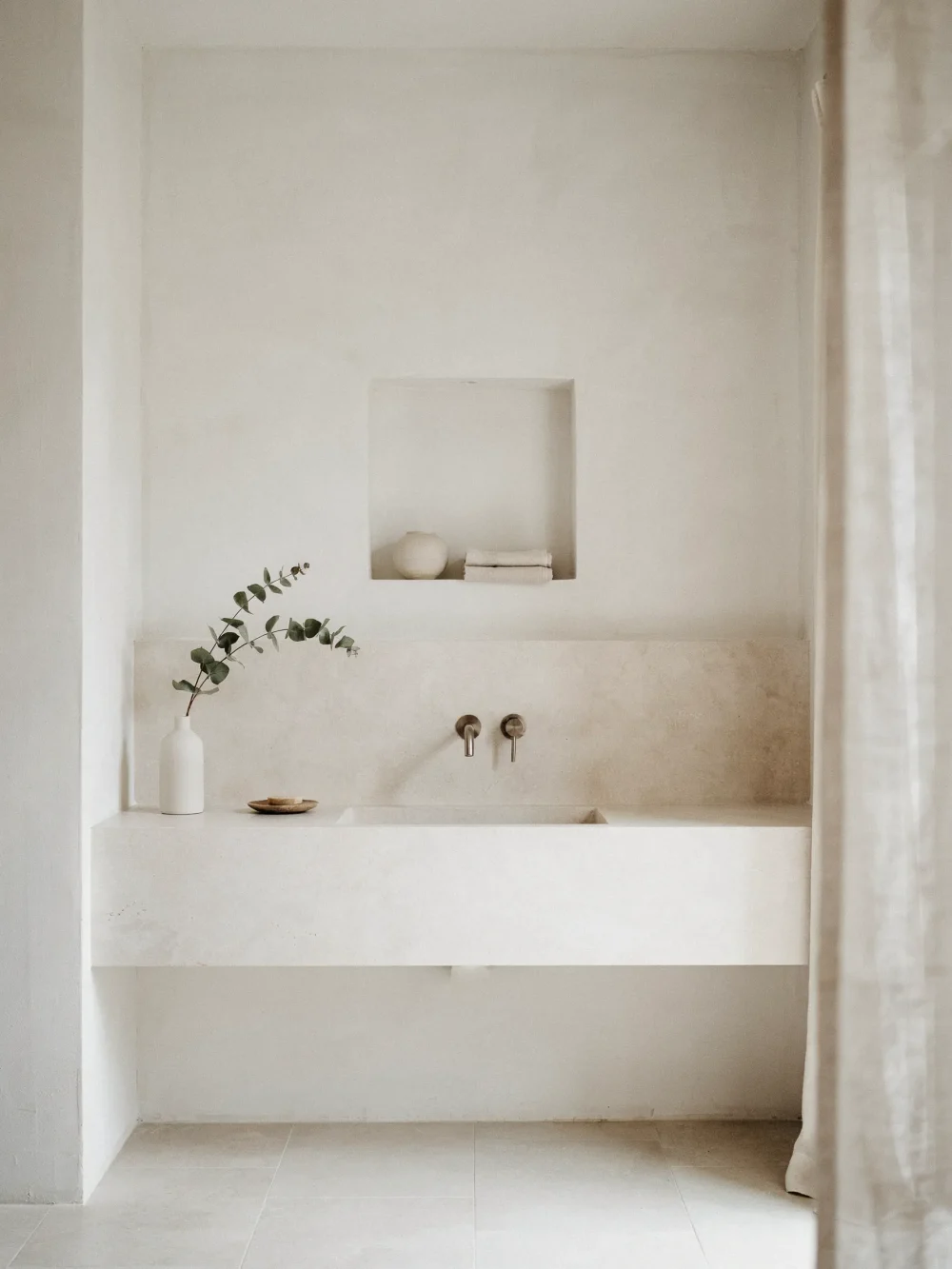
A completely white integrated stone sink paired with a matching white stone recessed niche above creates a monochrome bathroom moment that feels both minimal and intentional. Using the same stone for both the vanity and the niche surround — even if it is engineered quartz rather than marble — ties the room together with a coherence that feels custom and considered. Monochrome stone bathrooms photograph beautifully and age gracefully, which makes them one of the safest high-end design investments you can make.
21. Matte Black Quartz Integrated Sink With Gold Vein Detail
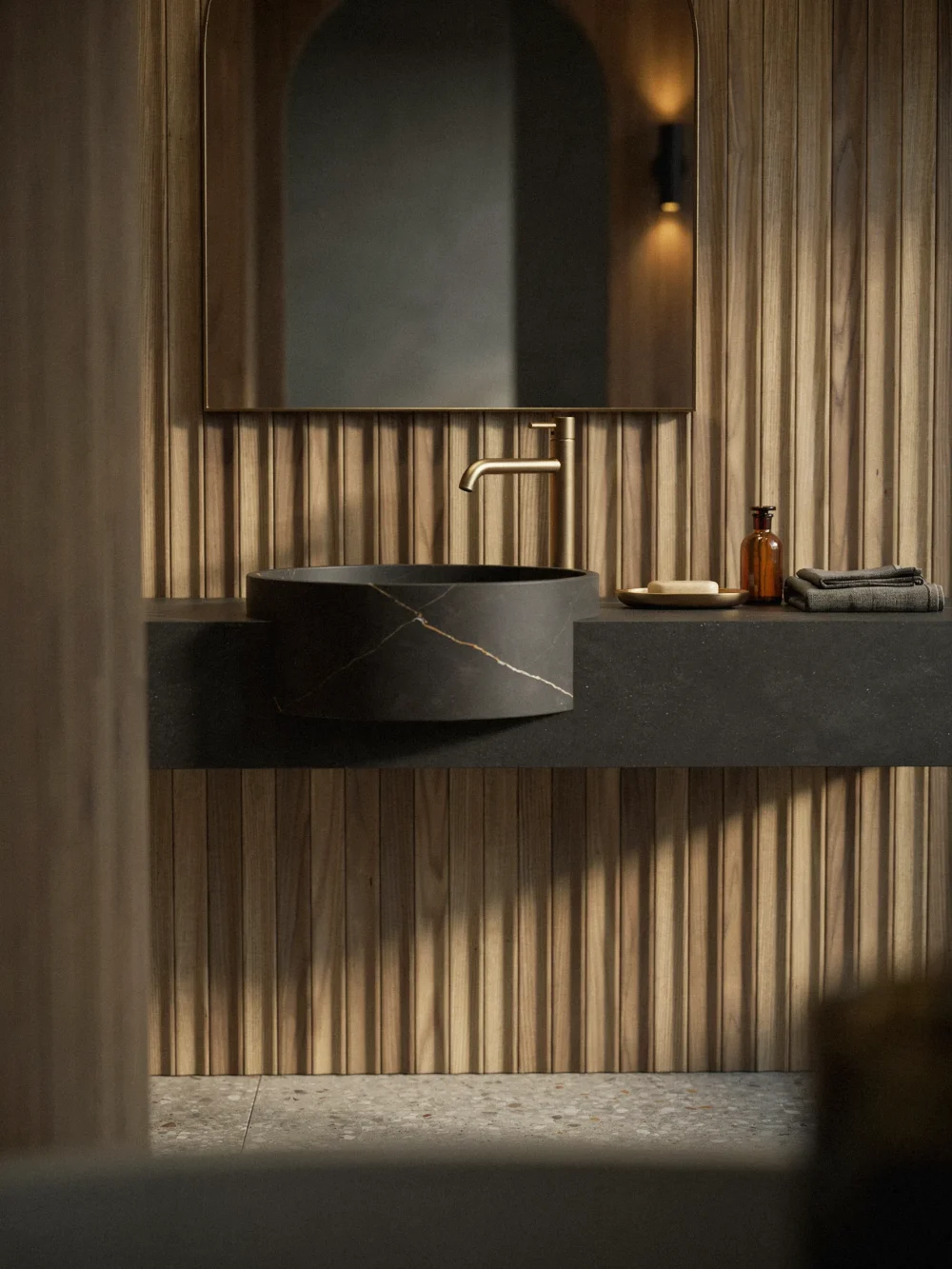
Matte black quartz with subtle gold veining is an engineered stone option that delivers maximum drama with minimum maintenance, and as an integrated sink it creates a vanity that genuinely stops people mid-sentence. The gold veining catches light differently throughout the day, which keeps the surface visually interesting without being busy. This is the design to choose if you want a master bath that feels like a luxury boutique hotel without the natural stone maintenance schedule.
22. Pale Pink Portuguese Marble Integrated Basin
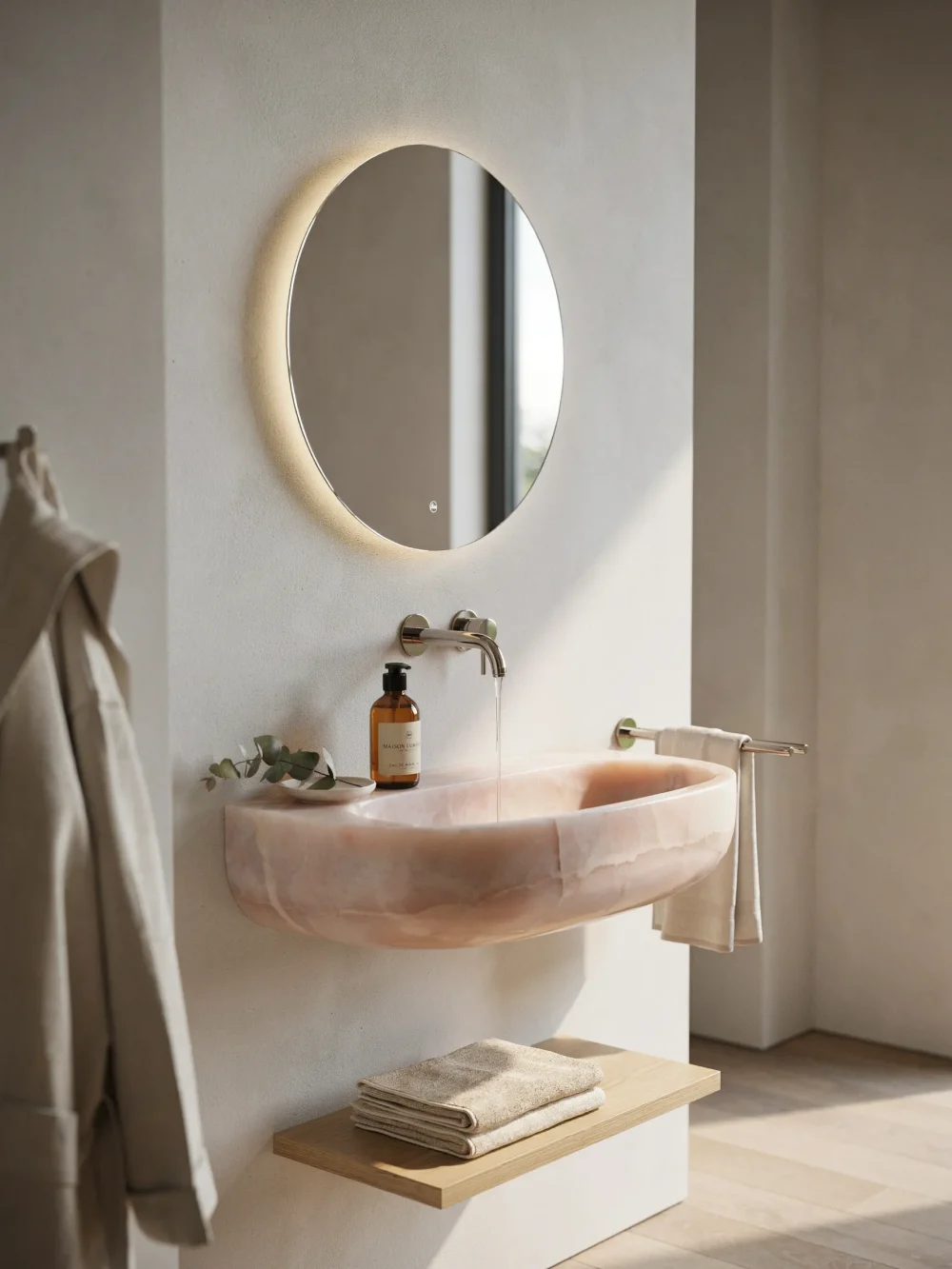
Rosa Aurora marble from Portugal — a soft blush pink with warm grey veining — carved into an integrated sink creates a bathroom that feels both feminine and architectural, which is a rare combination to pull off. It pairs beautifully with matte white walls and polished chrome fixtures for a look that is soft without being saccharine. Pink marble reads as sophisticated rather than precious when it is used in a large, confident format like an integrated vanity slab.
23. Reclaimed Stone Integrated Sink With Antique Patina
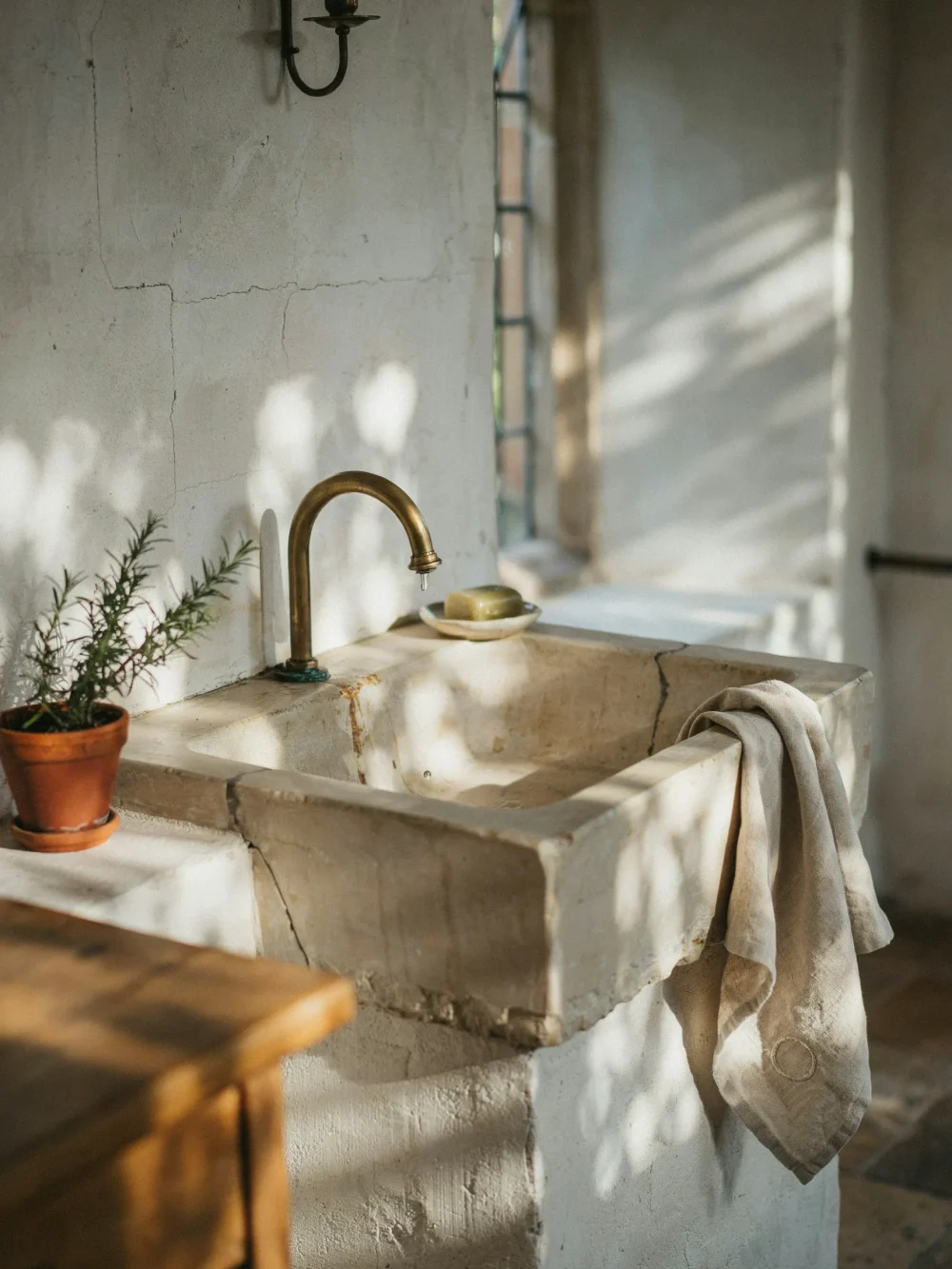
Using reclaimed antique stone — salvaged from old European buildings and re-fabricated into an integrated sink — brings a layer of history and character that no new stone can replicate, and the natural patina that has built up over decades gives the basin a warmth that feels genuinely lived-in. Reclaimed limestone and marble are the most commonly available options through specialty stone dealers. Reclaimed stone integrated sinks are among the most unique and conversation-worthy choices you can make for a master bath.
24. Japandi-Inspired White Sandstone Integrated Vanity
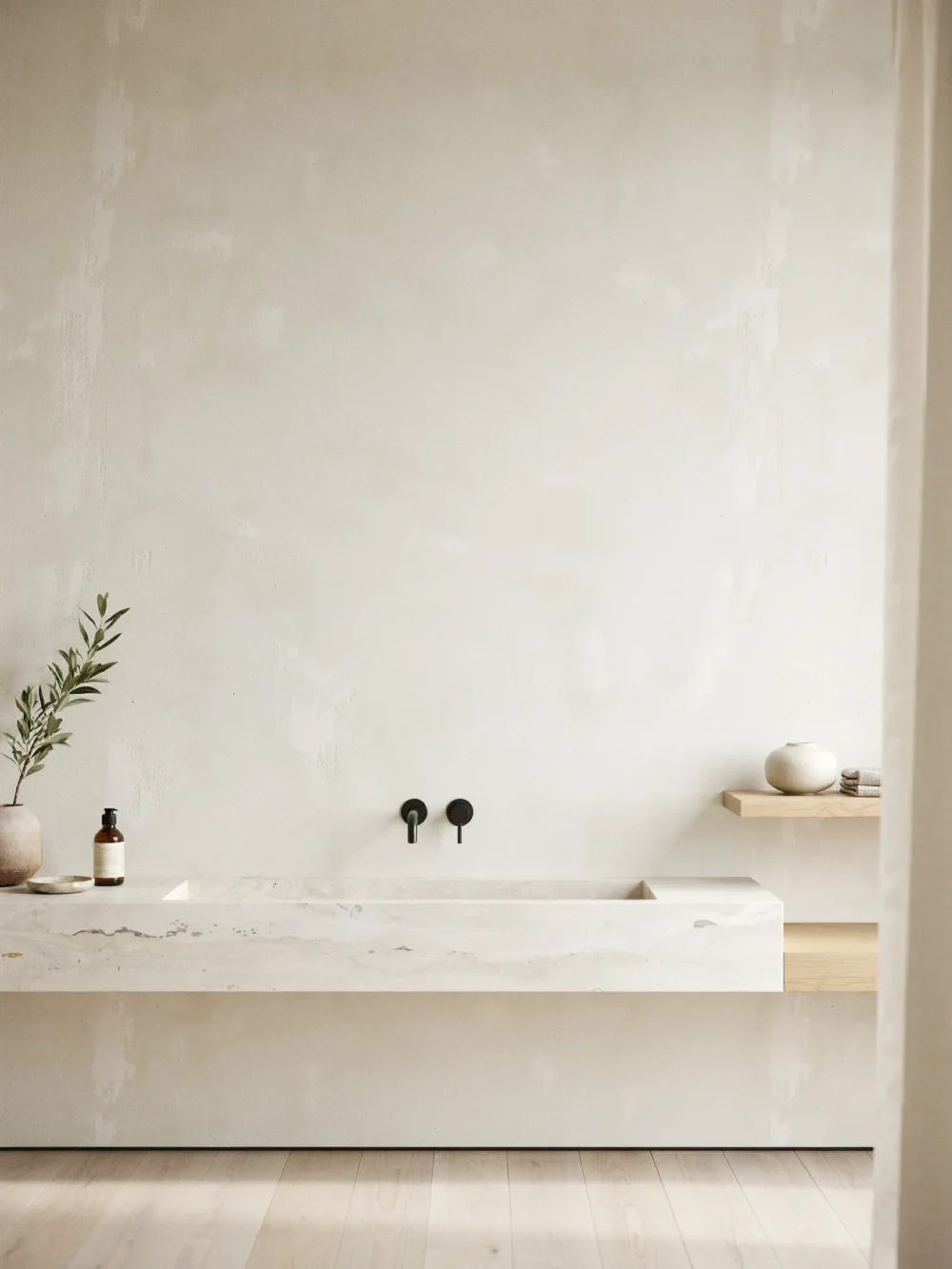
A soft white sandstone integrated sink with a low-profile basin, clean rectangular lines, and a single wall-mounted matte black faucet captures the Japandi aesthetic — Japanese minimalism meets Scandinavian warmth — better than almost any other material choice. The fine grain of sandstone gives it a quiet, almost meditative quality that works perfectly in a spa-inspired master bath. Sandstone is the softest of the common bathroom stones, so seal it religiously and keep harsh cleaning products well away from the surface.
Your Practical Guide to Planning and Installing an Integrated Stone Sink
If the sheer number of options feels overwhelming right now, start by narrowing your choice to just two variables: stone type and basin shape. Everything else — finish, drain style, fixture finish — flows from those two decisions. Visit a stone yard in person if at all possible, because the difference between a slab that looks right on screen and one that genuinely works in your specific bathroom with your specific light is something you can only feel when you are standing in front of the material. If you are in a major city, checking out design showrooms that carry stone samples alongside vanity hardware is one of the most efficient ways to make confident decisions quickly.
If you are renting and cannot make permanent structural changes, integrated stone sinks are genuinely not a renter-friendly project — they require wall mounting or significant cabinet modification that is not reversible. What you can do as a renter is plan, research, and save so that when you do own your space, you are ready to move quickly and confidently. Use this time to browse resources like modern minimalist design ideas to understand how integrated stone aesthetics connect to a broader whole-home design language.
On a tighter budget, engineered quartz is your best friend — it delivers 90% of the visual impact of natural marble at roughly 40-60% of the cost, it requires far less maintenance, and fabricators are more comfortable working with it, which means fewer surprises during installation. If you are comparing options, understanding the full range of sink styles available will help you feel certain that integrated stone is genuinely the right choice for your space rather than just the most appealing thing you saw recently.
The mistake almost every first-timer makes is choosing the stone before finalizing the plumbing rough-in location. Your drain, your water supply lines, and your wall-mount bracket placement all need to be confirmed before your fabricator takes final measurements. If the rough-in moves even two inches after the slab is cut, you have an expensive problem. Nail the plumbing plan first, then order the stone.
To make the whole design feel intentional rather than assembled from separate decisions, choose one material to repeat at least twice in the bathroom — if your integrated sink is Calacatta marble, use the same marble for the floor inset, the niche surround, or even a small accent shelf. Repetition is what makes a room feel designed rather than decorated. If you are still building out the broader aesthetic of your home, exploring cohesive room design approaches can help you think about material continuity across spaces rather than treating each room in isolation. Start today by pulling three stone samples and placing them against your existing wall tile — that one physical step will tell you more than two hours of scrolling ever will.