
15 Green House Exterior Ideas: Make Your Neighbors Green with Envy
Let’s be real for a second. Driving through most suburbs feels like drowning in a sea of beige, gray, and—if someone is feeling particularly spicy—”greige.” It’s safe, sure. But is it inspiring? Not really.
I have a confession to make. A few years ago, I decided to paint my garden shed. I wanted it to blend in with the trees, so I picked a color called “Lucky Clover.” Long story short, it didn’t look like a forest retreat; it looked like a radioactive avocado. That disaster taught me a valuable lesson: green is complex.
But when you get it right? It is absolute magic.
Green connects your home to the landscape in a way no other color can. It can be moody and sophisticated, fresh and airy, or historic and charming. If you are ready to break up with beige, you have come to the right place. We are going to chat about 15 green house exterior ideas that range from subtle sage to bold emerald. Let’s find the perfect shade for you.
The Soft & Serene Palette
If you are nervous about color (I get it, paint is expensive!), these shades are the perfect gateway. They are muted, calming, and act almost like neutrals.
1. Sage Green and Cream
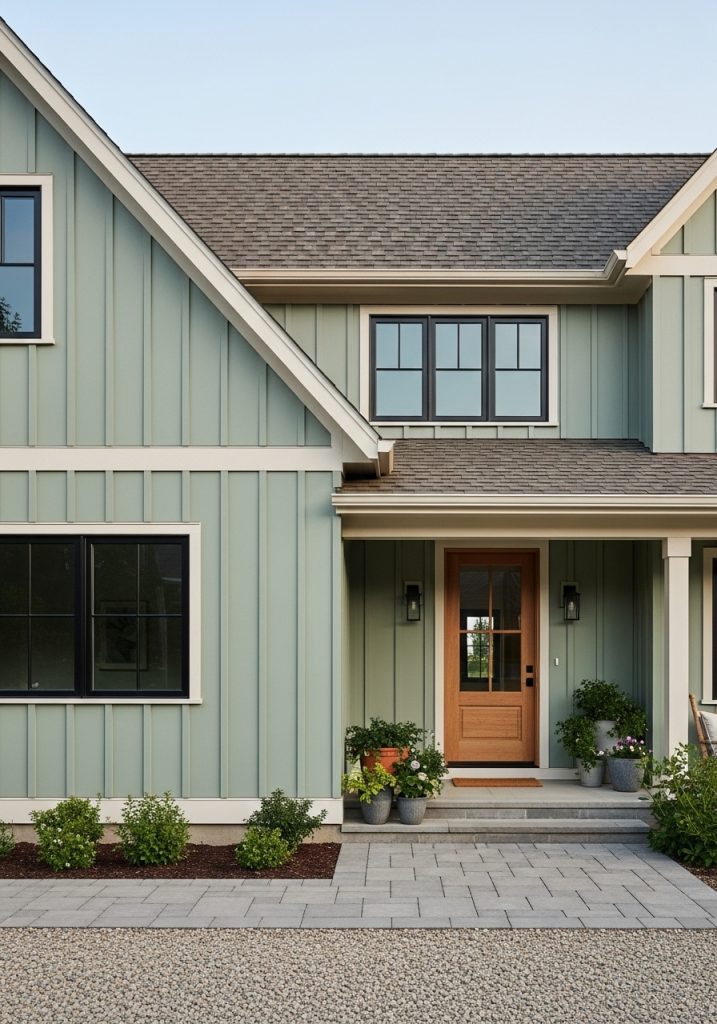
This is the undisputed champion of green exteriors right now. Sage has grey undertones, which keeps it from looking too vibrant in direct sunlight.
- The Look: Timeless and organic.
- Best For: This is a staple in modern farmhouse exterior styles. It softens the sometimes stark look of board and batten siding.
- Accents: Pair it with cream trim rather than stark white for a softer transition.
2. French Grey-Green
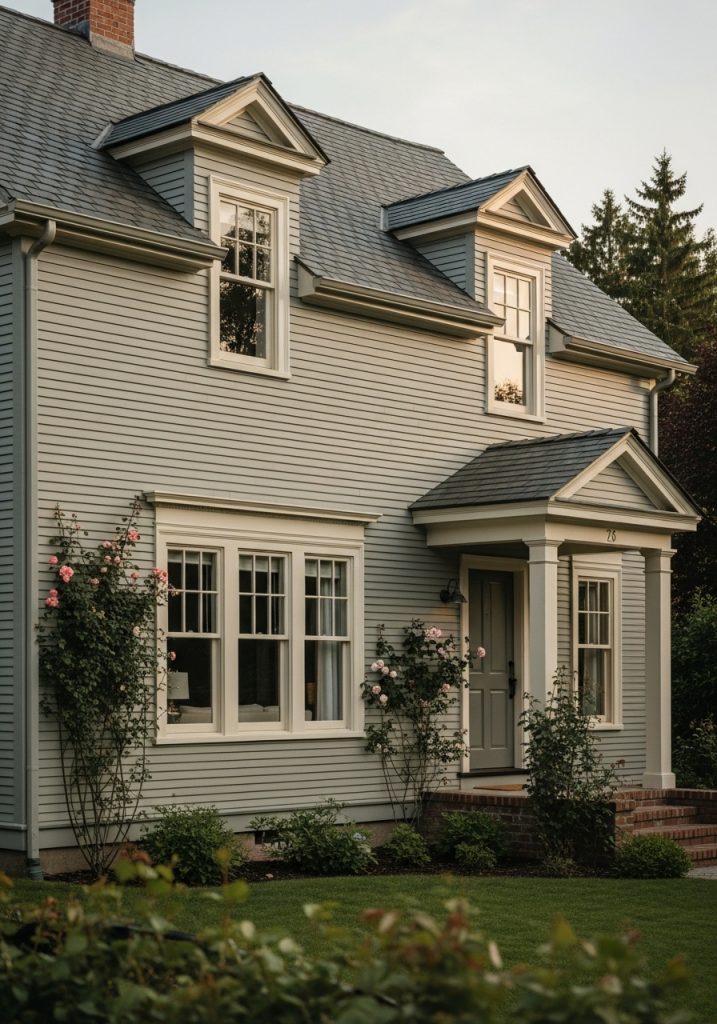
Is it grey? Is it green? Depending on the time of day, it’s both. This chameleon color is incredibly sophisticated and works beautifully on historic homes or cottages.
- Why it works: It feels established. It looks like the house has been there for 100 years.
- Roof Pairing: This looks stunning with a slate or dark grey shingle roof.
3. Mint Green and White
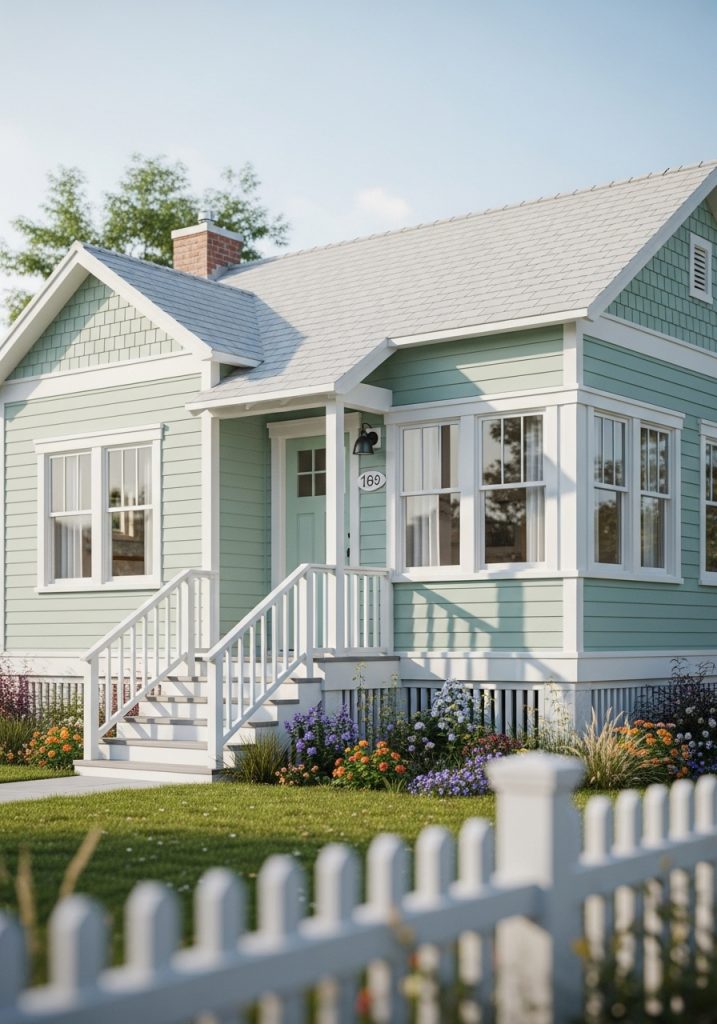
Before you scroll past, I am not talking about toothpaste mint. I am talking about a dusty, pale mint that feels like a beach glass treasure.
- The Vibe: Coastal, retro, and cheerful.
- Application: This works best on bungalows or smaller cottages. On a massive mansion, it might look like a wedding cake.
- Pro Tip: Keep the landscaping loose and flowery.
4. Pistachio and Natural Wood
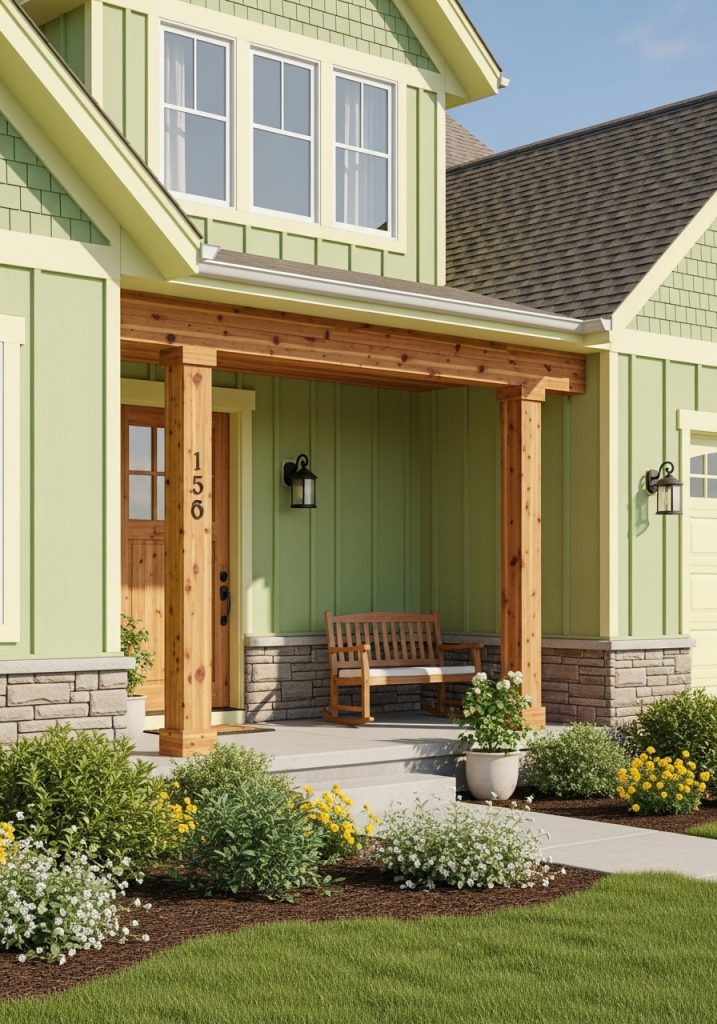
This is for the adventurous souls. A yellow-based light green can feel incredibly sunny and welcoming.
- The Secret: Ground it with natural wood elements. A cedar porch or a stained wood front door stops the color from floating away.
- Styling: Imagine this with a rocking chair on the porch. If you need inspiration for that setup, check out 19 back porch ideas—many of those layouts work just as well for the front!
The Deep & Moody Collection
Ready to embrace the drama? Dark exteriors are trending hard because they blur the lines of the house and make greenery pop.
5. Forest Green and Cedar
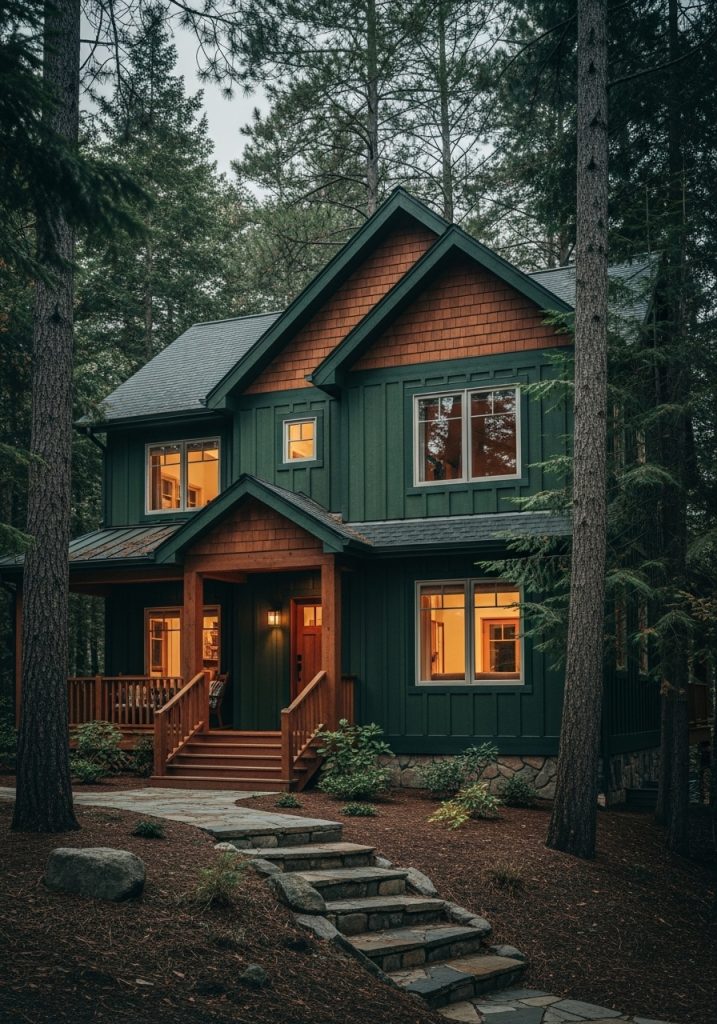
This is the ultimate “cabin in the woods” look, even if you live in the suburbs. Deep forest green recedes visually, allowing the architecture to blend with the trees.
- Texture: This looks incredible on shake siding or rough-hewn planks.
- Inspiration: This palette is the backbone of many cabin exterior ideas, offering a cozy, secluded feel.
6. Blackened Green (The Nearly Black)
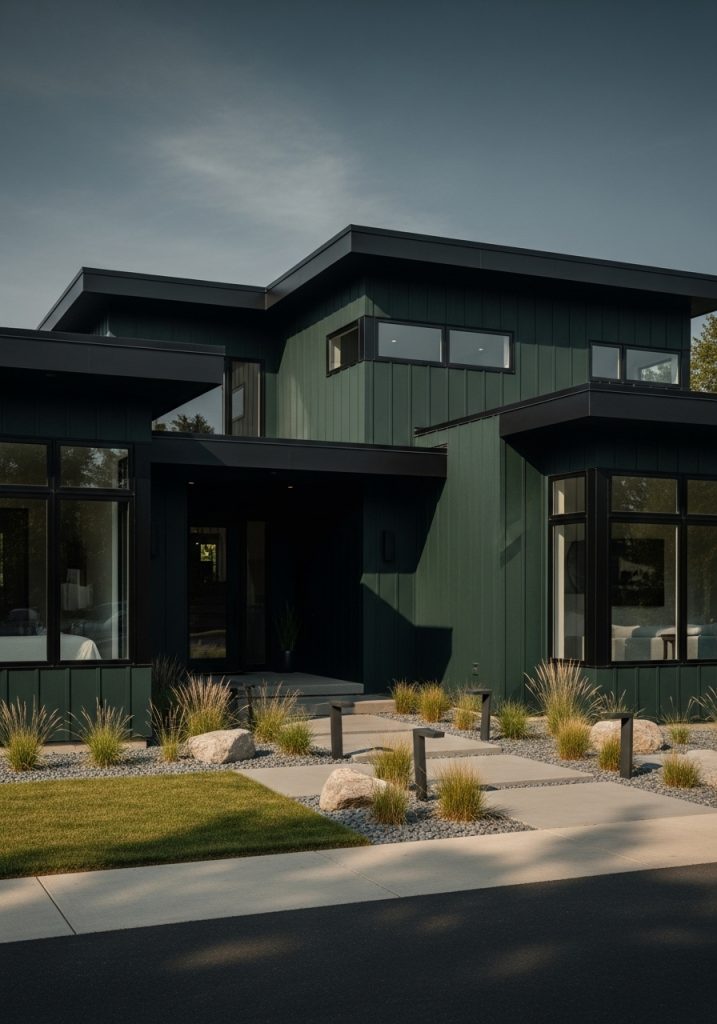
If you love the trend of black houses but feel it’s too harsh, go for a green so dark it looks black in the shade and emerald in the sun.
- The Aesthetic: Modern, sleek, and high-end.
- Architecture: This color creates a striking silhouette, making it perfect for modern house design exteriors with sharp angles and flat roofs.
7. Hunter Green and Red Brick
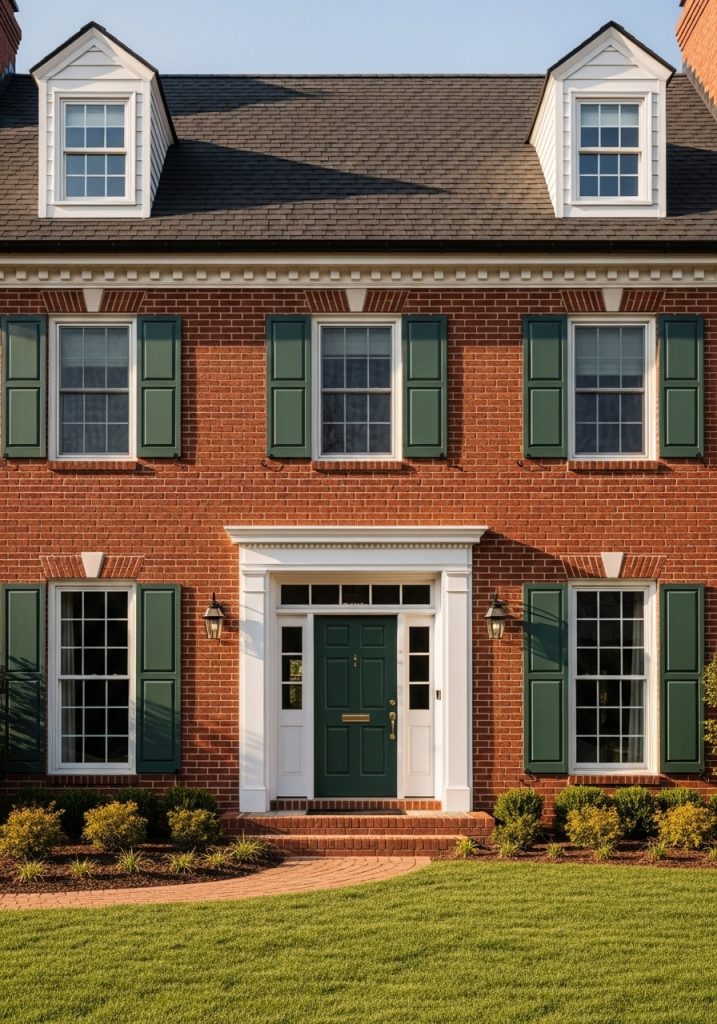
This is a classic combination that screams “traditional elegance.” The cool tones of the green balance the warm, orange tones of the brick.
- Where to use it: Shutters, doors, and gable accents.
- Caution: Ensure the green is dark enough. If it’s too light, it will look like Christmas decoration gone wrong (FYI, nobody wants that year-round).
8. Olive Drab and Industrial Metals
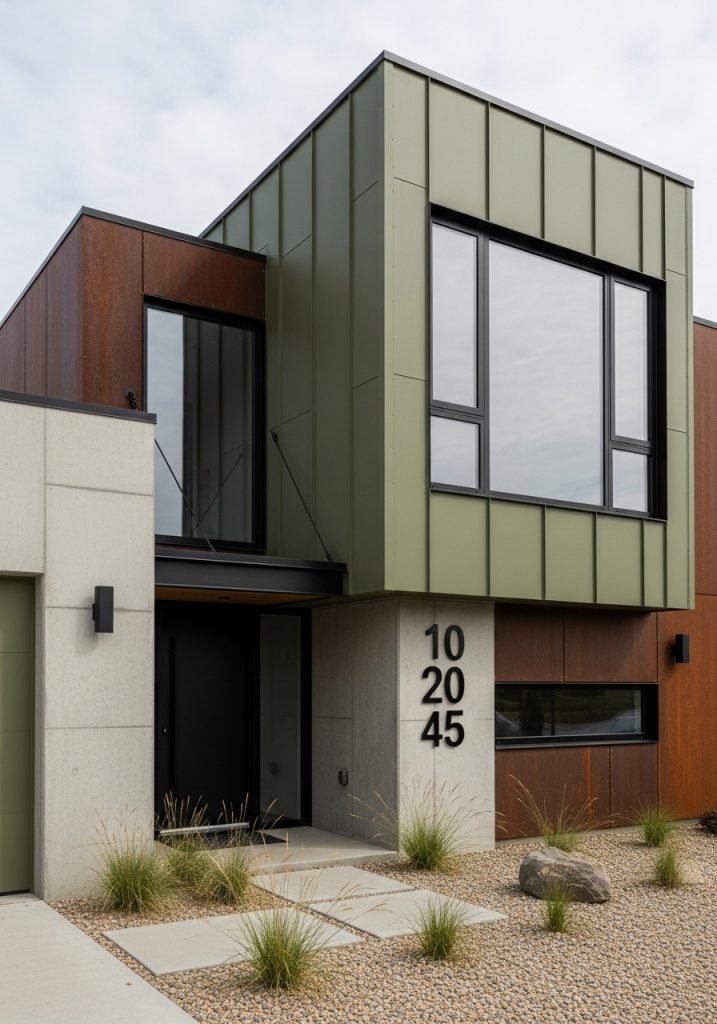
Olive green has yellow/brown undertones, making it feel earthy and rugged. It pairs exceptionally well with modern industrial materials like steel, copper, and concrete.
- The Look: Utilitarian chic.
- Accents: Matte black light fixtures and house numbers are non-negotiable here.
The Bold & Unique Mix
Sometimes, you just want your house to have a personality as big as yours. These ideas are for the rule-breakers.
9. Teal Green and Coral
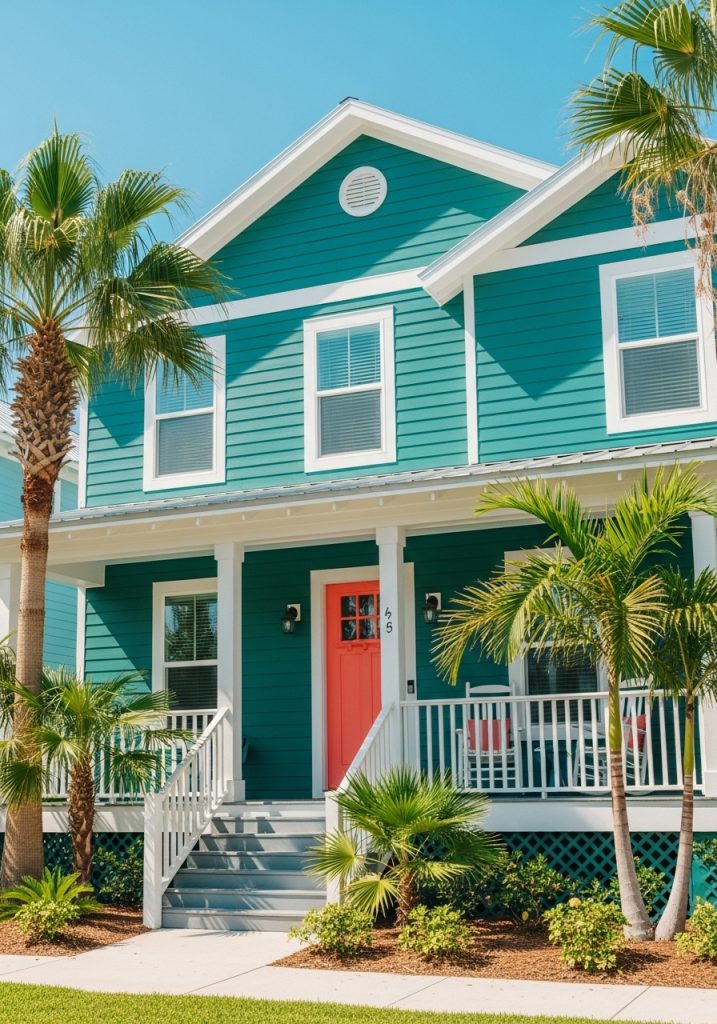
This is technically blue-green, but it counts! A deep teal exterior with a pop of coral on the front door is a head-turner.
- Location: Ideally suited for coastal areas or warm climates.
- Balance: Keep the trim crisp white to frame the colors cleanly.
10. The Monochromatic Green
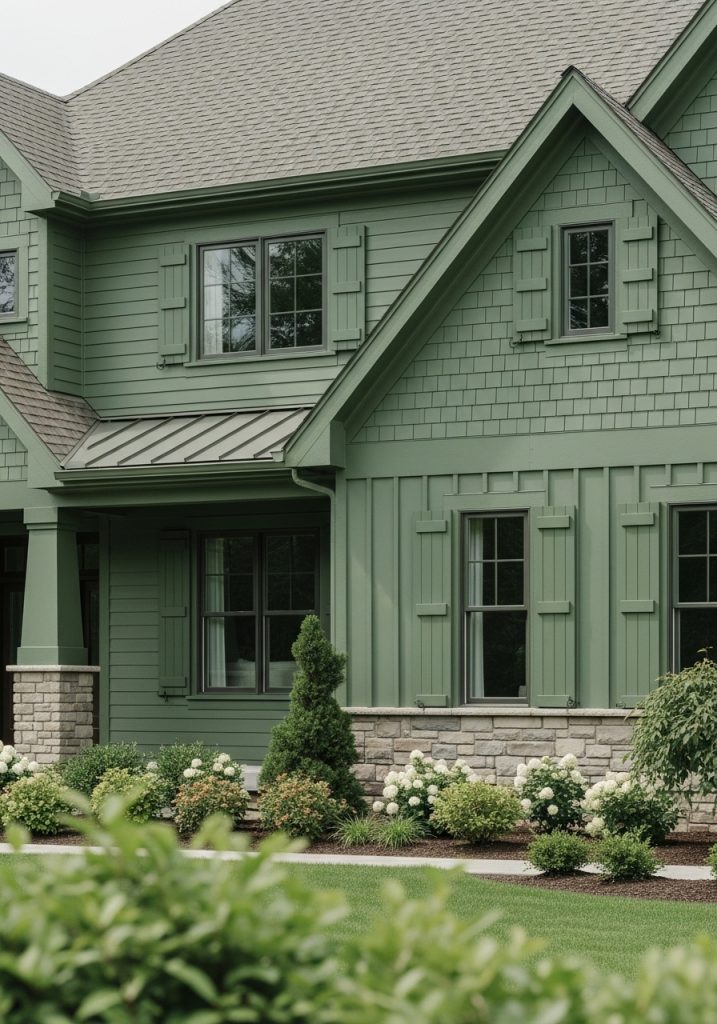
Why stop at one shade? Try painting the siding a medium green and the trim a darker shade of the same green.
- Effect: It creates a subtle, sophisticated depth without the high contrast of white trim.
- Texture: This works best on homes with mixed textures (like shingles and siding) to keep it interesting.
11. Chartreuse Accents (The “Pop”)
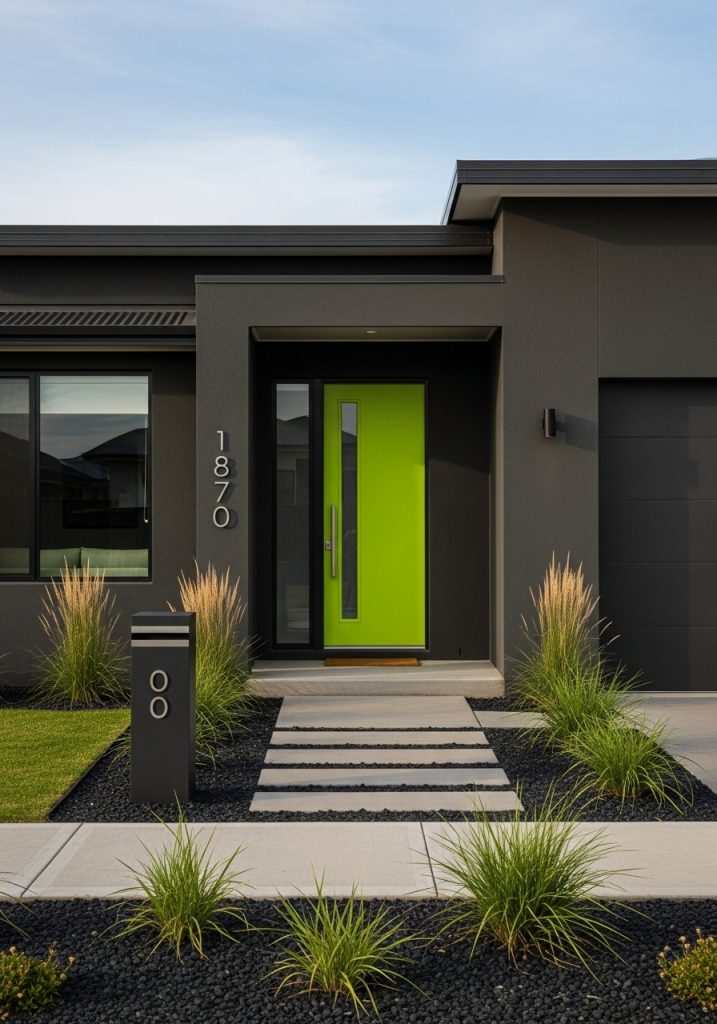
Okay, painting your whole house neon green is a bad idea. But using a bright chartreuse or lime green for just the front door? Genius.
- Background: This works best against a dark grey or charcoal house.
- Impact: It guides the eye immediately to the entry.
Materials & Landscaping Synergy
Paint isn’t the only way to introduce green. Sometimes the material itself is the green element.
12. Green Stained Wood
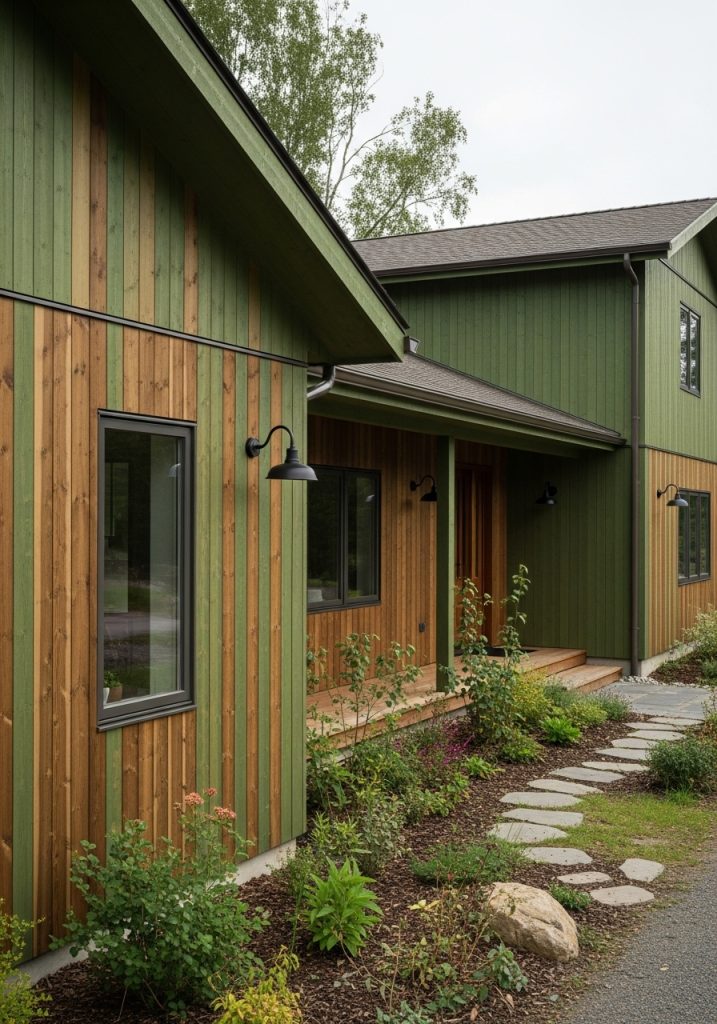
Instead of opaque paint, consider a semi-transparent green stain. This allows the grain of the wood to show through, creating a rustic, textured look.
- Maintenance: Stains often require less scraping than paint when they age; they just fade.
- Vibe: Very organic and relaxed.
13. The Ivy-Covered Wall
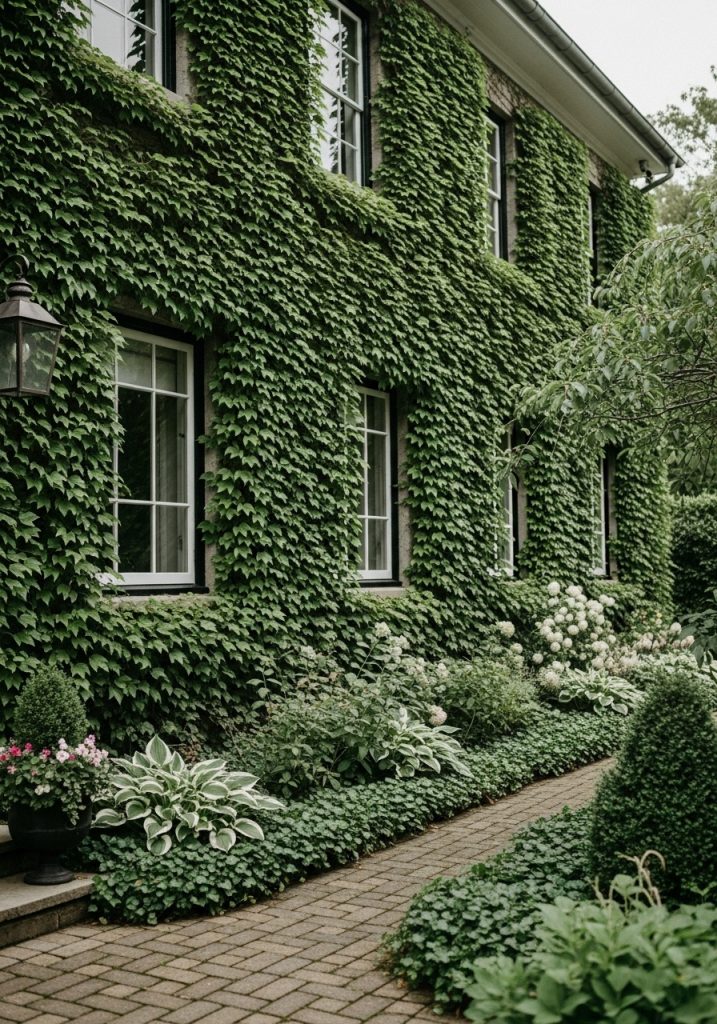
If you can’t paint it, grow it! A “living wall” of ivy or climbing vines turns your exterior into a vertical garden.
- Warning: Make sure the vines won’t damage your masonry or siding.
- Link: If you love this lush look, you should explore 10 stunning home garden ideas to see how to integrate vertical planting into your landscape design.
14. Green Metal Roofing
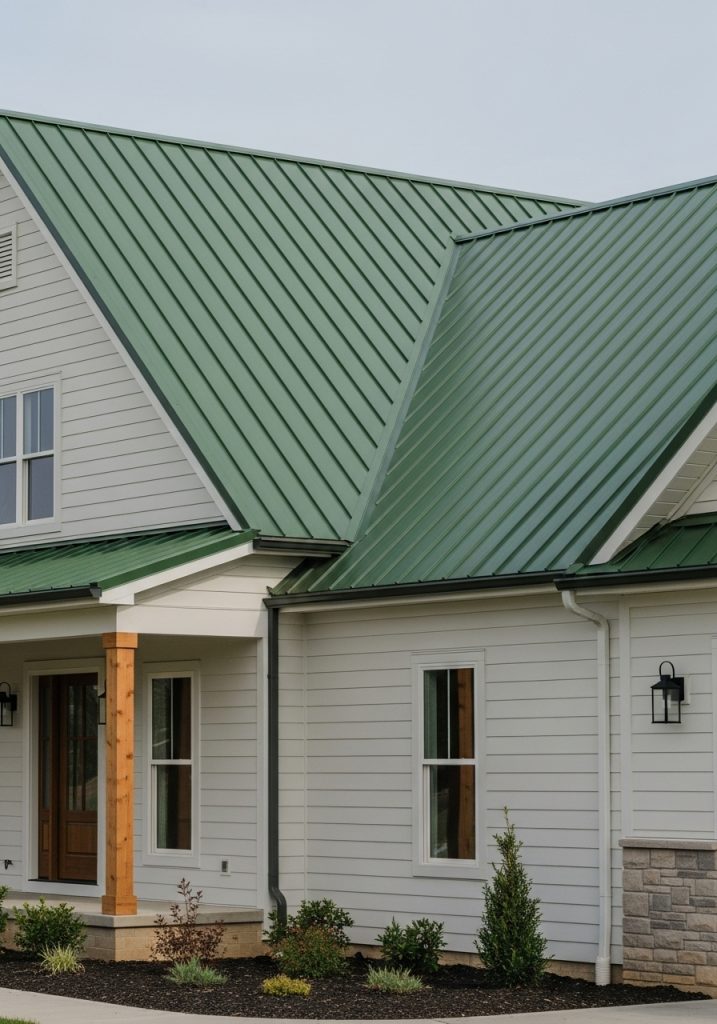
Maybe keep the house neutral (cream or white) and let the roof be the star. A forest green metal roof is a classic farmhouse staple.
- Longevity: Metal roofs last forever (well, almost).
- Curb Appeal: It adds a “hat” of color that defines the home’s character from the street.
15. The “Garden First” Exterior
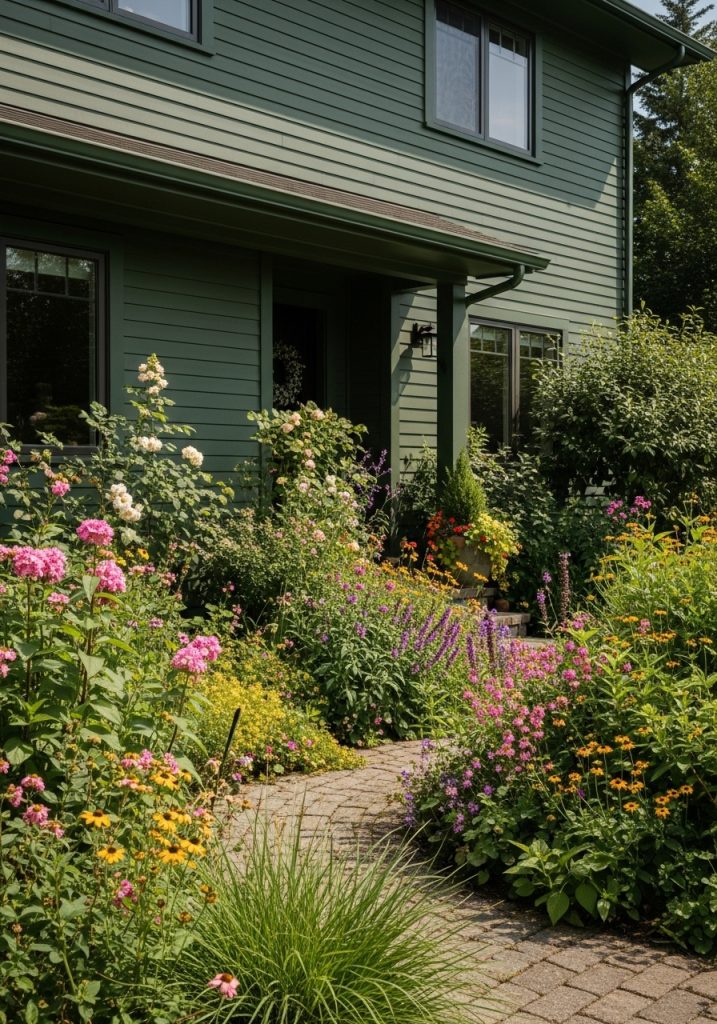
Sometimes the best green exterior is the one that steps back. A dark, muted mossy green is the perfect backdrop for a vibrant garden.
- Why: Dark green makes flower colors (pinks, purples, yellows) explode visually.
- Seasonal Bonus: This backdrop looks incredible during the holidays. Imagine a red berry wreath against a moss-green door. Check out christmas front door wreaths ideas to visualize this stunning contrast.
How to Choose the Right Shade (Without Panicking)
Picking a green is trickier than picking a grey. Here is how to avoid my “radioactive avocado” mistake.
Check the Undertones
Green is never just green.
- Blue-Greens (Teal/Spruce): Cool, crisp, and formal.
- Yellow-Greens (Olive/Chartreuse): Warm, earthy, and casual.
- Grey-Greens (Sage/Lichen): Neutral, safe, and calming.
Test in All Light
Paint a 2×2 foot square on the North side (shadow) and the South side (sun) of your house. Watch it for 24 hours. A color that looks lovely at noon might turn brown at sunset.
Consider Your Neighbors
You don’t have to match them, but you shouldn’t clash. If your neighbor has a bright red brick house, a clashing yellow-green might cause a visual vibration that hurts the eyes. Go for a cooler blue-green instead.
Accents That Make Green Pop
Once you have painted the walls, how do you accessorize?
Metals
- Brass/Gold: Looks rich and traditional against dark green.
- Black: Looks modern and industrial against olive or sage.
- Copper: The orange tones of copper are the complementary color to blue-green/teal. It’s a match made in heaven.
Porch Styling
If you go with a green exterior, treat your porch as an extension of the garden. Wicker furniture, natural wood, and plenty of potted plants bridge the gap.
Pro Tip: If you have a small entry, style it intentionally. Even a green house needs a defined entry zone. Looking at front porch ideas can give you the layout strategies to make the furniture pop against your new paint job.
Final Thoughts
Choosing a green exterior is a bold move, but it’s one that signals a love for nature and a desire for tranquility. Whether you go for the safety of sage or the drama of forest black, you are creating a home that feels grounded.
Don’t be afraid to experiment. It’s just paint (or siding). The worst that happens is you have to repaint it—but I have a feeling once you go green, you won’t want to go back.
So, grab those sample pots, annoy the hardware store guy by asking for 50 shades of moss, and transform your curb appeal.
Which shade are you feeling? Team Sage or Team Forest? Let me know! (And seriously, avoid the avocado unless you really, really love guacamole). 😉
Happy painting!